Equipment
TRX suspension trainer exercises
Straps anchored overhead turn your own bodyweight into a load you dial in without adding anything. All it takes is moving your feet: the more horizontal your torso, the more of yourself you have to lift. It is the only equipment in the atlas where you set the difficulty with a step forward or back.
The handles hang free, so on top of the movement itself you have to hold your body in line. That is why straps are so good for rows, chest flyes and rollouts, and so weak anywhere you need real load. The atlas covers both the exercises with your hands in the handles and the ones with your feet in the loops.
TRX suspension trainer exercises by muscle group
Pick the muscle group you want to train and see which exercises cover it.

More muscle groupsRear delts 5·Mid chest 3·Glutes 2
Exercise library
All TRX suspension trainer exercises
39 exercisesFilters
Filters
Muscle group
Training type

Suspension Trainer with Grips Leg Curl
Hamstrings · Suspension trainer

Suspension Trainer with Grips Triceps Extension
Triceps · Suspension trainer

Suspension Trainer with Grips Bent Knee Inverted Row
Upper back · Suspension trainer

Suspension Trainer with Grips High Row
Upper back · Suspension trainer

Suspension Trainer with Grips Face Pull
Rear delts · Suspension trainer

Suspension Trainer with Grips Pull-up
Lats · Suspension trainer

Suspension Trainer with Grips Wide Grip Inverted Row on Floor
Upper back · Suspension trainer

Suspension Trainer with Grips Inverted Row Arm Twist
Upper back · Suspension trainer

Suspension Trainer with Grips Knee Tuck Row
Upper back · Suspension trainer

Suspension Trainer with Grips Hip Bridge
Glutes · Suspension trainer

Suspension Trainer with Grips Decline Push-up
Lower chest · Suspension trainer
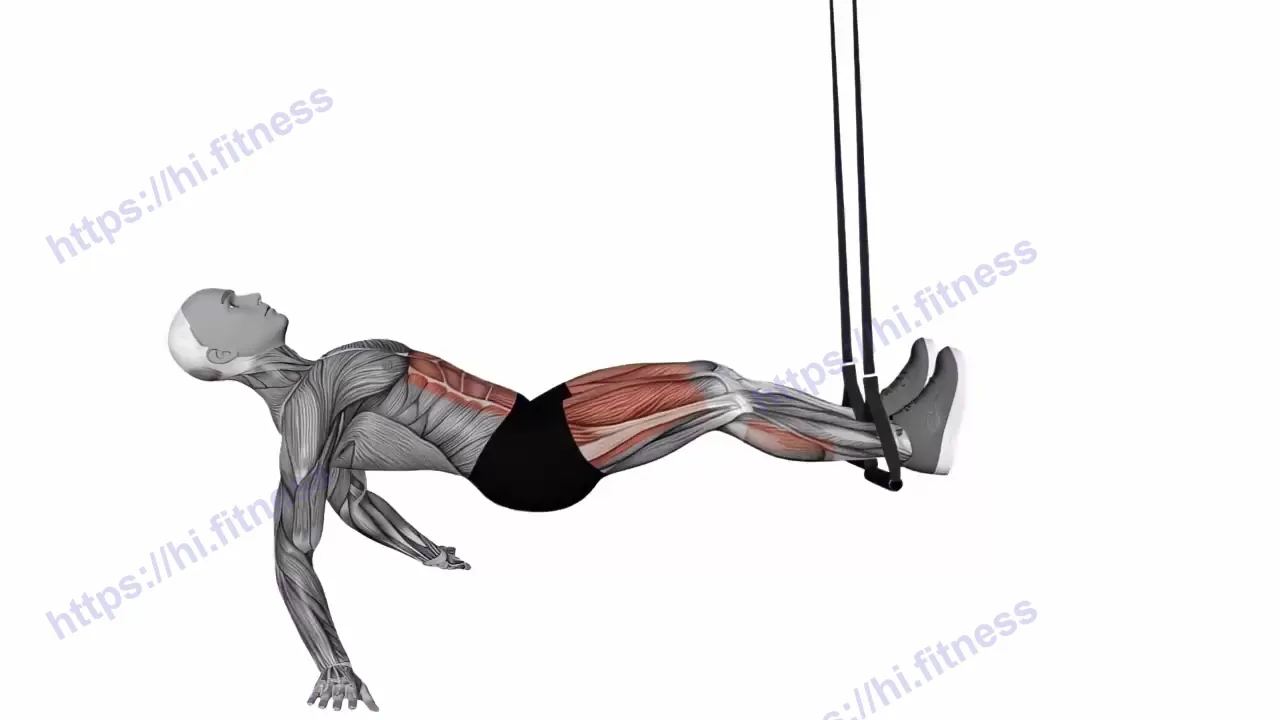
Suspension Trainer with Grips Pull Through
Glutes · Suspension trainer
Training guide
About training TRX suspension trainer exercises
Choose one movement, perform it well, then progress it over time.
How do the straps set the difficulty?
The torso angle does all of it. On a row you lean back and pull toward you the share of your own weight that the lean decides: feet close to the anchor puts you almost horizontal and makes the movement hardest, feet further away stands you closer to upright and makes it light. There is a dozen or so degrees between the two, so you get a whole ladder of difficulty without a single plate.
The same rule runs the other way on the exercises with your feet in the loops. The higher the handles hang, the more of the work of holding your hips falls on the abs. That is why almost every description here starts with setting the strap height - it is not housekeeping, it is how you pick your load.
The practical takeaway: before you decide a movement is too hard for you, check whether it is just two steps in the wrong direction.
What will a TRX not replace?
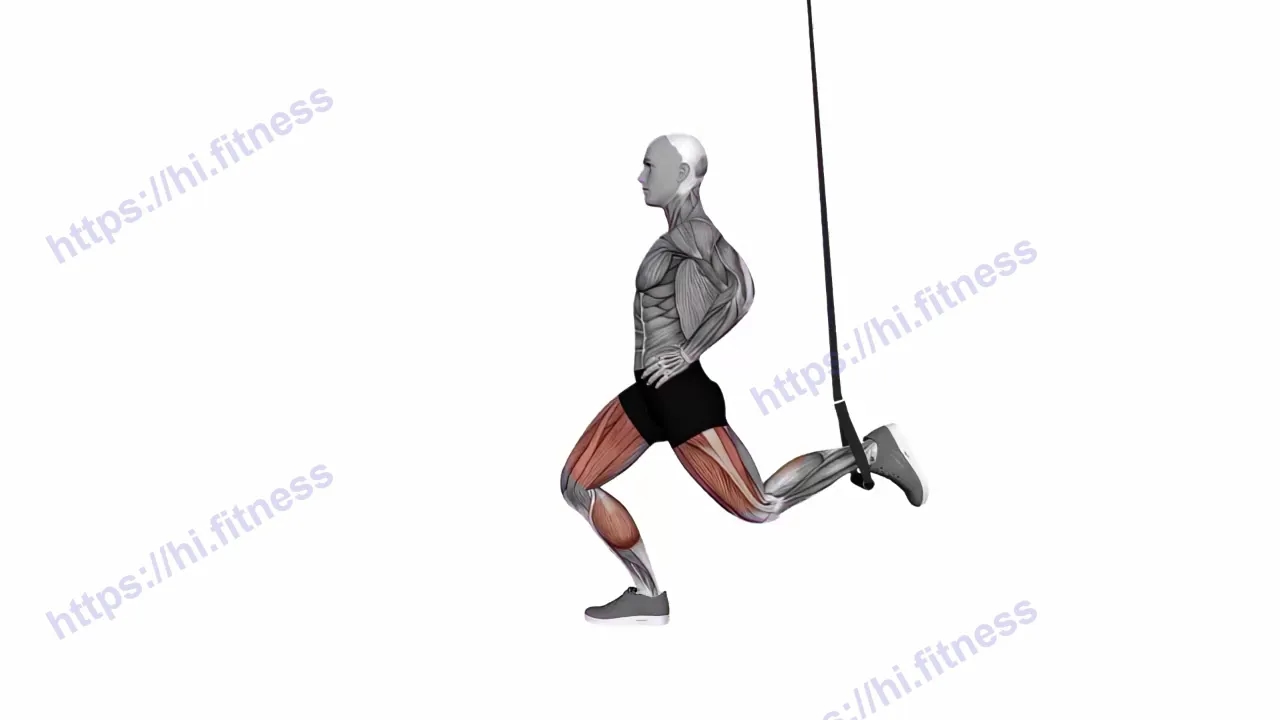
The ceiling on load is your own bodyweight, and in most positions less than that, because part of your weight still sits on your feet. For back, shoulders and abs that is often plenty. For legs it usually is not: the split squat and the side squat on straps teach the pattern and help you hold your balance, but they will not load the quads the way a barbell does, or even a heavy pair of dumbbells.
The second limit is sneakier. Straps always add a stability job on top of the exercise, so a set often ends because your torso stopped holding its line, not because the target muscle quit. That is good news for your abs and bad news if you are chasing one specific muscle group. In that case it is easier to reach for a movement with external resistance and leave the straps for rows, chest flyes and torso work, where what they do is an advantage.
Progress the movement
Move your feet
A step toward the anchor lays your torso more horizontal and raises the share of your weight you actually lift. It is the smallest repeatable jump in difficulty this equipment gives you.
Narrow your base
Feet together instead of shoulder width, then one foot lifted off the floor. The same position gets harder, because now you have to balance side to side as well.
Change the strap length
The atlas says this outright on the rollout: shorter straps shorten the lever, longer straps lengthen it. Remember which setting you trained on, or you have nothing to compare your sets against.
Explore further
Browse the exercise library
Browse by muscle
Upper chest·Mid chest·Lower chest·Lats·Upper back·Lower Back·Front delts·Side delts·Rear delts·Biceps·Triceps·Forearms·Quads·Hamstrings·Glutes·Calves·Core
Browse by equipment
Bodyweight·Dumbbell·Barbell·Bench·Other·Resistance band·Cable·Machine·Squat rack·Mat·Suspension trainer·Kettlebell·Stability ball·Cardio machine·Pull-up bar·Box·EZ bar·Ab wheel·Roman chair·Weight plate·Smith machine·Dip bars·Jump rope·Medicine ball·Trap bar
Browse by type
Workout tracker
Add this exercise to a workout and track your progress
Add it to a plan or to your current session, log sets, weight and reps, keep the instructions and tips at hand while you train, and check your previous results, records and volume.
- Plan - add this exercise to a workout
- Log - sets, weight and reps
- Progress - history, records and volume