Equipment
Machine exercises
A machine guides the weight along one path, fixed in advance. You do not have to stabilize it or keep it from drifting sideways, so all that is left is pushing or pulling - and the option of taking a set to the end without a spotter.
The price is that the path was designed by an engineer, not by your body. That is why the description of almost every position on this list starts with an adjustment: seat height, back pad position, where the roller sits. Before you compare the weight with your last session, make sure the machine is set up the same way.
Machine exercises by muscle group
Pick the muscle group you want to train and see which exercises cover it.
 Leg press, hack squat and extensionsLats8
 Assisted pull-upsHamstrings7
 Seated and kneeling leg curls
More muscle groupsMid chest 6·Lower chest 5·Calves 4
Exercise library
All Machine exercises
60 exercisesFilters
Filters
Muscle group
Training type
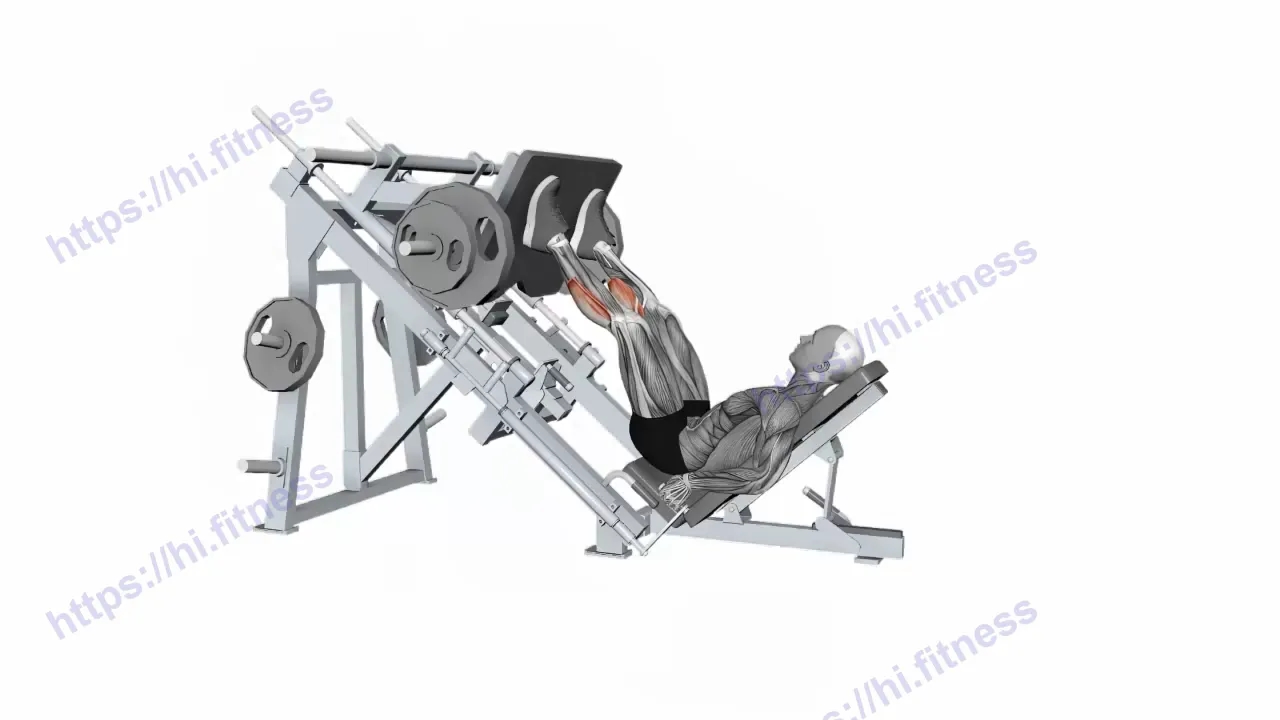
Calf Raise Leg Press Machine
Calves · Machine

Seated Calf Machine
Calves · Machine
Lying Leg Curl Machine
Hamstrings · Machine
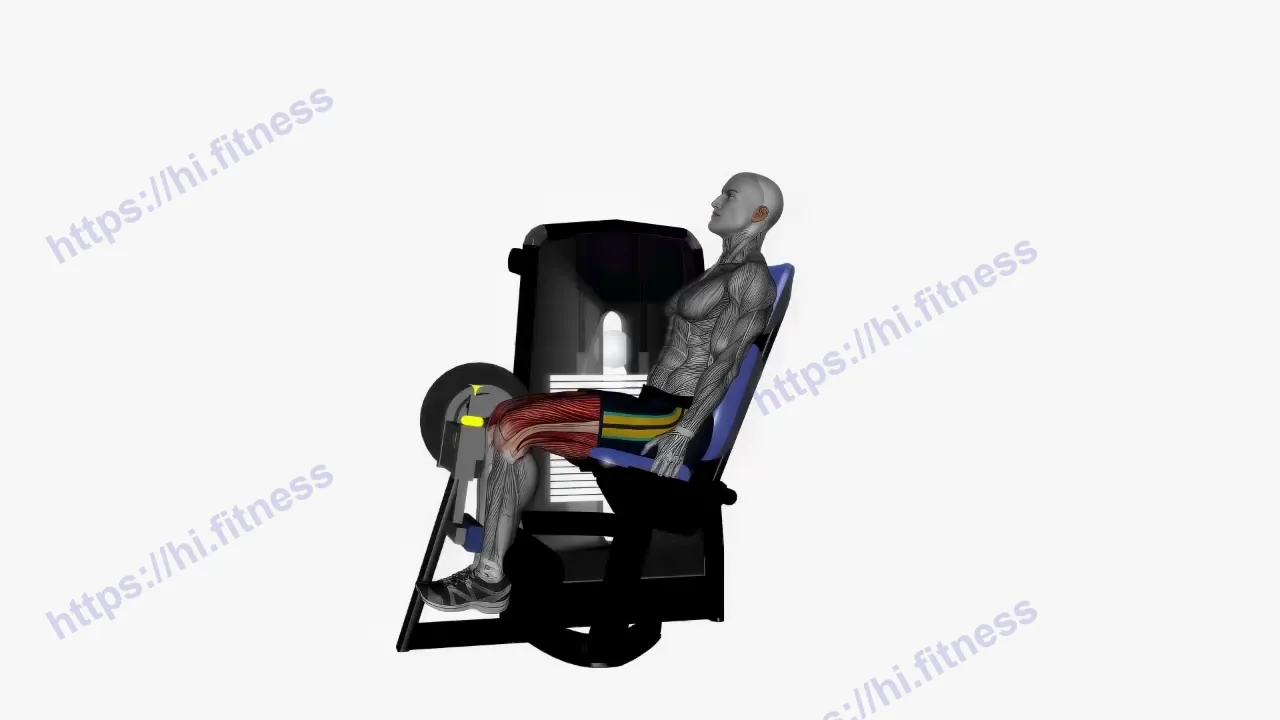
Seated Leg Curl Machine
Hamstrings · Machine

Seated Hip Abductor Machine
Glutes · Machine

Triceps Dip Machine
Triceps · Machine

Seated Leg Extension_both Legs
Quads · Machine

Hack Squat Machine
Quads · Machine

Iso Lateral Shoulder Press Both Arm
Side delts · Machine

Pec Deck Fly Machine
Mid chest · Machine

Single Leg Calf Raise Leg Press Machine
Calves · Machine

Abdominal Crunches Machine
Core · Machine
Training guide
About training Machine exercises
Choose one movement, perform it well, then progress it over time.
What does a machine do for you?
First of all, it guides the weight. Balance, holding the path, keeping the bar from wandering sideways - none of that is your job anymore. What is left is one direction of pushing or pulling, which in practice means the last rep can fail with no consequences at all: the stack goes back where it came from, not onto you.
The second thing a machine does for you is choose the path, and that is also what it costs. Paths are designed around an average build. If you are very tall or very short, the machine's axis of rotation can miss your joint even after you adjust everything. If you set it all up the way the description says and the movement still feels off, it makes more sense to switch machines or reach for the free-weight version than to fight the hardware.
The third thing is isolation. Leg extensions or a pec deck deliver load to one movement at one joint, with no torso in between. That is why machines work well at the end of a session, when your back and grip are already tired and the muscle you want to finish off is not.
Who gets the most out of machines?
Someone learning a pattern who has too many things to watch at once - a machine takes half of them away. People who train alone, because a heavy set ends here without having to bail out from under a bar. And anyone coming back after a break, where the point is a repeatable stimulus, not a record.
A separate category is the movements you cannot do with a free weight at all. An assisted machine is the only piece of equipment that can make a pull-up lighter instead of heavier. A leg curl loads knee flexion in a position where a dumbbell would simply fall off. A multi-hip gives resistance to abduction and to a kickback, where standing up there is nothing for the weight to hang on.
One limit is worth knowing: a machine trains the movement it was built for, and the carryover to free weights is partial, because the stabilizers have the whole time off. If your goal is a strong squat or bench press, machines work as a supplement to the plan, not as the whole plan.
Progress the movement
Assistance counts the other way
On an assisted pull-up machine the counterweight subtracts part of your body weight. Progress here means a smaller number on the stack, not a bigger one, and the end of the road is zero, which is just a pull-up bar.
A harder variation at the same weight
Iso-Lateral machines show up in the atlas in two-arm, alternating and single-arm versions. The load per side stays the same, but your torso has to resist rotation, and the stronger side stops setting the pace.
A free weight is waiting at the end anyway
The path the machine holds for you is the part you are not training. If the goal is a barbell squat or bench press, a machine carries you toward the free weight instead of replacing it for good.
Explore further
Browse the exercise library
Browse by muscle
Upper chest·Mid chest·Lower chest·Lats·Upper back·Lower Back·Front delts·Side delts·Rear delts·Biceps·Triceps·Forearms·Quads·Hamstrings·Glutes·Calves·Core
Browse by equipment
Bodyweight·Dumbbell·Bench·Barbell·Resistance band·Cable·Machine·Squat rack·Other·Mat·Box·Suspension trainer·Stability ball·Kettlebell·Cardio machine·Pull-up bar·EZ bar·Ab wheel·Weight plate·Roman chair·Smith machine·Dip bars·Jump rope·Medicine ball
Browse by type
Add this exercise to a workout and track your progress
Add it to a plan or to your current session, log sets, weight and reps, keep the instructions and tips at hand while you train, and check your previous results, records and volume.
- Plan - add this exercise to a workout
- Log - sets, weight and reps
- Progress - history, records and volume