Equipment
Mat exercises
A mat offers no resistance. It is a surface that lets you lie down, kneel and rest your spine on something soft, so this category collects what you do on the floor: stretching and mobility. Almost everything here is a position you hold for half a minute or so, not a set of reps.
Several of these positions do not need a mat at all - you stretch a calf against a wall or off a step, the back hanging from a pull-up bar, and a few variations rest the hips on a stability ball. Treat this set as "work down at floor level", not as a list of gear you have to buy.
Mat exercises by muscle group
Pick the muscle group you want to train and see which exercises cover it.
 Quads and hip flexorsLower Back7
 Cat stretch and knee to chestGlutes5
 Glute in the figure-four position
More muscle groupsCore 4·Hamstrings 4·Lats 4
Exercise library
All Mat exercises
44 exercisesFilters
Filters
Muscle group
Training type

Child Pose
Lower Back · Mat

Lying Crossover Stretch
Lower Back · Mat

Kneeling Wrist Flexor Stretch
Forearms · Mat

Legs Hand Reach Spine Stretch
Lower Back · Mat

Child Pose Up
Lower Back · Mat

Ceiling Look Stretch
Lower Back · Mat
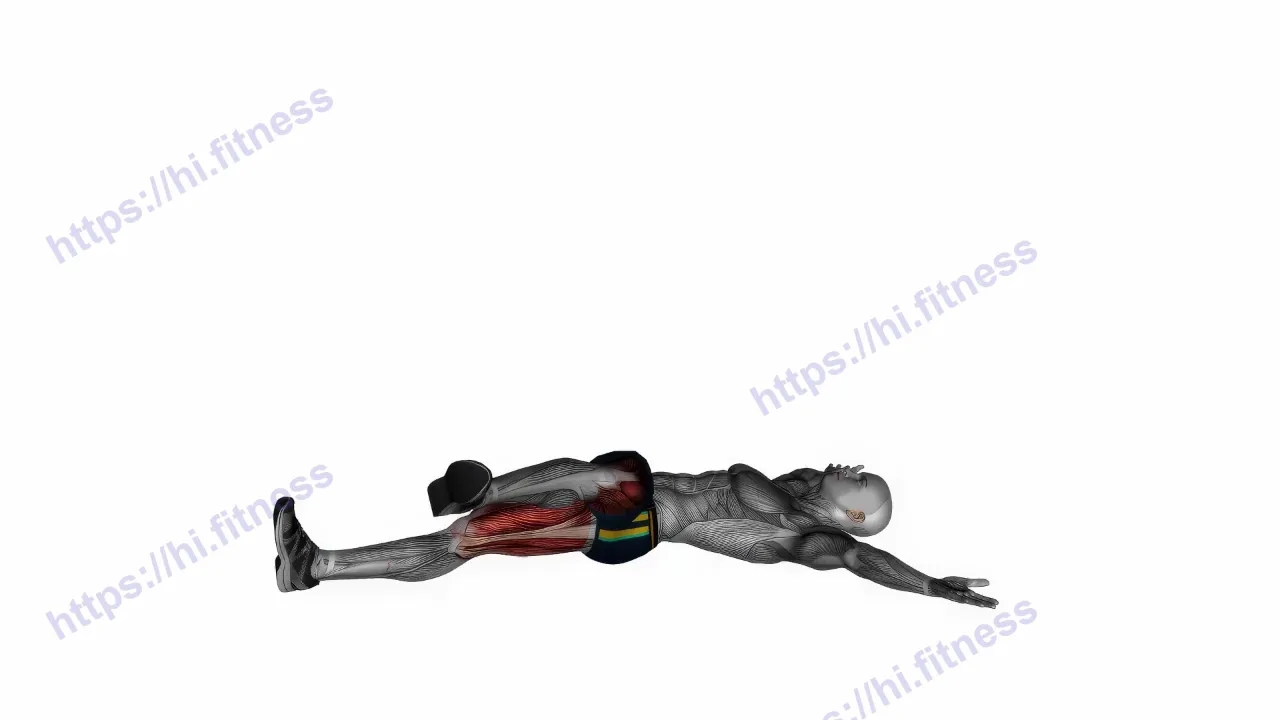
Iron Cross Stretch
Lower Back · Mat

Hamstring Lying Straight Leg Stretch
Hamstrings · Mat

Hamstring Lying Curl Up Stretch
Hamstrings · Mat

Seated Calf Stretch
Calves · Mat

Seated Straight Leg Calf Stretch
Calves · Mat
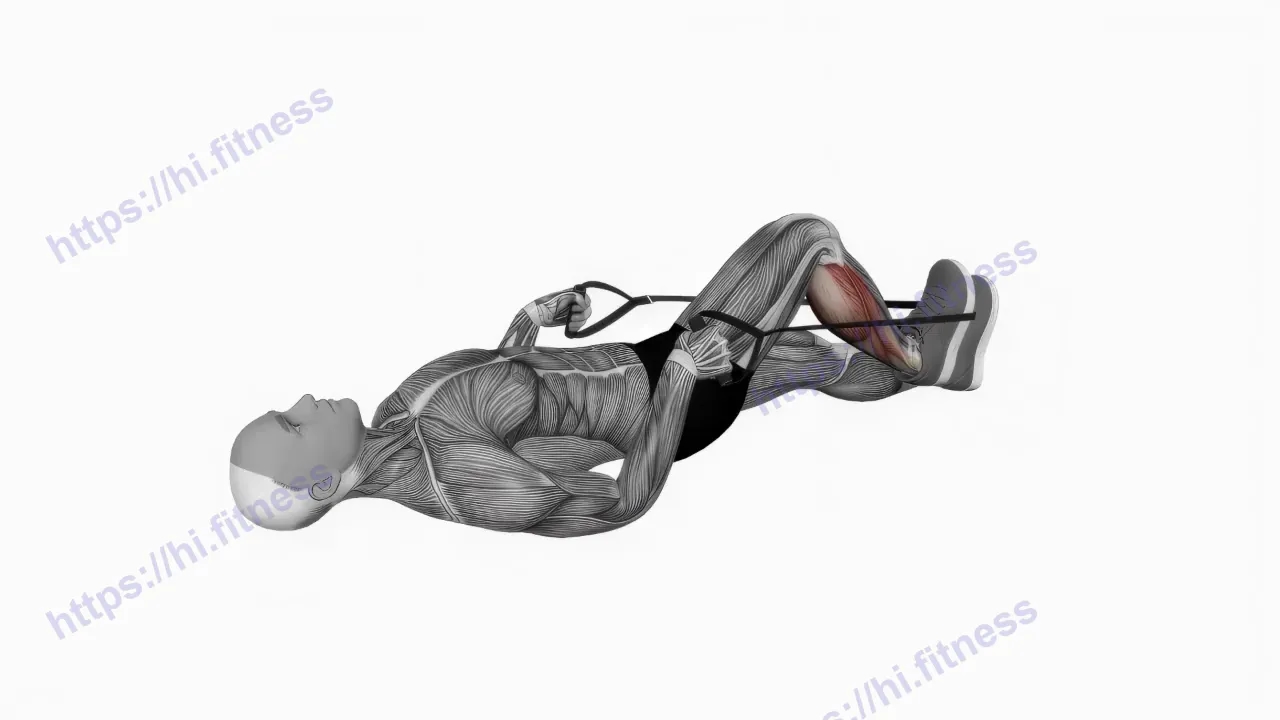
Calf Stretch with Rope
Calves · Other
Training guide
About training Mat exercises
Choose one movement, perform it well, then progress it over time.
Is a mat even equipment?
Not the way a barbell or a resistance band is. A mat loads nothing and makes nothing mechanically easier. It does two things: it cushions your spine, knees and elbows in lying and kneeling positions, and it gives you a stable, non-slip patch where a hand or a foot will not slide. The sit-up description starts with putting a mat under your lower back, and that is the whole of its role.
Which is why this category has no progression in the usual sense. There is no smallest plate here, no shorter band, no pin one notch lower. Your range does get better from week to week, but it depends on so many things at once - body temperature, time of day, what you did earlier - that treating it like a number on the bar leads nowhere.
The one strength exercise in the set is the sit-up, and even that uses the mat purely as padding under the lower back.
When does stretching make sense?
The catalog answers that itself on the cat stretch: as part of a cool-down, or when you want to take tension out of your back. Most of the descriptions call for holding the position 15 to 30 seconds and repeating it on both sides - that is not a training protocol, it is just how a single position is performed.
The choice is simpler than it looks: stretch what is actually bothering you. After a day at a desk that is usually the hip flexors and the front of the shoulders. After running, calves and hamstrings. After heavy squats, quads. This category is split by muscle group, so instead of working through all of it in order, open the one that is talking to you.
Comfort is the limit. That line the descriptions keep coming back to, stretching "only as far as is comfortable", is not legal cover - in a position where you are fighting pain the muscle tenses up reflexively and the point of the stretch is gone.
Explore further
Browse the exercise library
Browse by muscle
Upper chest·Mid chest·Lower chest·Lats·Upper back·Lower Back·Front delts·Side delts·Rear delts·Biceps·Triceps·Forearms·Quads·Hamstrings·Glutes·Calves·Core
Browse by equipment
Bodyweight·Dumbbell·Bench·Barbell·Resistance band·Cable·Machine·Squat rack·Other·Mat·Box·Suspension trainer·Stability ball·Kettlebell·Cardio machine·Pull-up bar·EZ bar·Ab wheel·Weight plate·Roman chair·Smith machine·Dip bars·Jump rope·Medicine ball
Browse by type
Add this exercise to a workout and track your progress
Add it to a plan or to your current session, log sets, weight and reps, keep the instructions and tips at hand while you train, and check your previous results, records and volume.
- Plan - add this exercise to a workout
- Log - sets, weight and reps
- Progress - history, records and volume