Equipment
Kettlebell exercises
A kettlebell is a weight with the handle offset from its center of mass, and practically everything follows from that one difference. The bell hangs below your hand, rests on your forearm in the rack position, and in a swing it travels on an arc and pulls backward. So the same movements you would do with a dumbbell load your wrist, your grip and your torso differently.
The set here is small and clusters around four things: squats held in front, overhead presses, deadlifts and swings. If you want to learn the hip hinge, or an easy way to squat heavy at home, this is a good place to look. There is next to no isolation work here, and that is not what this equipment is for.
Kettlebell exercises by muscle group
Pick the muscle group you want to train and see which exercises cover it.


More muscle groupsCore 3·Hamstrings 2·Biceps 1
Exercise library
All Kettlebell exercises
37 exercisesFilters
Filters
Muscle group
Training type

Good Mornings Kettlebell
Lower Back · Kettlebell

Single Kettlebell Deadlift
Glutes · Kettlebell
- 5s
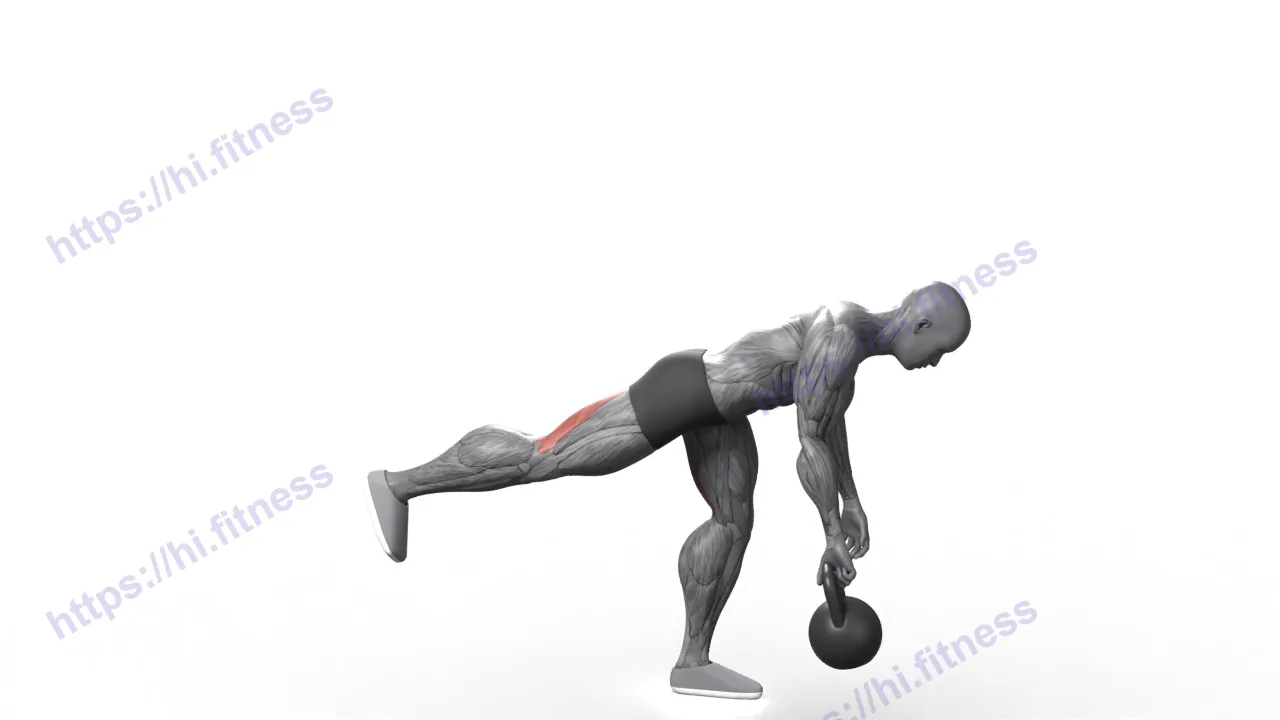
Kettlebell Single-Leg Romanian Deadlift
Hamstrings · Kettlebell
- 5s
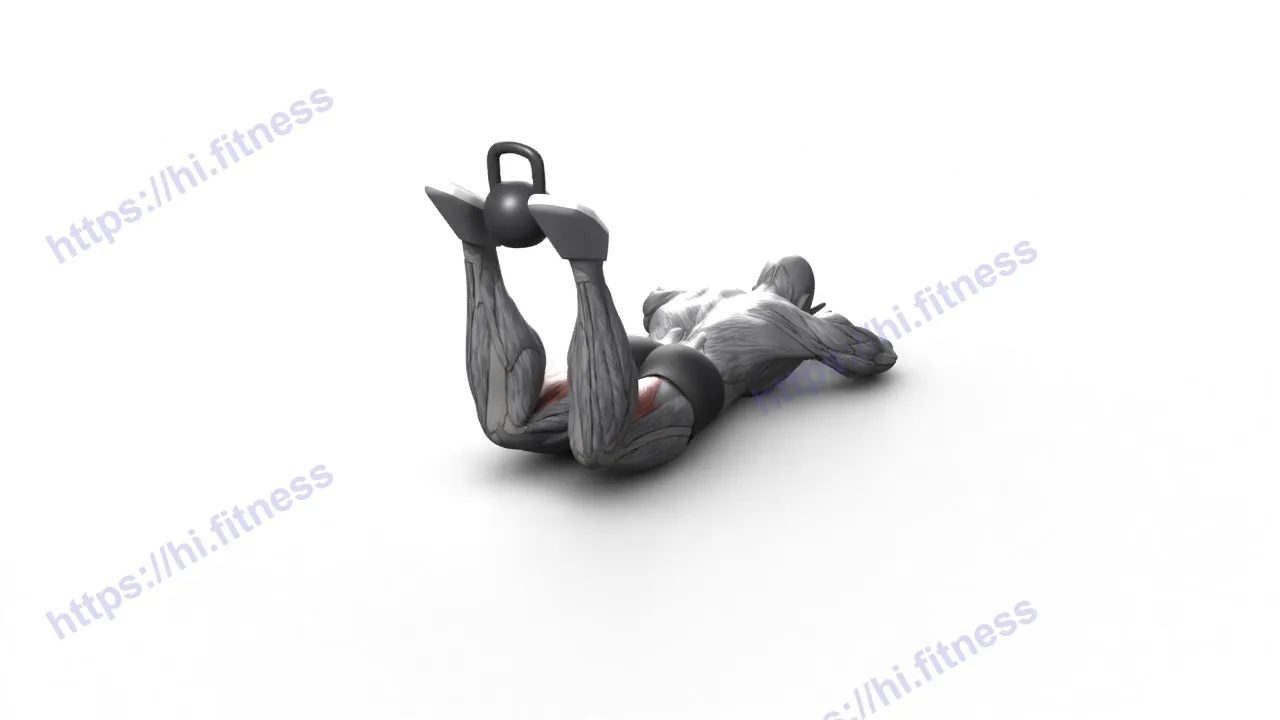
Kettlebell Lying Hamstring Curl
Hamstrings · Kettlebell

Kettlebell Squats
Quads · Kettlebell
- 5s
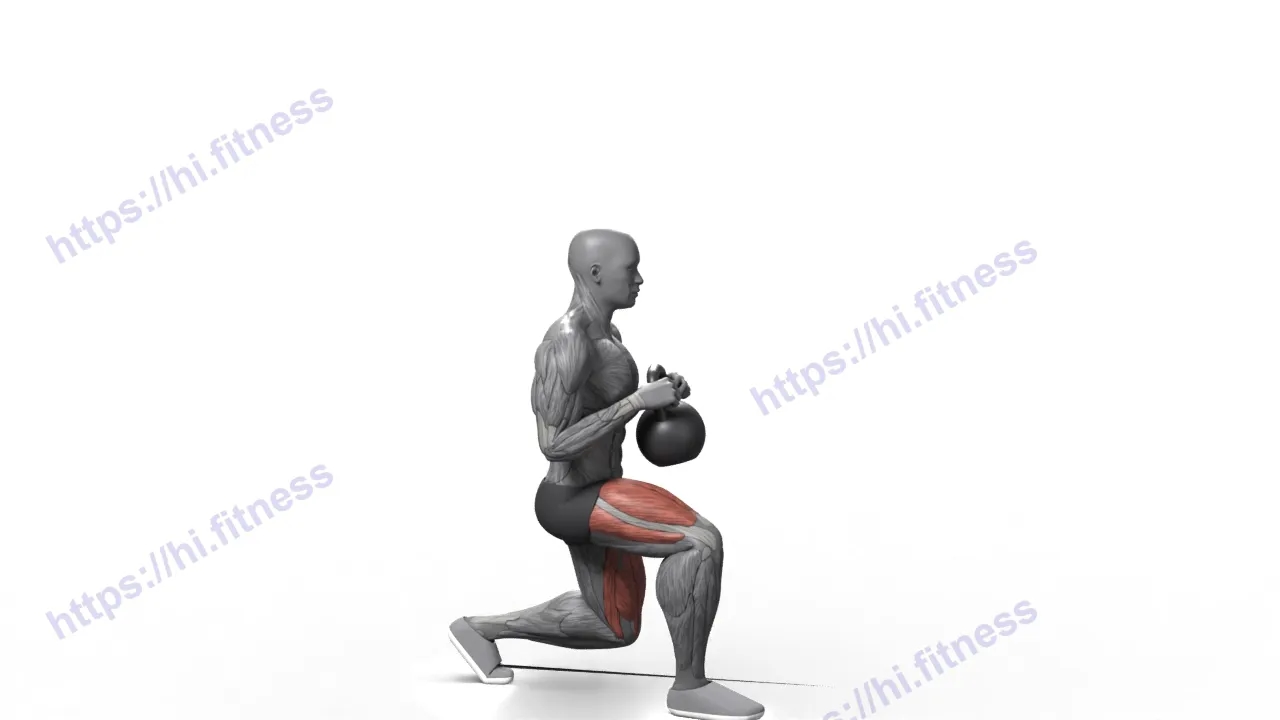
Kettlebell Goblet Reverse Lunge
Quads · Kettlebell
- 5s
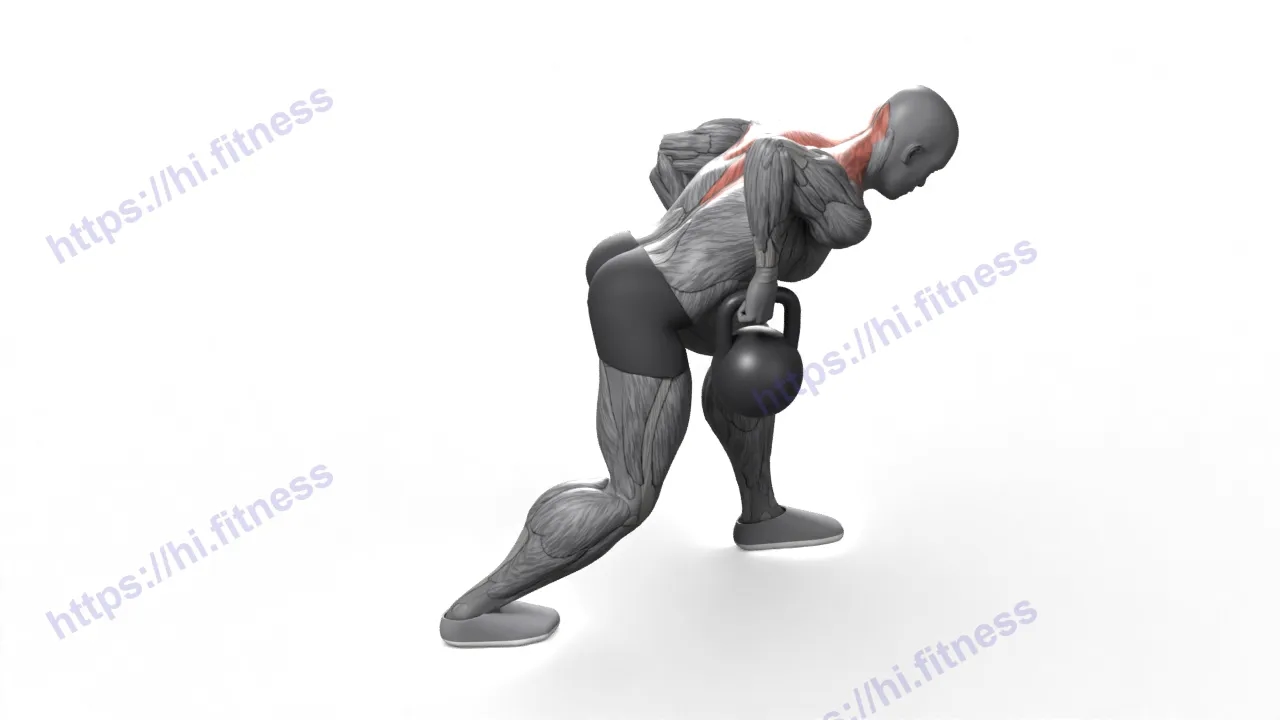
Kettlebell Single-Arm Row
Upper back · Kettlebell
- 5s
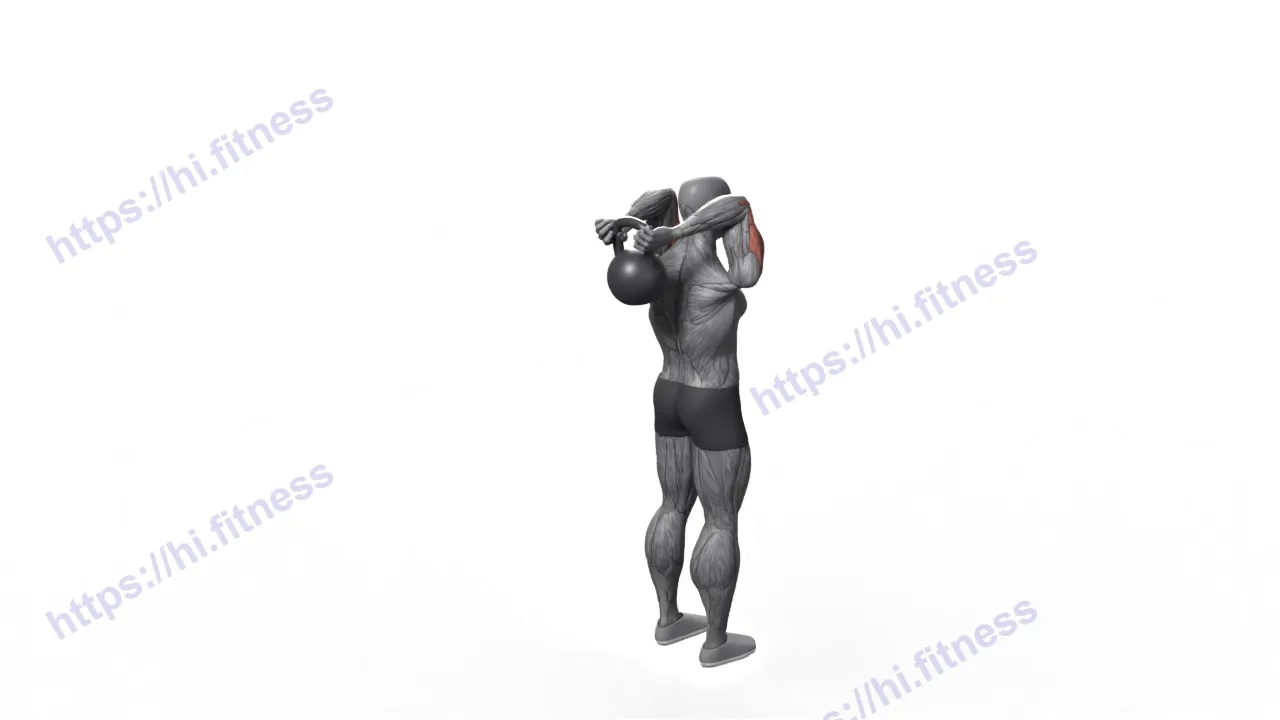
Kettlebell Overhead Triceps Extension
Triceps · Kettlebell
- 5s
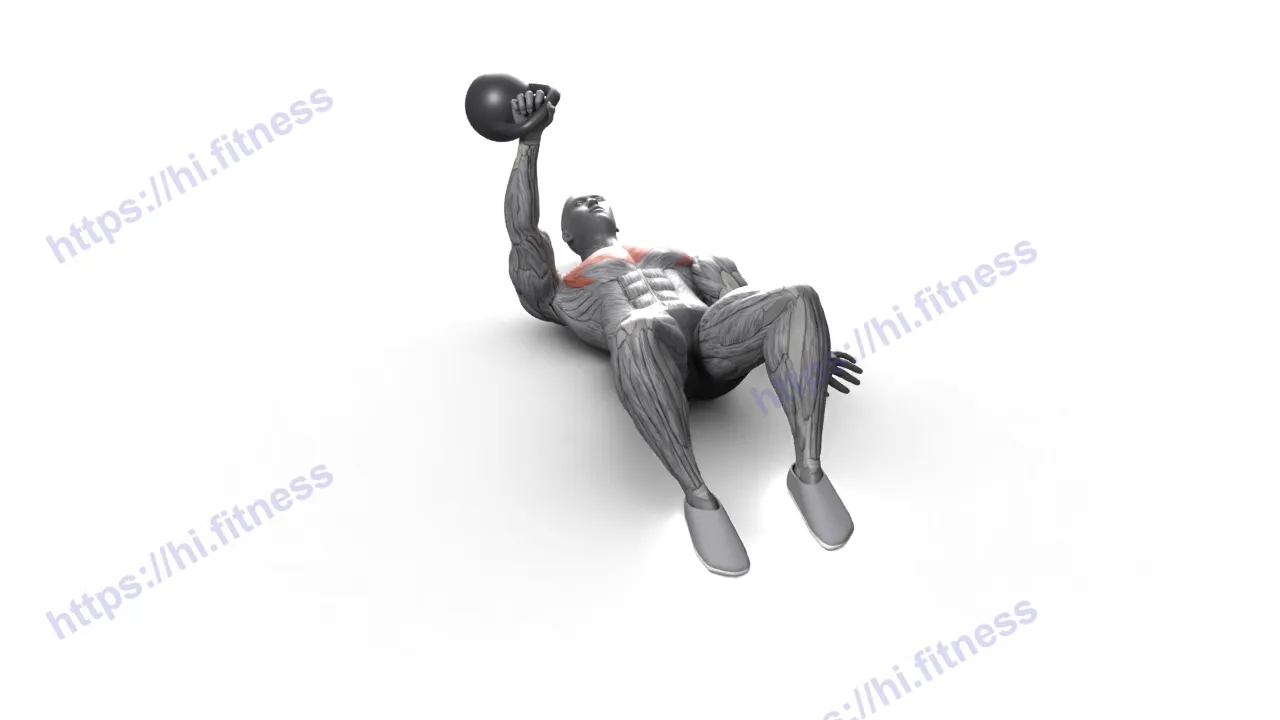
Kettlebell Single-Arm Floor Press
Mid chest · Kettlebell
- 5s
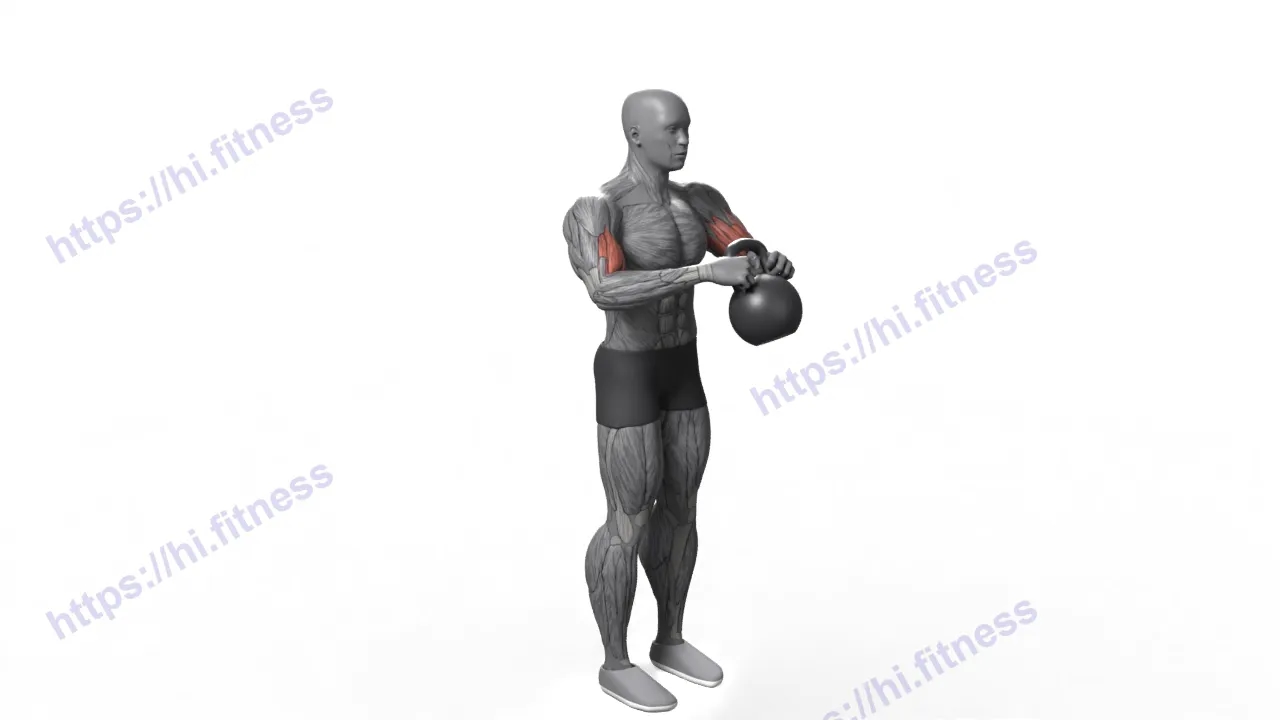
Kettlebell Biceps Curl
Biceps · Kettlebell
- 5s
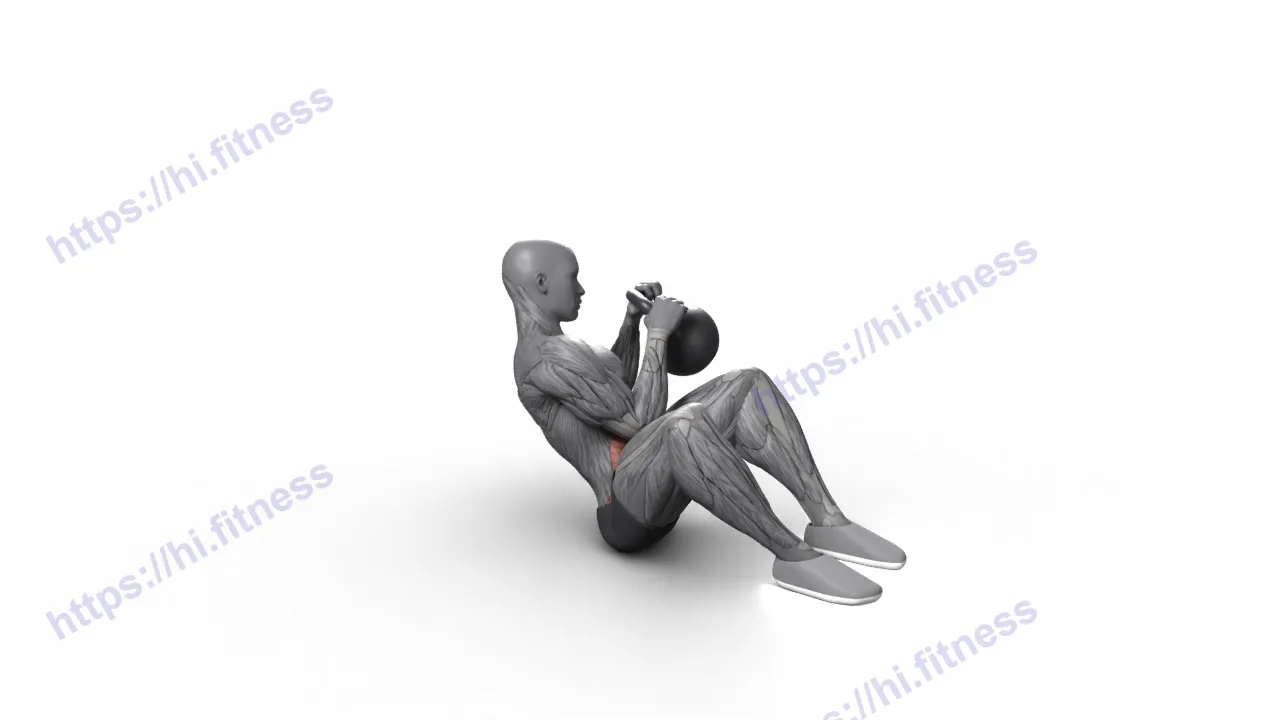
Kettlebell Russian Twist
Core · Kettlebell

Kettlebell Split Squat
Quads · Kettlebell
Training guide
About training Kettlebell exercises
Choose one movement, perform it well, then progress it over time.
What does a kettlebell do that a dumbbell does not?
The center of mass sits a dozen or so centimeters away from your hand and that is the entire difference. In a swing the weight hangs far from your grip, so once the bell has speed it pulls you into the hip hinge at the end of every rep. A dumbbell held vertically does not do that, because its mass sits too close to your hand to build a comparable arc.
In the rack position the same trait works in your favor: the bell rests against your forearm and you do not have to balance it with anything. The condition is a straight wrist. Overhead, the mass stays behind your hand, so the shoulder works in a different position than it does pressing a dumbbell, and a shaky grip shows up immediately.
In the goblet squat, holding the bell by the horns at chest height puts the weight in front of your torso, where it acts as a counterweight. For plenty of people that means going lower with a flat back than they can in a bodyweight squat, and that is usually the strongest argument for keeping one bell at home.
Which of these exercises really need a kettlebell?
Honestly: a minority. Squats, lunges, step-ups, deadlifts and most of the presses on this list you can do with a dumbbell almost identically. The kettlebell is more comfortable there, but it is not a requirement. If you own a set of dumbbells, what you lose without a bell is smaller than a separate category in the atlas suggests.
Four things are genuinely specific: the swing, the clean, the bottoms-up press and the seesaw press. Each one uses the fact that the mass sits outside your hand, and none of them reproduces sensibly with a dumbbell. If you are buying a single bell, those four plus the goblet squat decide whether it gets used.
And one bell covers more than you would think, because the same one can be held with both hands, with one hand, and bottoms up. Three completely different difficulty levels without buying more equipment is a more sensible first step than a set of three sizes.
Progress the movement
From two hands to one
A kettlebell has one handle you can hold with both hands or with one, and a dumbbell gives you no such option. The same bell in one hand is close to twice the load per side, plus the work your torso does to stop the tilt.
Same weight, harder grip
A bottoms-up press is clearly harder than a regular one, even though nothing changes on the scale. The whole difference sits in the grip and in stabilizing, so start lighter than you normally press.
A second bell instead of a heavier one
The gaps between kettlebell sizes can be large. Two matching bells in a thruster or a sumo deadlift add load in a smaller step, though they take away the anti-rotation work.
Explore further
Browse the exercise library
Browse by muscle
Upper chest·Mid chest·Lower chest·Lats·Upper back·Lower Back·Front delts·Side delts·Rear delts·Biceps·Triceps·Forearms·Quads·Hamstrings·Glutes·Calves·Core
Browse by equipment
Bodyweight·Dumbbell·Barbell·Bench·Other·Resistance band·Cable·Machine·Squat rack·Mat·Suspension trainer·Kettlebell·Stability ball·Cardio machine·Pull-up bar·Box·EZ bar·Ab wheel·Roman chair·Weight plate·Smith machine·Dip bars·Jump rope·Medicine ball·Trap bar
Browse by type
Workout tracker
Add this exercise to a workout and track your progress
Add it to a plan or to your current session, log sets, weight and reps, keep the instructions and tips at hand while you train, and check your previous results, records and volume.
- Plan - add this exercise to a workout
- Log - sets, weight and reps
- Progress - history, records and volume