Equipment
Pull-up bar exercises
A pull-up bar does one thing, and it does it better than anything else: pulls your body straight up against your full weight. There is no dial to turn that weight down, so for plenty of people the first rep is a training goal in itself - which is why the atlas lists band-assisted versions, foot-supported versions and lowering-only work here.
Dips on parallel bars sit under the same equipment, because at home and at the neighborhood gym they usually hang off the same frame. Dips are a pushing movement, so treat them as the counterweight to pull-ups, not as a variation of them.
Pull-up bar exercises by muscle group
Pick the muscle group you want to train and see which exercises cover it.

Exercise library
All Pull-up bar exercises
18 exercises
Hanging Knee Raises
Core · Pull-up bar

Pull Up Wide Grip
Lats · Pull-up bar

Chin Up
Lats · Pull-up bar

Dead Hang Stretch
Lats · Pull-up bar
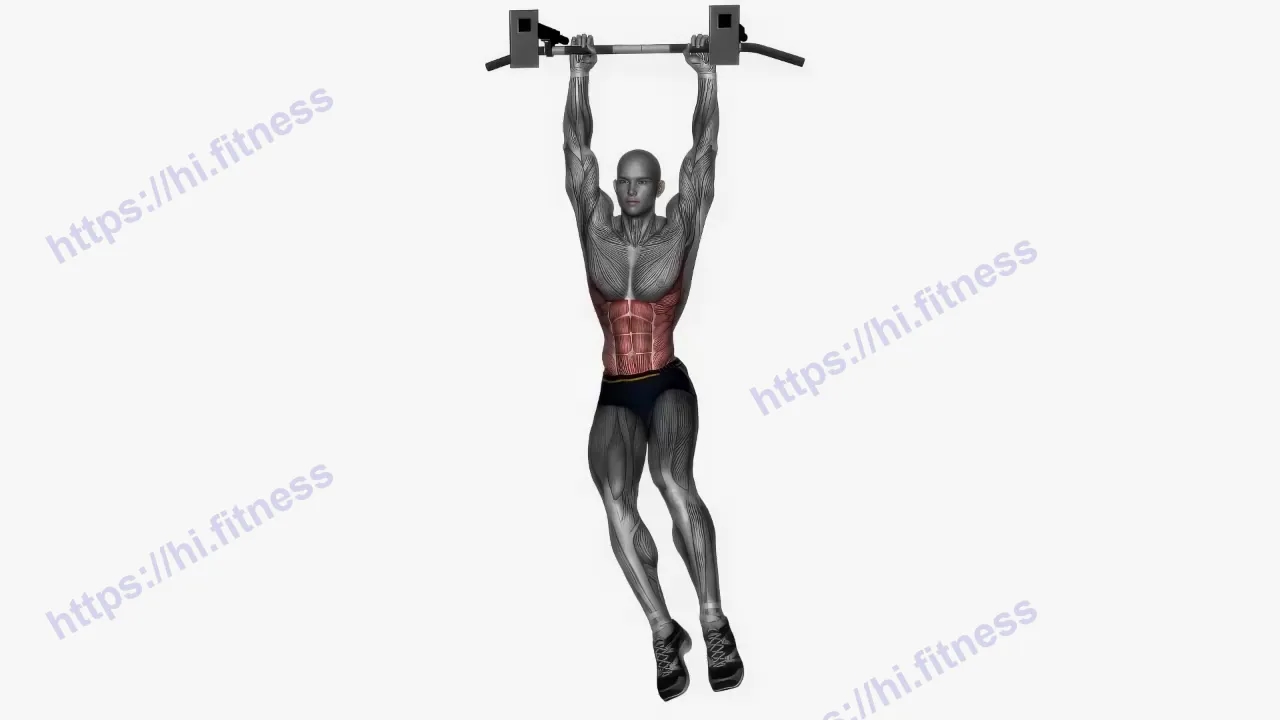
Hanging Oblique Crunches
Core · Pull-up bar

Band Assisted Chin Up (From Knee)
Lats · Pull-up bar

Close-reverse Grip Chin-up
Lats · Pull-up bar

Chin Ups (Narrow Parallel Grip)
Lats · Pull-up bar

Chin Up Reverse Wide Grip
Lats · Pull-up bar
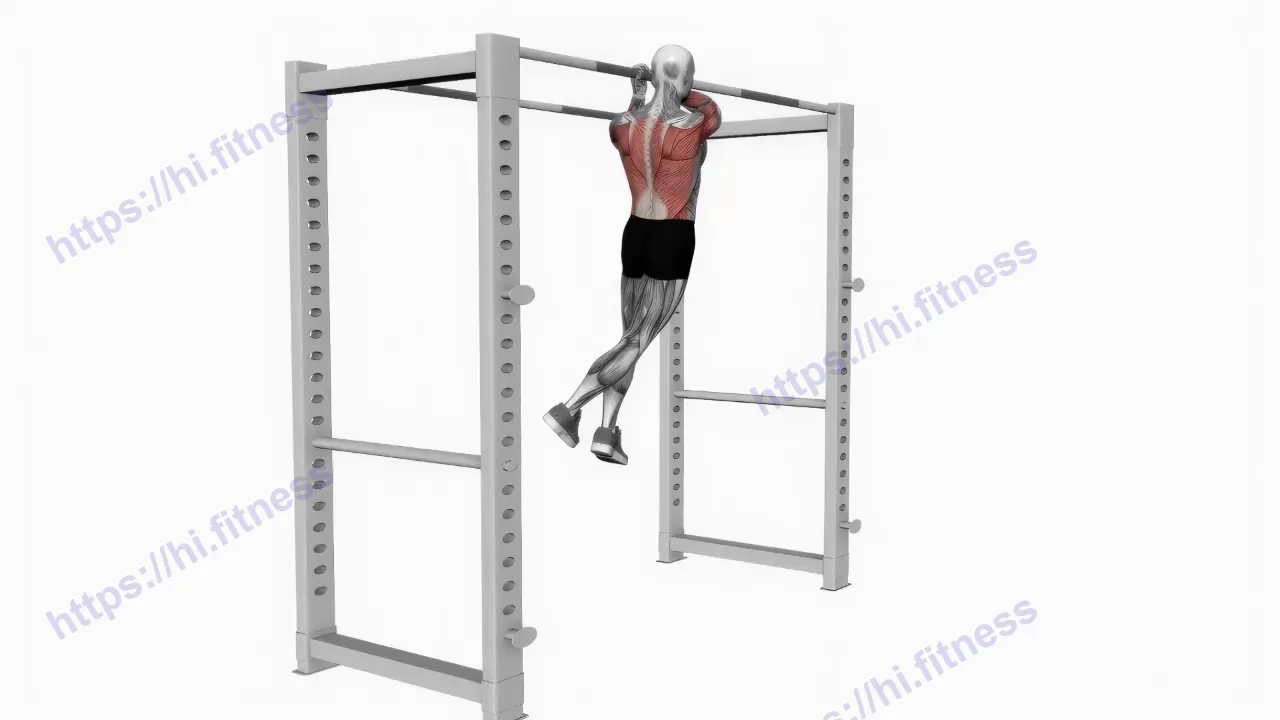
Commando Pull-up
Lats · Pull-up bar
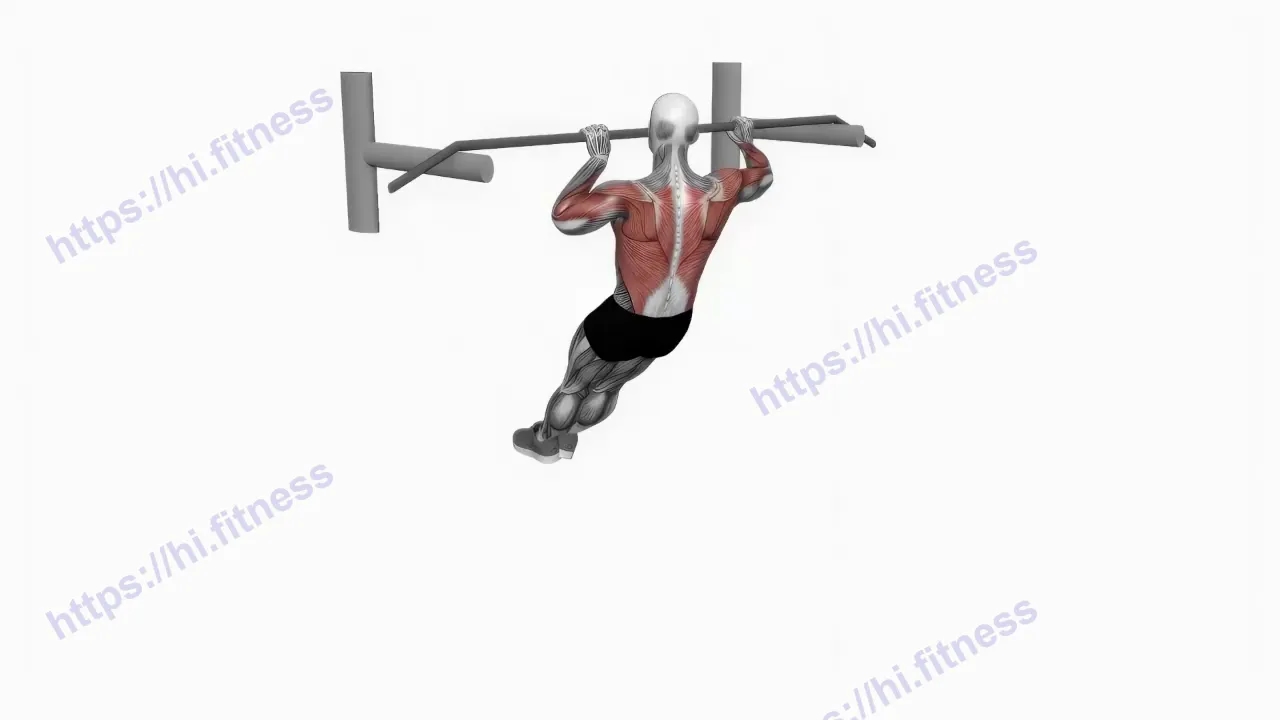
Archer Pull Up
Lats · Pull-up bar

Assisted Chin-up on a Bench
Lats · Pull-up bar
Training guide
About training Pull-up bar exercises
Choose one movement, perform it well, then progress it over time.
What do you do before your first rep?
The most common mistake is waiting. An assisted pull-up is not a substitute exercise - it is the same movement with part of the weight taken off, done through a full range from day one. The atlas carries three different ways to take that weight off: a band looped over the bar, a foot resting on a bench, and a version where you help yourself with a leg from a step. Each of them lets you train the exact pattern you are trying to own.
Negatives are their own category. A muscle handles more load braking a movement than driving it, so a controlled lower from the top is doable well before a full pull-up is. The description of that variation gives three to five seconds to reach a straight-arm hang and warns against hanging passively at the top - the pause is meant to be tight, not restful.
What both roads have in common: what counts is how many clean full-range reps you did, not how many times your chin cleared the bar thanks to your legs.
Wide, narrow or underhand?
The underhand grip is usually the easiest, because it puts the biceps in a good position where it genuinely helps. An overhand grip at shoulder width is the neutral option and the one most often described as the basic version. A wide grip shortens the distance you travel, but it also drives the shoulders further into external rotation and some people find it less comfortable. A narrow neutral grip is the compromise, and with a cranky elbow or wrist it often turns out to be the only one that feels fine.
Variations like commando pull-ups, archer pull-ups or the muscle-up are a different category: they add a shift of weight to one side or a dynamic transition over the bar. They make sense once the basic reps are clean and repeatable, not as a way around the fact that they are not yet.
Whatever the grip, one thing holds: the bar has to be mounted solidly. The catalog repeats that note on every variation and on the hanging stretch, because the whole setup carries your entire weight at a single point.
Progress the movement
Take some of the weight off
A band looped over the bar, a foot on a bench or an assist from a bench take off as much as you need to do the movement through a full range at all. A thicker band helps more.
Keep only the lowering
Jump to the top and lower yourself for 3 to 5 seconds. The atlas describes this as its own variation, because you can handle noticeably more on the way down than on the way up.
Add weight
Once clean full-range reps stop being a problem, the only variable left is a plate on a belt or a weight vest. The same road applies to dips, which already have a weighted version in the atlas.
Explore further
Browse the exercise library
Browse by muscle
Upper chest·Mid chest·Lower chest·Lats·Upper back·Lower Back·Front delts·Side delts·Rear delts·Biceps·Triceps·Forearms·Quads·Hamstrings·Glutes·Calves·Core
Browse by equipment
Bodyweight·Dumbbell·Barbell·Bench·Other·Resistance band·Cable·Machine·Squat rack·Mat·Suspension trainer·Kettlebell·Stability ball·Cardio machine·Pull-up bar·Box·EZ bar·Ab wheel·Roman chair·Weight plate·Smith machine·Dip bars·Jump rope·Medicine ball·Trap bar
Browse by type
Workout tracker
Add this exercise to a workout and track your progress
Add it to a plan or to your current session, log sets, weight and reps, keep the instructions and tips at hand while you train, and check your previous results, records and volume.
- Plan - add this exercise to a workout
- Log - sets, weight and reps
- Progress - history, records and volume