Equipment
Stability ball exercises
A stability ball weighs nothing and cannot be loaded. What it does do is two things the floor does not: it rolls under you, so your support moves, and it is round, so your torso can arch over it in a way a mat will never allow.
That shapes the list. A good part of it is stretching - back, lats, chest - because those are the positions where the shape of the ball earns its keep. The rest is a handful of movements where the rolling itself is the whole exercise, plus squats, where the ball is either something to slide along the wall or something to hold pinned at your side.
Stability ball exercises by muscle group
Pick the muscle group you want to train and see which exercises cover it.
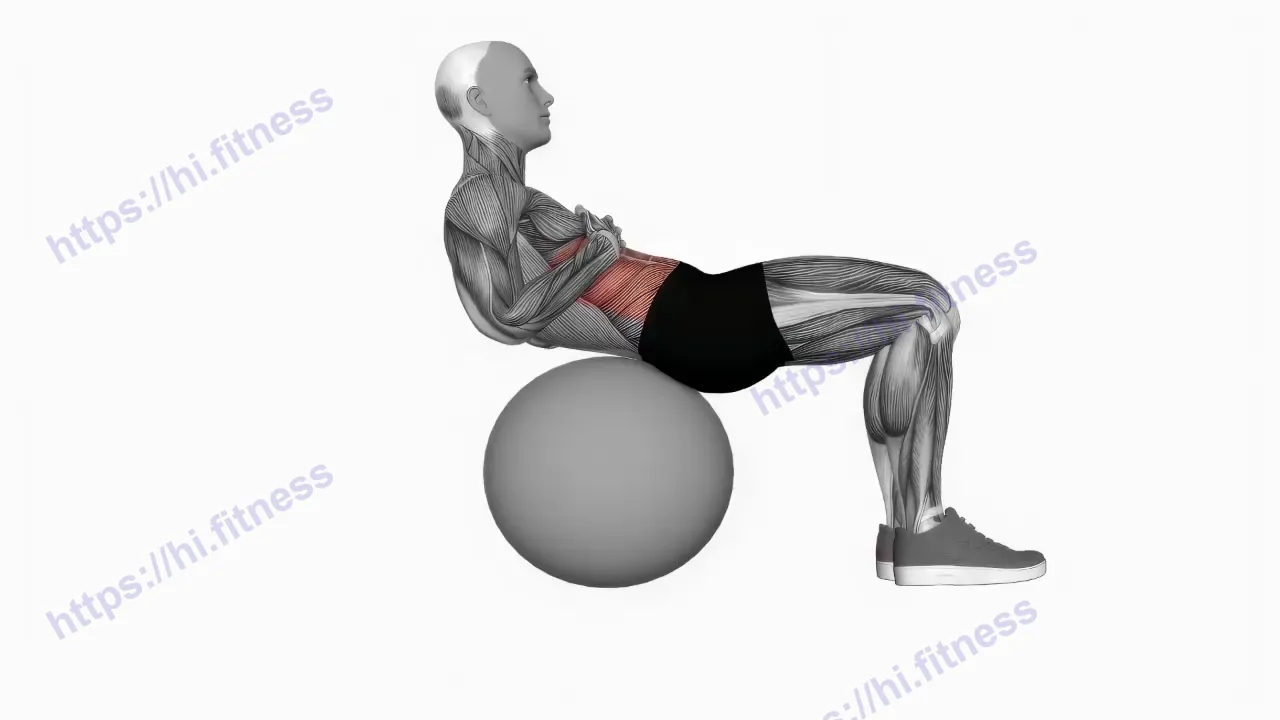 Sit-ups, body saws and twistsLower Back4
 Back extensions and stretchingQuads4
 Wall squats and squats with the ball
More muscle groupsHamstrings 3·Lats 3·Biceps 2
Exercise library
All Stability ball exercises
28 exercisesFilters
Filters
Muscle group
Training type

Exercise Ball Back Stretch
Lower Back · Stability ball

Exercise Ball Lower Back Dynamic Stretch
Lower Back · Stability ball

Exercise Ball Lower Back Prone Stretch
Lower Back · Stability ball

Exercise Ball One Legged Diagonal Kick Hamstring Curl
Hamstrings · Stability ball
Crunch (On Stability Ball)
Core · Stability ball
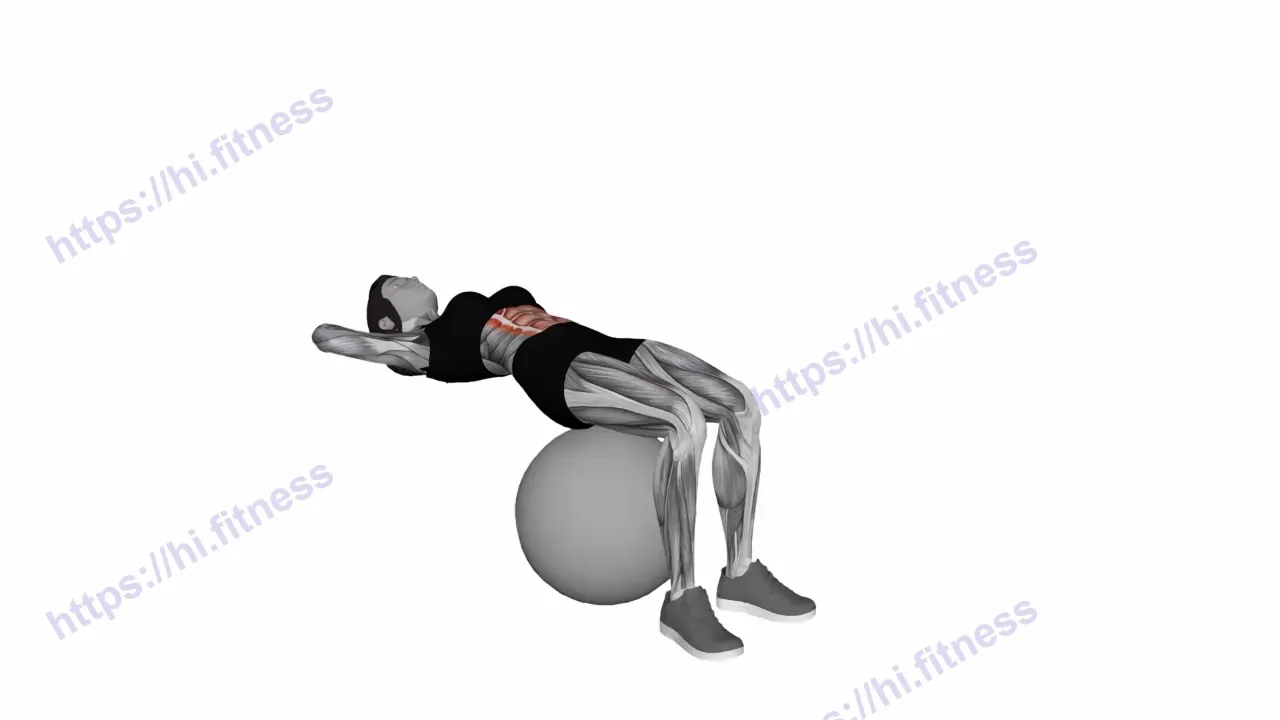
Ball Sit-up
Core · Stability ball
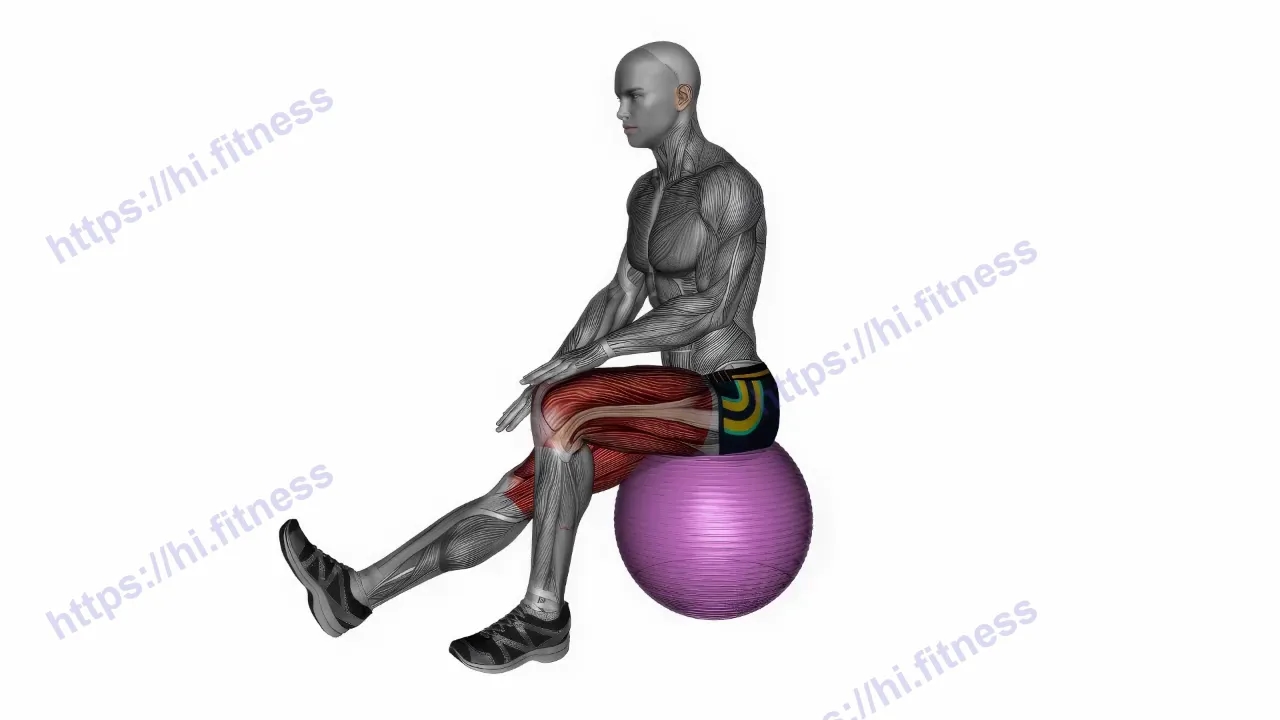
Exercise Ball Seated Hamstring Stretch
Hamstrings · Stability ball
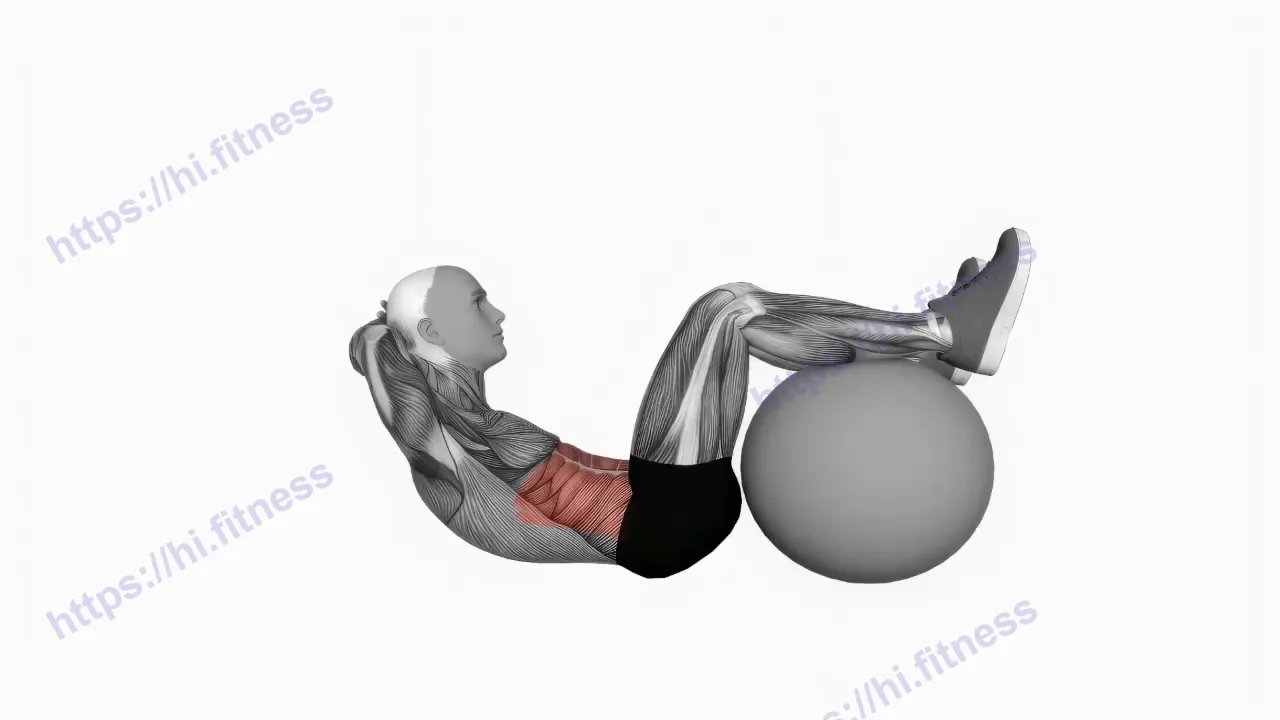
Crunch (Legs on Stability Ball)
Core · Stability ball
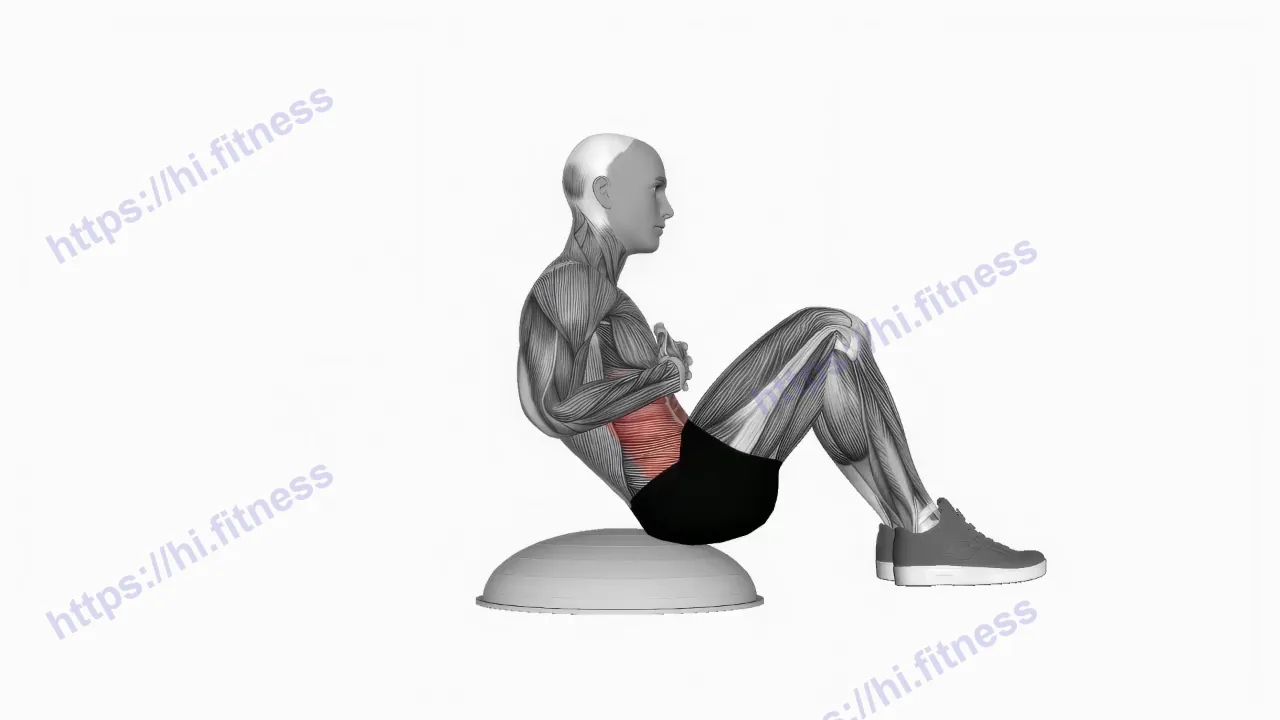
Crunch (On BOSU Ball)
Core · Stability ball
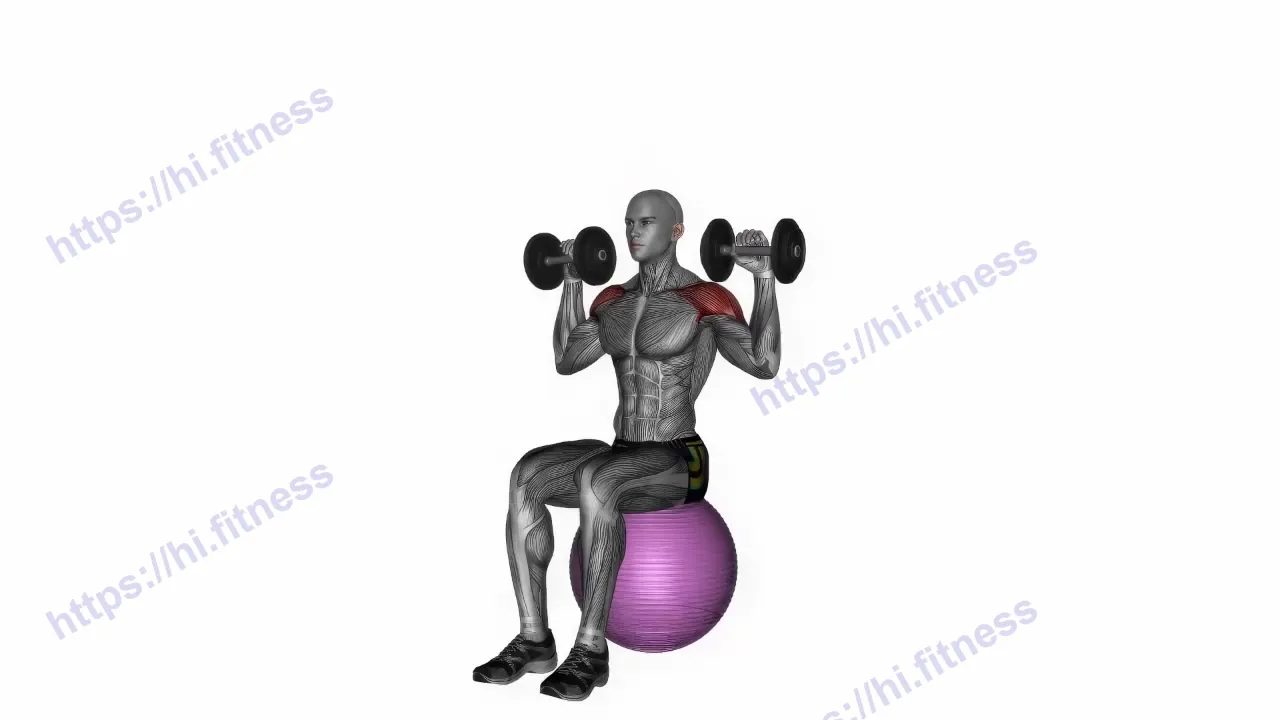
Dumbbell Seated on Exercise Ball Shoulder Press
Front delts · Dumbbell

Resistance Band Reverse Hyper with Stability Ball on Flat Bench
Glutes · Resistance band
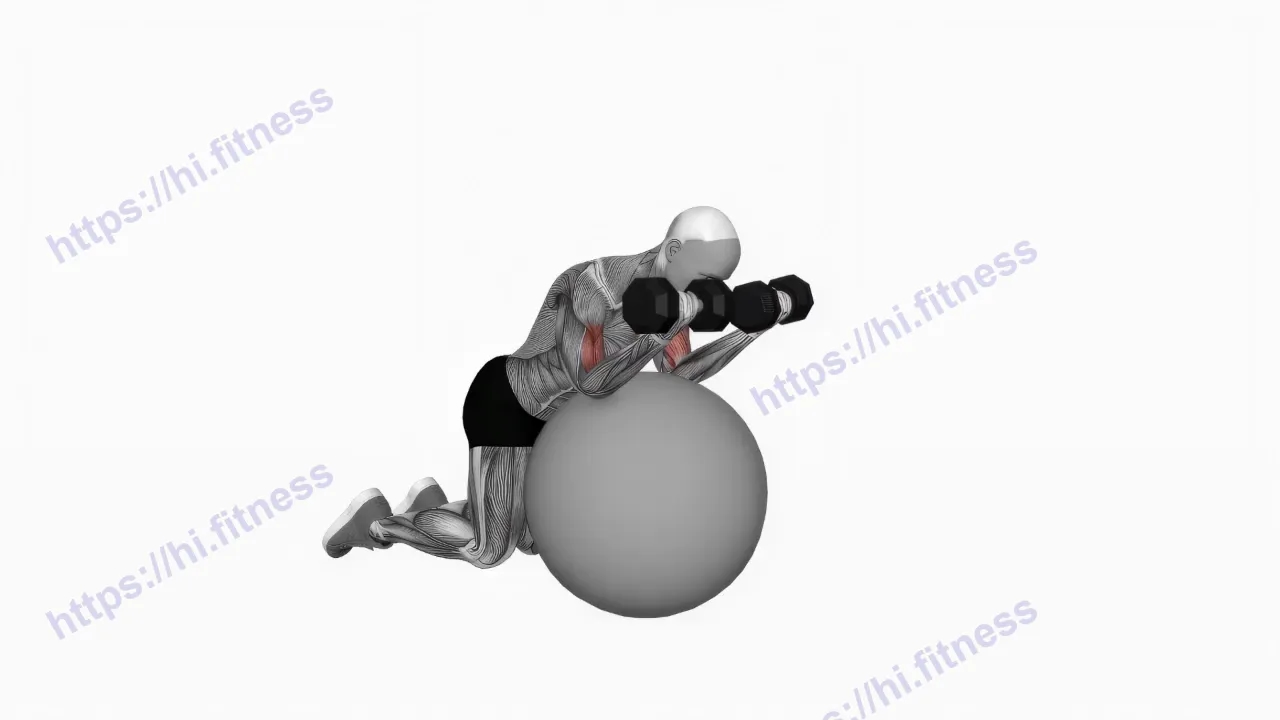
Dumbbell Preacher Curl Over Exercise Ball
Biceps · Dumbbell
Training guide
About training Stability ball exercises
Choose one movement, perform it well, then progress it over time.
Why would you want a support that moves?
Because it gives you a movement that otherwise does not exist. The leg curl is the best example: the hamstrings bend the knee, and to load that without a machine something under your heels has to move. The ball rolls, so the knee has something to bend against while you hold your hips up the whole time - that one exercise justifies buying a ball better than the rest of the list put together.
The same property turns a plank from a position you endure into a movement. In the body saw you push the ball a few centimeters away with your forearms and come back; the further it travels, the longer the lever working on your torso. The floor cannot do that, because there is no way to glide smoothly along it.
You pay for that freedom in stability. The ball escapes in every direction, so part of the effort goes into holding the position rather than into the muscle. For stretching and for trunk work that is a price worth paying. Under heavy loads there is no reason to pay it, which is why the ball does not show up on the lists where the point is moving weight.
Why is so much of this stretching?
Because in a stretch the ball is using its shape, not its mobility. Lie back over it and your torso settles into an arch you cannot get on a mat without propping something under your spine. The chest opens wider, and for the lats you only have to roll the ball forward with one hand to get the arm higher than a plain bend-over would. That same roundness is why back extensions cover more range here: your stomach rests on the ball, so the torso drops lower than a bench would let it.
Worth saying plainly: the ball replaces nothing. It is not a load, so it displaces neither the barbell nor the dumbbells - it is an add-on for trunk work and the cheapest way to stretch your back decently at home. You will also find one exercise on this list that is done on a balance board. It is here because it solves exactly the same problem: it deliberately takes away solid ground and asks you to hold the position anyway.
Progress the movement
Move the point of support
The further the ball sits from the middle of your body, the harder it gets. On leg curls, supporting under the calves is easier than under the heels alone, and the distance you have to cover stays the same.
Roll out further
On the plank body saw, difficulty is measured in reach, not in reps. A few centimeters further forward changes the exercise more than an extra set does.
Pause where the ball wants to get away
The hardest point is the far end of the roll-out, because that is where the lever is longest. A one-second hold there can be tougher than several extra reps.
Explore further
Browse the exercise library
Browse by muscle
Upper chest·Mid chest·Lower chest·Lats·Upper back·Lower Back·Front delts·Side delts·Rear delts·Biceps·Triceps·Forearms·Quads·Hamstrings·Glutes·Calves·Core
Browse by equipment
Bodyweight·Dumbbell·Barbell·Bench·Other·Resistance band·Cable·Machine·Squat rack·Mat·Suspension trainer·Kettlebell·Stability ball·Cardio machine·Pull-up bar·Box·EZ bar·Ab wheel·Roman chair·Weight plate·Smith machine·Dip bars·Jump rope·Medicine ball·Trap bar
Browse by type
Workout tracker
Add this exercise to a workout and track your progress
Add it to a plan or to your current session, log sets, weight and reps, keep the instructions and tips at hand while you train, and check your previous results, records and volume.
- Plan - add this exercise to a workout
- Log - sets, weight and reps
- Progress - history, records and volume