Muscle group
Lower back exercises
The lower back means the spinal erectors - the columns running along the spine that straighten the torso and keep it in one line when you hinge at the hips. Hence two kinds of exercise: the ones where you actually perform that extension (hyperextensions, the superman), and the ones where the erectors only hold position under load (good mornings, trap bar deadlifts).
A good part of this list, though, is stretching and mobility work: cat-cow, child's pose, hanging from a bar. It reads as one list but it answers two different questions, so it helps to know which one you came with. If your back hurts, the atlas will not settle that - pain is a question for a doctor or a physiotherapist, not for a list of exercises.
Lower back exercises by equipment
Choose the equipment available to you and find exercises that suit your setup.
 Mobility work on the matBodyweight5
 Superman and floor versionsStability ball5
 Extensions and stretches on a ball
More equipmentRoman chair 4·Barbell 3·Resistance band 3
Exercise library
All Lower back exercises
30 exercisesFilters
Filters
Equipment
Training type
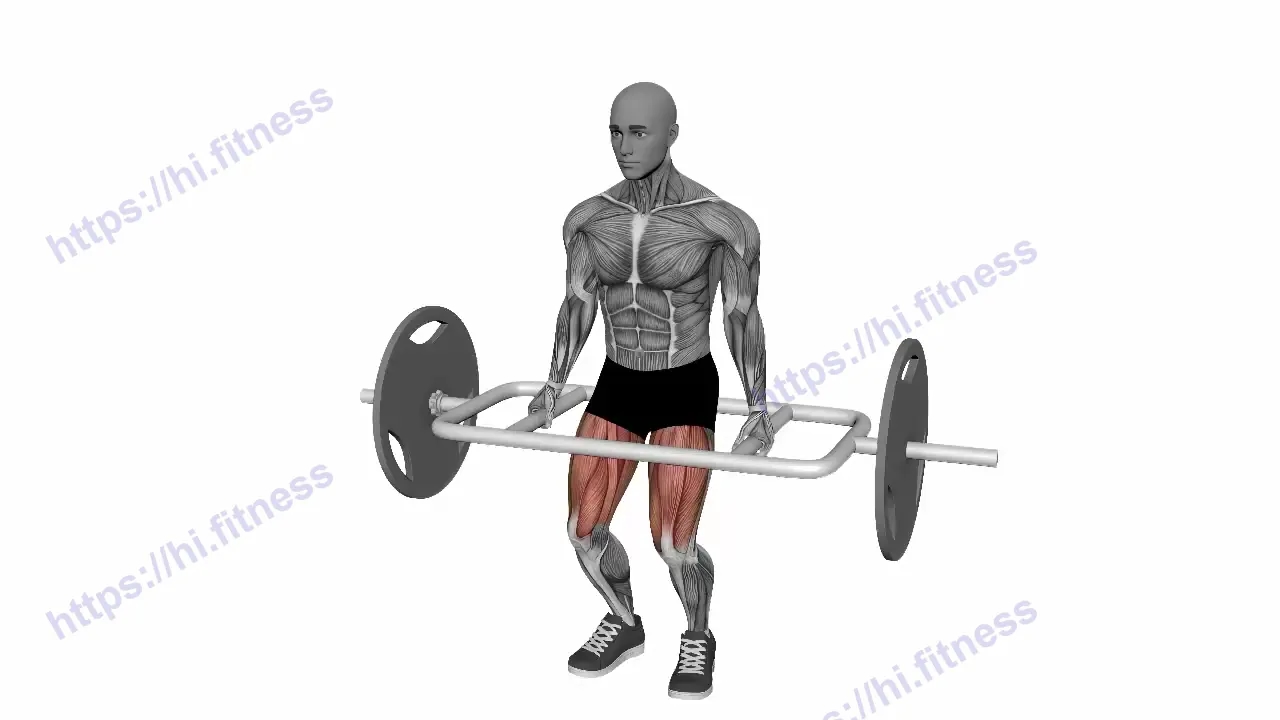
Trap Bar Deadlift
Lower Back · Barbell

45 Degree Hyperextension (Arms in Front of Chest)
Lower Back · Roman chair

Back Extension Machine
Lower Back · Roman chair

Good Mornings Dumbbells
Lower Back · Dumbbell

Good Mornings Kettlebell
Lower Back · Kettlebell

Barbell Seated Good Morning
Lower Back · Barbell

Lying Back Extension
Lower Back · Bodyweight

45 Degree Twisting Hyperextension
Lower Back · Roman chair
Back Extension on Exercise Ball
Lower Back · Stability ball

Superman Holds
Lower Back · Bodyweight

Exercise Ball Back Extension with Hands Behind Head
Lower Back · Stability ball

Resistance Band Floor Hyperextension
Lower Back · Resistance band
Training guide
About training Lower back exercises
Choose one movement, perform it well, then progress it over time.
Training or stretching?
The list splits into two parts that do completely different jobs. Hyperextensions, the superman and the machine back extension are muscle work: the torso rises from flexion to a straight line against the weight of your upper body, sometimes with extra load added. Good mornings and trap bar deadlifts go a step further, because there the erectors never shorten at all - they hold the spine in one line while the hips do the moving.
The second part is cat-cow, child's pose, knee-to-chest pulls, hanging from a bar and the versions over a stability ball. They do not load the muscle and they do not replace the first group. They sit under the same muscle because they concern the same area, not because they are the same kind of exercise.
The equipment filter separates them faster than reading names does. Barbell, bench and kettlebell lead to the first group, the mat to the second, and the stability ball lands in both at once.
Do you train the lower back separately?
The spinal erectors work in almost every heavy movement where the torso is not supported: deadlifts, squats, bent-over rows, every version of the hip hinge. Keeping the back flat under load is their job, not a side effect - the catalog brings it back as a cue on each of those exercises.
Separate work adds what is missing there: movement through a full range instead of holding one position. Hyperextensions and the superman take the torso from flexion to extension with no weight in your hands, so the load is small and you have full control of the tempo. The stability ball version adds an unstable base on top of that, which makes the same movement noticeably harder.
How much of it you need depends on the rest of the week. Two heavy hinge sessions back to back load the same segment twice in a row, so spacing them out is sometimes the only decision you actually have to make here.
Explore further
Browse the exercise library
Browse by muscle
Upper chest·Mid chest·Lower chest·Lats·Upper back·Lower Back·Front delts·Side delts·Rear delts·Biceps·Triceps·Forearms·Quads·Hamstrings·Glutes·Calves·Core
Browse by equipment
Bodyweight·Dumbbell·Bench·Barbell·Resistance band·Cable·Machine·Squat rack·Other·Mat·Box·Suspension trainer·Stability ball·Kettlebell·Cardio machine·Pull-up bar·EZ bar·Ab wheel·Weight plate·Roman chair·Smith machine·Dip bars·Jump rope·Medicine ball
Browse by type
Add this exercise to a workout and track your progress
Add it to a plan or to your current session, log sets, weight and reps, keep the instructions and tips at hand while you train, and check your previous results, records and volume.
- Plan - add this exercise to a workout
- Log - sets, weight and reps
- Progress - history, records and volume