Equipment
Box exercises
A box weighs nothing and has exactly one variable: height. It does one job - it lifts one end of your body off the floor. Whether that makes a movement harder or easier depends entirely on which end you lift.
The backbone of this list is the feet-elevated glute bridge in its variations: both legs, single leg, staggered feet and the figure-four position. Beyond that there are lateral step-ups, an assisted Bulgarian split squat and push-ups with the hands up on the box. Narrow, but nothing on it is filler.
Box exercises by muscle group
Pick the muscle group you want to train and see which exercises cover it.

More muscle groupsFront delts 4·Lower chest 2·Lats 1
Exercise library
All Box exercises
39 exercisesFilters
Filters
Training type
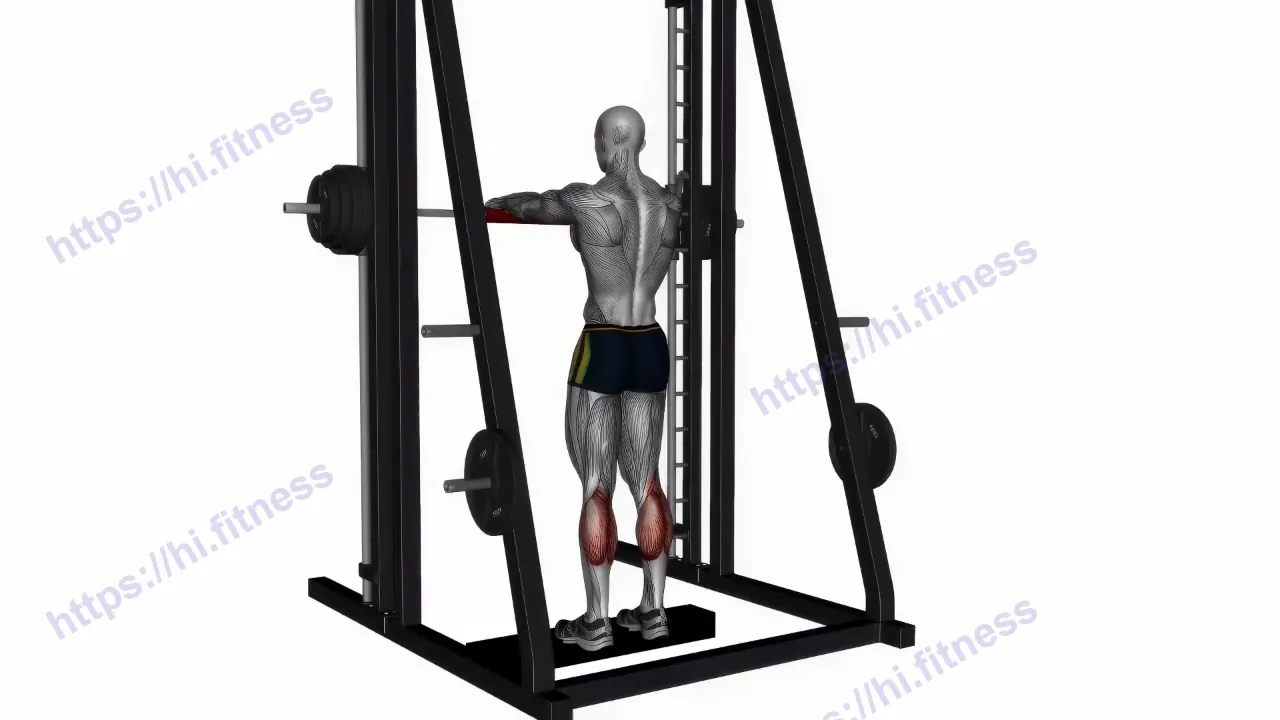
Standing Calf Raises Smith Machine
Calves · Smith machine

Barbell Standing Leg Calf Raises
Calves · Barbell

Elevated Standing Calf Raise
Calves · Box

Donkey Calf Raise
Calves · Box

Dumbbell Standing Calf Raise on Step
Calves · Dumbbell

Barbell Box Squat
Quads · Barbell
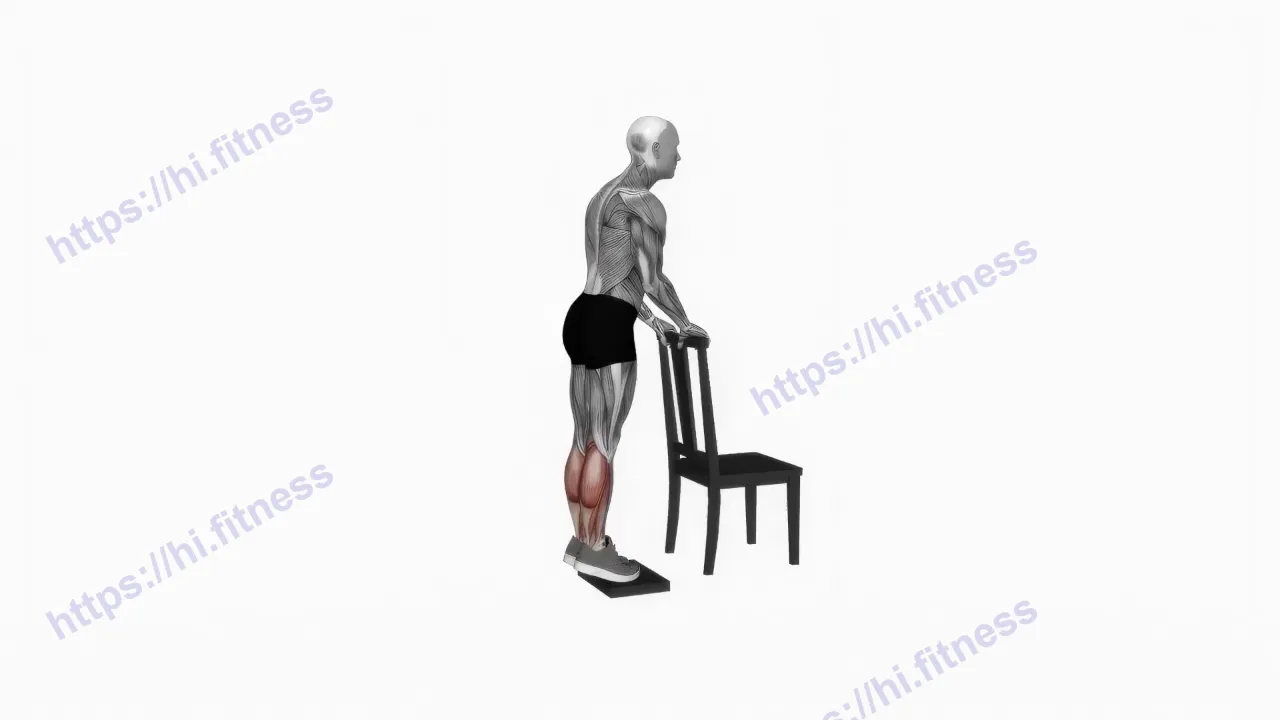
Calf Raise from Deficit with Chair Supported
Calves · Box

Calves Stretch on Stairs
Calves · Box

Box Jump
Quads · Box

Dumbbell Feet Elevated Glute Bridge
Glutes · Dumbbell

Barbell Feet Elevated Single Leg Glute Bridge
Glutes · Barbell

Dumbbell Feet Elevated Single Leg Glute Bridge
Glutes · Dumbbell
Training guide
About training Box exercises
Choose one movement, perform it well, then progress it over time.
Which end are you lifting?
Feet up, harder. In a glute bridge, elevated feet start your hips lower and give them a longer way to travel, so the glutes work through more range. The staggered, figure-four and single-leg setups go further still: they move that whole distance onto one side and leave it there.
Hands up, easier. With your hands on the box the torso sits on an incline, so your arms carry a smaller share of your bodyweight. It is the simplest way to get your first push-ups through a full range instead of half reps off the floor.
Back foot up, a different story. In a Bulgarian split squat the box neither adds nor removes load, it takes away the back leg's ability to help. All the work stays on the front leg, and the hand on the support is there purely to keep you balanced.
Why are box jumps somewhere else?
You will not find box jumps on this list, though they are in the atlas. They sit under bodyweight, because what decides that movement is the jump itself and the box is only what you land on - swap it for a stair or a low wall and the jump does not change. Barbell step-ups sit under barbell for the same reason. What is collected here are the exercises where the platform decides how the movement looks.
The line between a box and a bench is a convention anyway. The barbell lateral step-up shows up on both lists, because the exercise does not care what you step onto as long as the height is right. The only thing that really matters is whether the platform holds the load and stays put through the set. Check that before you stand on it with a bar on your back.
Progress the movement
Height is the dial here
The box has one variable and it is the one that sets difficulty. On bridges and step-ups higher means harder; with your hands on the box for push-ups it is exactly the reverse: the lower you go, the closer you are to a full push-up from the floor.
Move one step at a time
Going straight from a low step to a tall box can be a big jump. If you have several heights available, the next one is the nearest, not the tallest.
Load comes last
Once height stops being a useful variable, the same list holds bridges with a barbell and with a dumbbell. They take over at the point where the box has done what it can.
Explore further
Browse the exercise library
Browse by muscle
Upper chest·Mid chest·Lower chest·Lats·Upper back·Lower Back·Front delts·Side delts·Rear delts·Biceps·Triceps·Forearms·Quads·Hamstrings·Glutes·Calves·Core
Browse by equipment
Bodyweight·Dumbbell·Bench·Barbell·Resistance band·Cable·Machine·Squat rack·Other·Mat·Box·Suspension trainer·Stability ball·Kettlebell·Cardio machine·Pull-up bar·EZ bar·Ab wheel·Weight plate·Roman chair·Smith machine·Dip bars·Jump rope·Medicine ball
Browse by type
Add this exercise to a workout and track your progress
Add it to a plan or to your current session, log sets, weight and reps, keep the instructions and tips at hand while you train, and check your previous results, records and volume.
- Plan - add this exercise to a workout
- Log - sets, weight and reps
- Progress - history, records and volume