Equipment
Dumbbell exercises
Dumbbells give you what a barbell cannot: each side works on its own, so the stronger arm never covers for the weaker one. Your wrists and shoulders also get more freedom, which for a lot of people means less discomfort when pressing.
The atlas covers dumbbell work for every muscle group: presses, rows, curls, deadlifts and lunges. If space is tight, this is the most versatile equipment you can own.
Dumbbell exercises by muscle group
Pick the muscle group you want to train and see which exercises cover it.


More muscle groupsCore 20·Mid chest 16·Triceps 16
Exercise library
All Dumbbell exercises
41 exercisesFilters
Filters
Clear filtersMuscle group
Training type
41 exercises

Dumbbell Goblet Squat
Quads · Dumbbell

Dumbbell Bulgarian Split Squat
Quads · Dumbbell
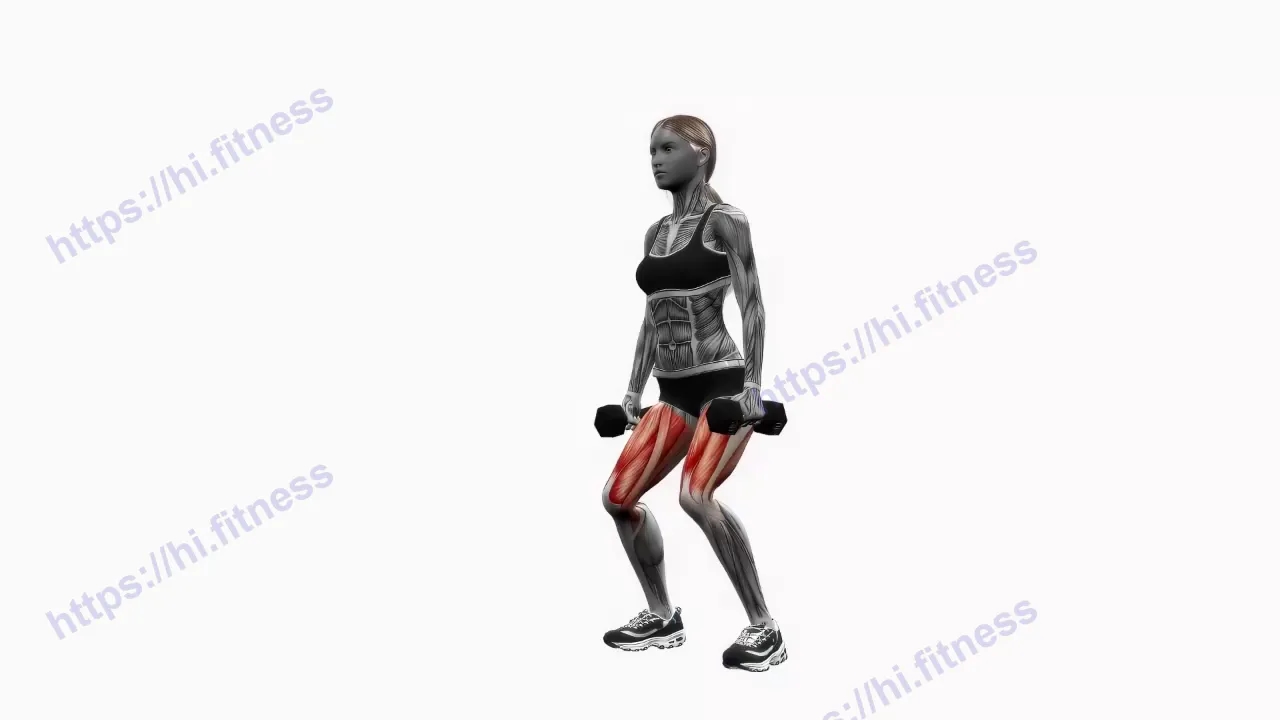
Dumbbell Squats
Quads · Dumbbell

Dumbbell Rear Lunge
Quads · Dumbbell

Dumbbell Front Squat
Quads · Dumbbell

Dumbbell Step Up on Bench
Quads · Dumbbell
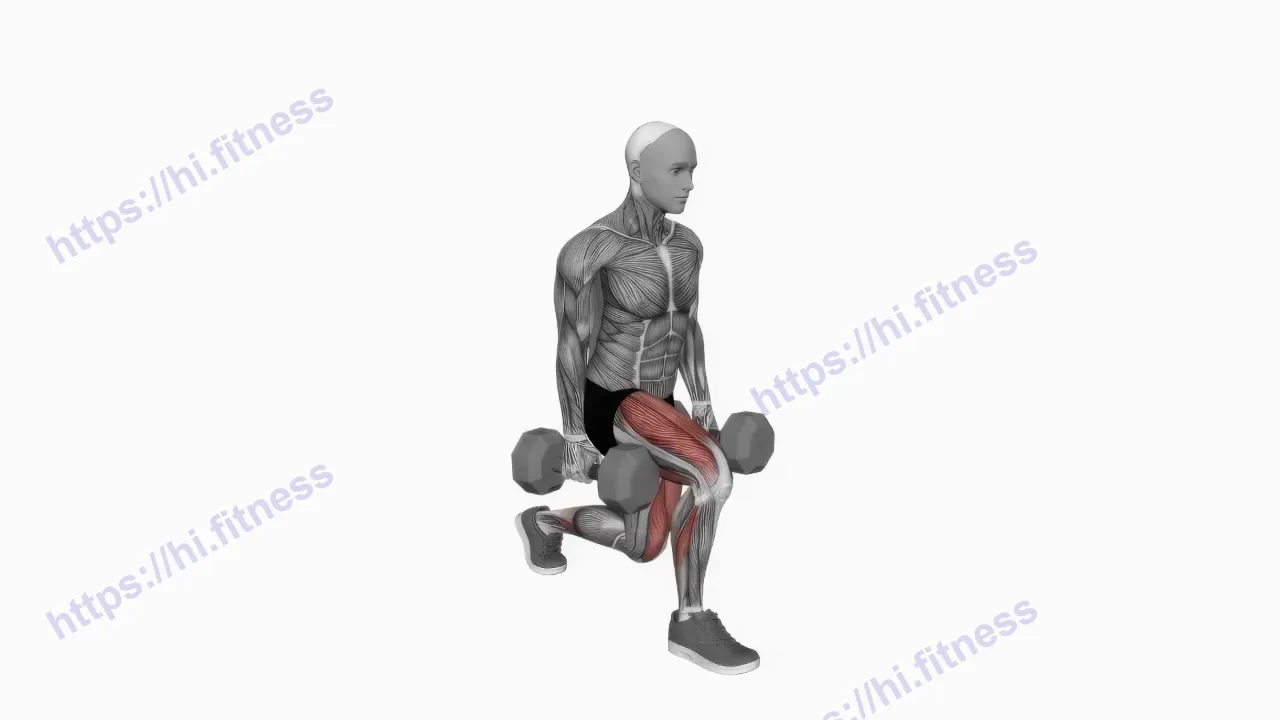
Dumbbell Split Squat
Quads · Dumbbell
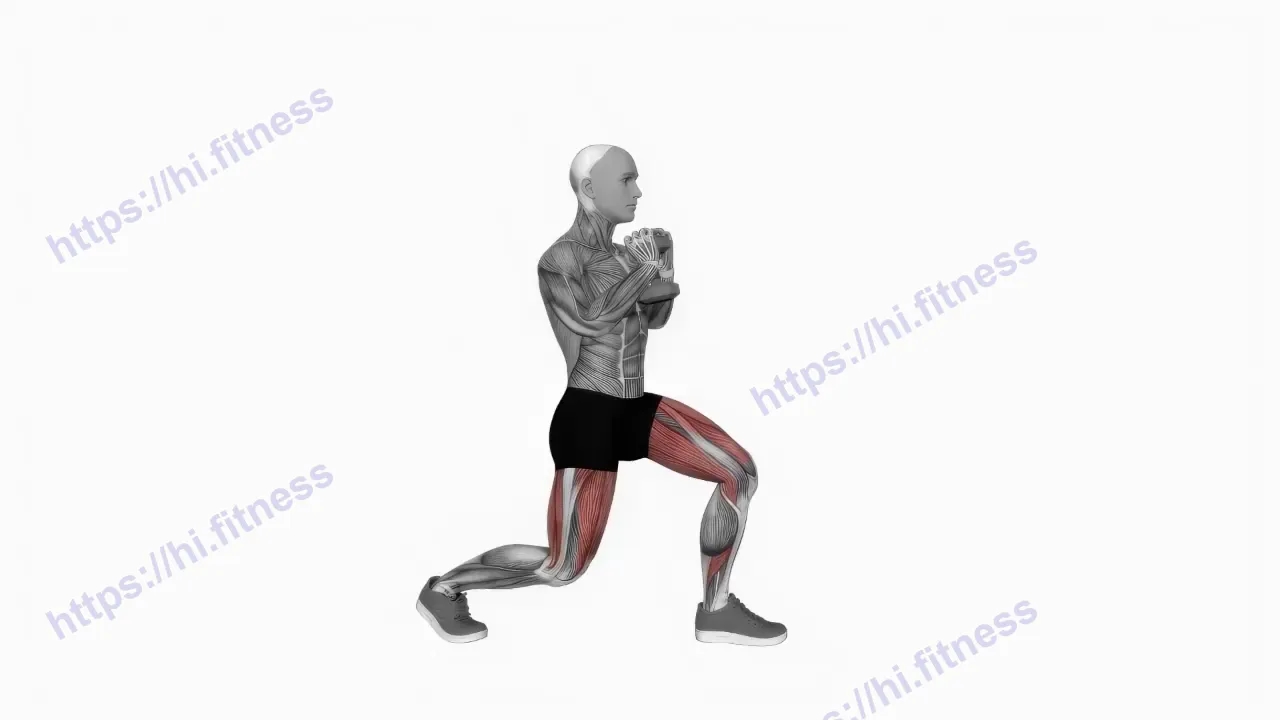
Dumbbell Goblet Split Squat
Quads · Dumbbell

Dumbbell Goblet Forward Lunge
Quads · Dumbbell

Dumbbell Sumo Squat Off Benches
Quads · Dumbbell

Dumbbell Lunge Alternating on the Spot
Quads · Dumbbell
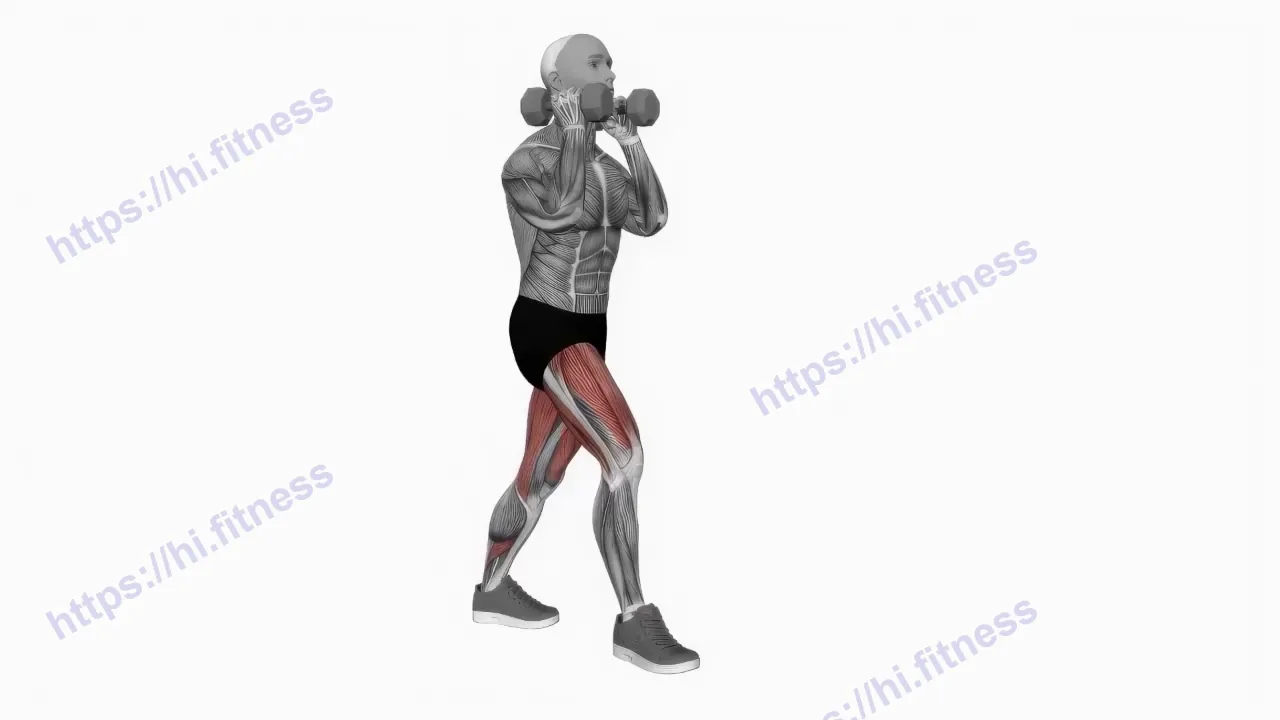
Dumbbell Front Rack Lunge
Quads · Dumbbell
Training guide
About training Dumbbell exercises
Choose one movement, perform it well, then progress it over time.
Dumbbells or a barbell?
A barbell moves more weight and makes progress easiest to measure, because you add a specific number of kilograms. Dumbbells even out side-to-side differences and give you more range, but once they get heavy, simply getting them into the start position becomes the problem. The combination works best: the heavy lift with a barbell, the rest of the work with dumbbells.
How many pairs do you need at home?
One pair of adjustable dumbbells replaces a whole rack and usually lasts a long time. If you are buying fixed ones, the sensible minimum is three pairs: light for shoulders and arms, medium for pressing and rowing, heavy for legs.
Progress the movement
Even out both arms
The same pair twice a week, both arms doing the number of reps the weaker one can manage.
Use up the rep range first
The jump between pairs is usually 2 kg per hand, which is a lot. Before you reach for it, hit the top of the range on every set.
Change the variant before the weight
Single-arm, on an incline bench, or with a slower lowering phase all raise the difficulty without waiting on a heavier pair - a way around a problem the barbell does not have.
Explore further
Browse the exercise library
Browse by muscle
Upper chest·Mid chest·Lower chest·Lats·Upper back·Lower Back·Front delts·Side delts·Rear delts·Biceps·Triceps·Forearms·Quads·Hamstrings·Glutes·Calves·Core
Browse by equipment
Bodyweight·Dumbbell·Barbell·Bench·Other·Resistance band·Cable·Machine·Squat rack·Mat·Suspension trainer·Kettlebell·Stability ball·Cardio machine·Pull-up bar·Box·EZ bar·Ab wheel·Roman chair·Weight plate·Smith machine·Dip bars·Jump rope·Medicine ball·Trap bar
Browse by type
Workout tracker
Add this exercise to a workout and track your progress
Add it to a plan or to your current session, log sets, weight and reps, keep the instructions and tips at hand while you train, and check your previous results, records and volume.
- Plan - add this exercise to a workout
- Log - sets, weight and reps
- Progress - history, records and volume