Equipment
Upper back exercises on the cable
A cable pulls toward the pulley no matter where you are in the range of motion. With a dumbbell the bottom position is the weight hanging free under your shoulder, where the muscle does essentially nothing. On the cable that same moment is still loaded, because the stack keeps pulling, and that is the main reason people row on a machine.
The second difference is position. In the seated versions you have nothing to hold: your feet are on the plates, your torso is upright, your lower back drops out of the equation. All that is left is the pull. The standing and bent-over variants hand that job back, so the choice on this list starts with a question about how much work you want to leave outside your back.
Exercise library
All Upper back exercises on the cable
17 exercisesFilters
Filters
Training type

Seated Cable Row V Bar Machine
Upper back · Cable

Cable Low Seated Row
Upper back · Cable

Cable Bent Over Row
Upper back · Cable

Straight Bar Cable Row Normal Grip
Upper back · Cable
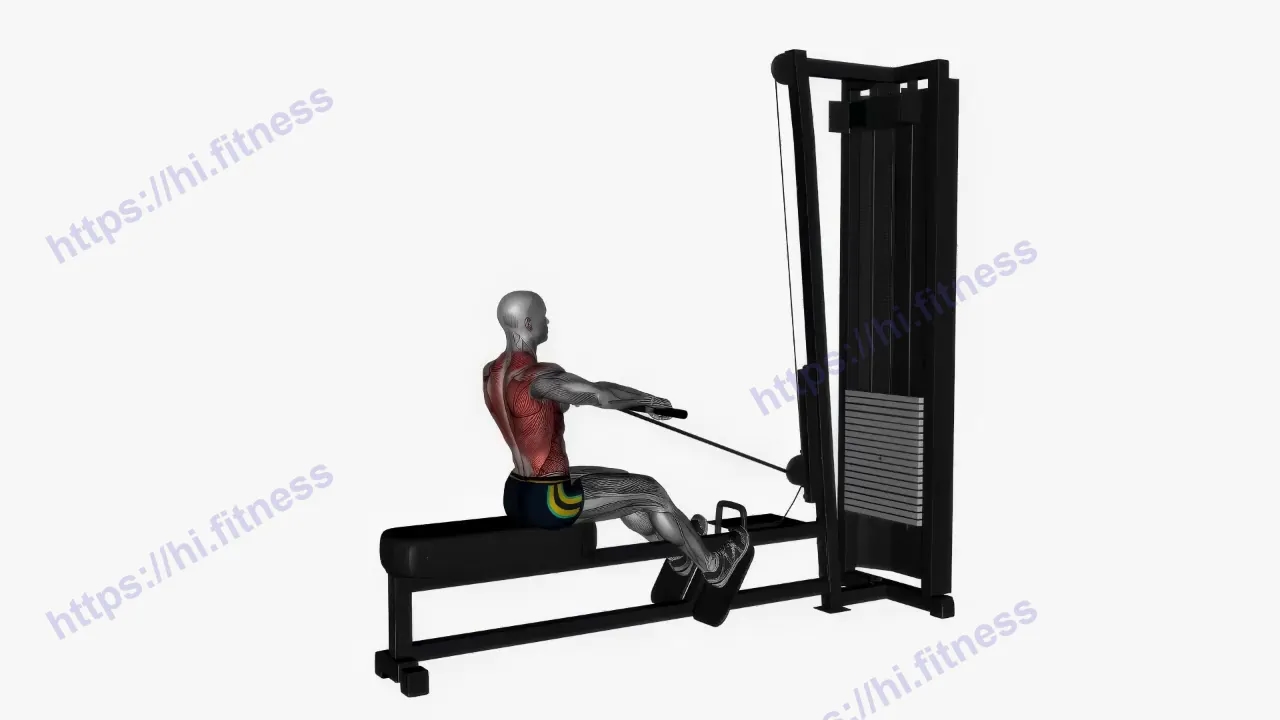
Seated Normal Grip Row Machine
Upper back · Cable

Straight Bar Cable Row Close Grip
Upper back · Cable

Cable One Arm Bent Over Row
Upper back · Cable

Cable Bent Over Reverse Grip Row
Upper back · Cable
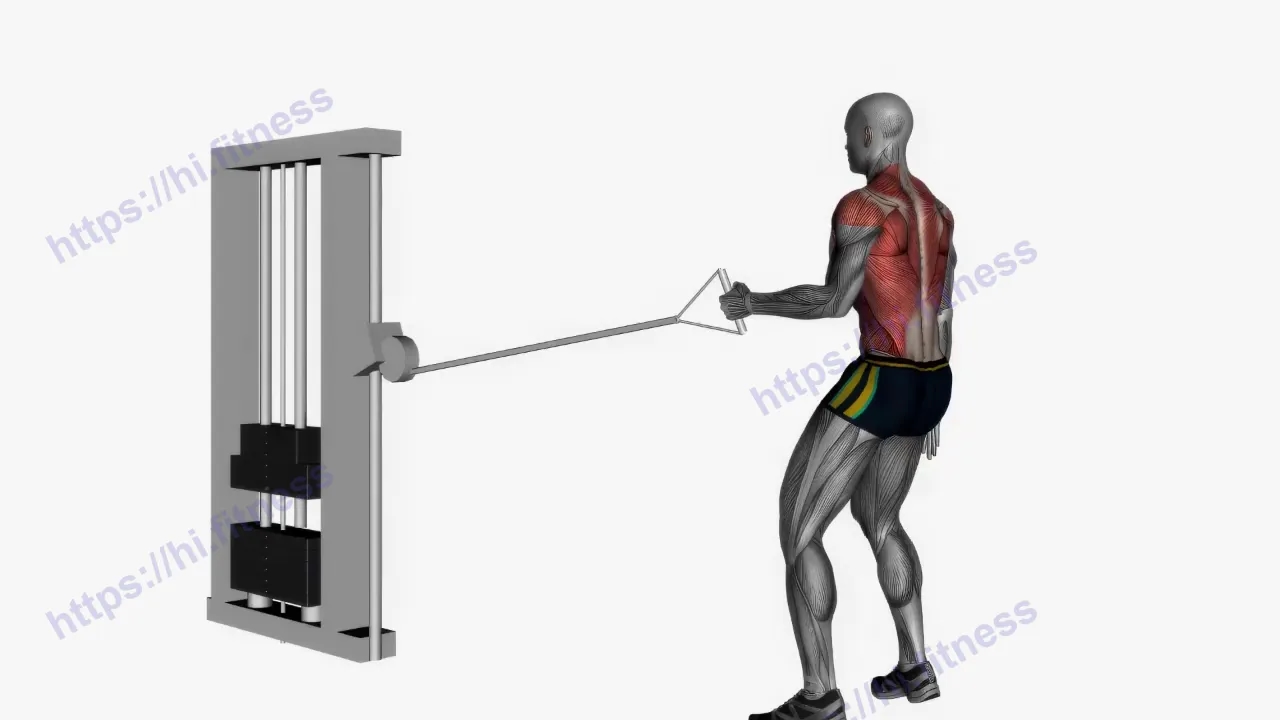
Single Arm Cable Row Left
Upper back · Cable
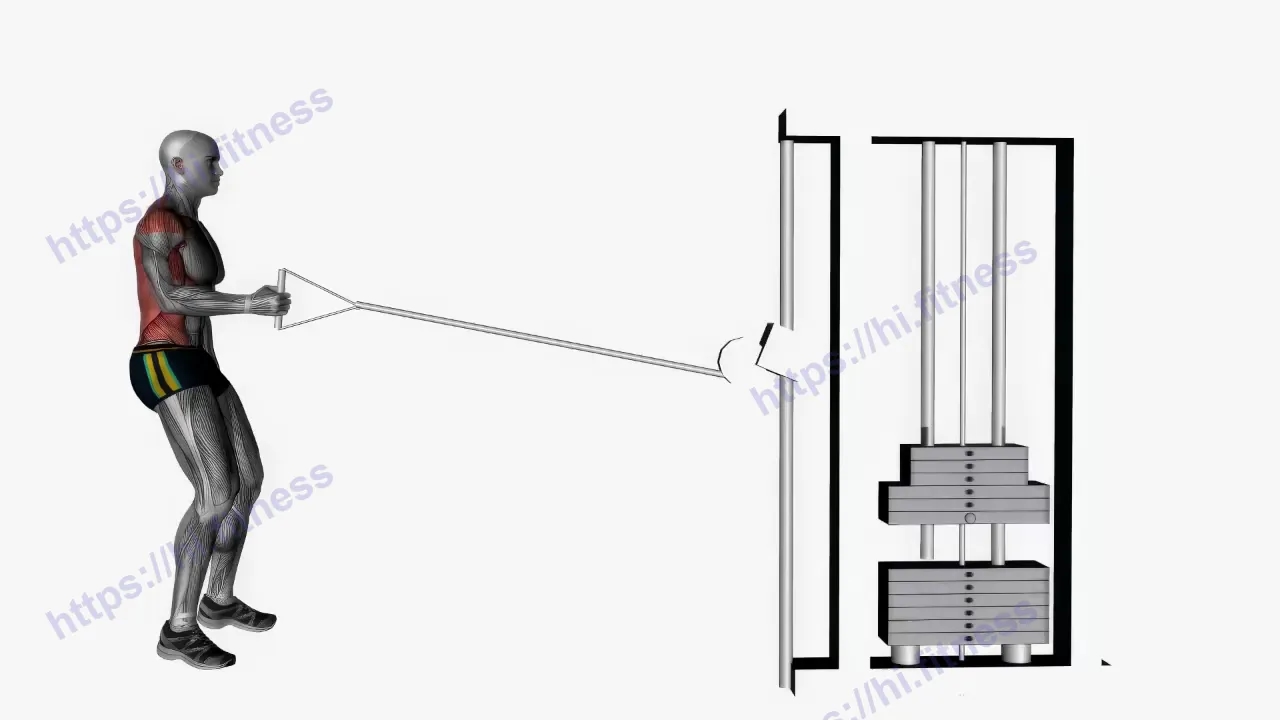
Single Arm Cable Row Right
Upper back · Cable
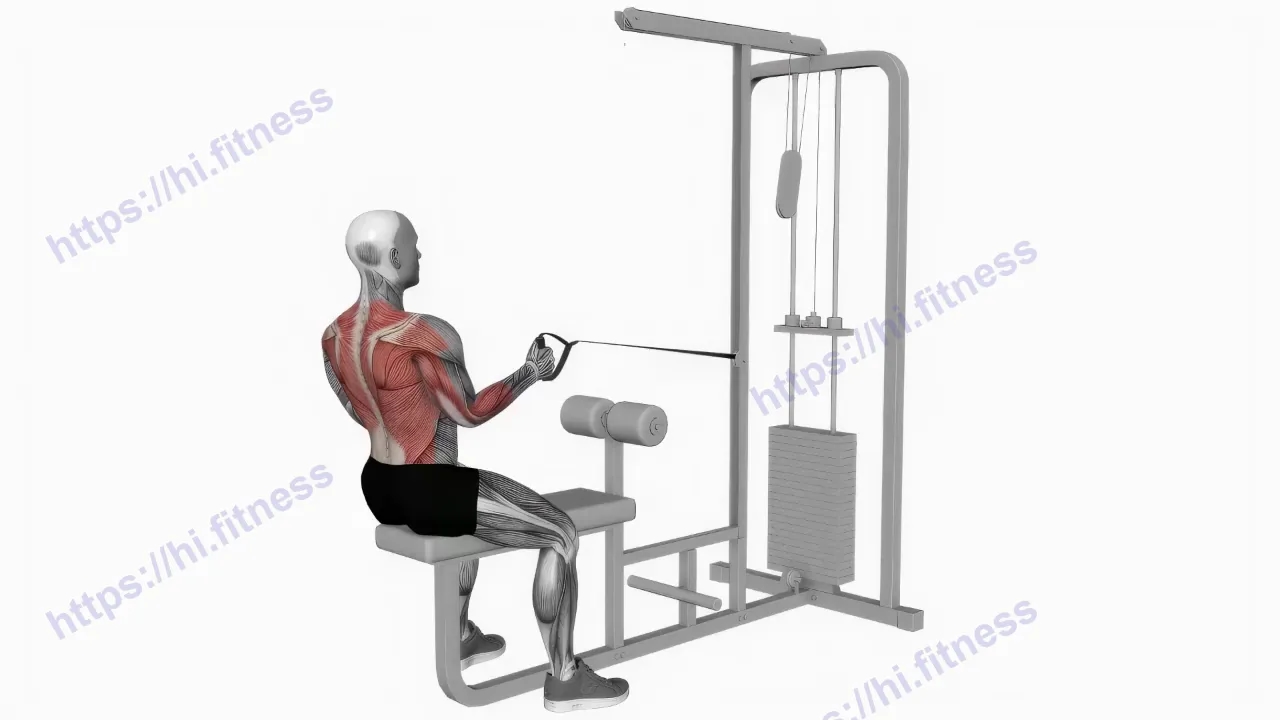
Cable Seated One Arm Alternate Row
Upper back · Cable

Cable Seated Supine Grip Row
Upper back · Cable
Training guide
About training Upper back exercises on the cable
Choose one movement, perform it well, then progress it over time.
Why are there no shrugs here?
Because shrugs need a force pulling straight down, and gravity hands you that for free with any bar and any dumbbell. A cable pulls toward the pulley, so to get the same direction you would have to stand exactly over the low pulley. It can be done, but the cable adds nothing there that a barbell held in front of your thighs will not do, and that is why rowing is the only movement pattern in this set.
The practical conclusion is simple: if you are looking for load for your traps, look for it on the barbell list or the dumbbell list. What the cable offers instead is rowing with no break in the tension, and that is its own specialty rather than a substitute for something else.
The seated row machine positions belong to the same family. In terms of the movement they do not differ from the cable version: you sit, your feet are braced, and the resistance comes horizontally toward the stack. The difference is that the machine steers the path, so the handle cannot be swapped.
What changes with pulley height and handle?
The low pulley on the seated version runs the cable roughly horizontally, and the catalog finishes the movement at the lower abdomen or the stomach, with the elbows traveling back close to the torso. It is the most classic position on this list and a good reference point for everything else.
A pulley overhead changes the task. In the underhand high row you start with your arms extended upward and pull the bar to your upper chest, driving your elbows down and back. The pull runs diagonally from above, so the upper back works at a different angle than in the seated version at the low pulley, and it is not the same movement under a different name.
The handle is the third variable, and the cable is the only place you can test it without changing stations. A V-handle sets your hands neutral and close together, a straight bar lets you pick both the width and the direction of your grip, and a single handle leaves you one side. Swapping takes a few seconds, so comparing grips inside one workout is realistic here, while with free weights it would mean changing the whole exercise.
Progress the movement
The return first
The catalog asks for slow arm extension on every variant, and here it has a concrete reason: the cable pulls the whole way back. Slowing that phase down adds work without touching the stack.
Then one plate
The stack has one fixed step and there is no making it smaller. On rows that is fortunately a small fraction of the total load, so the same jump can be repeated for weeks, unlike on isolation work.
One arm at the end
A single handle is half the weight in your hand, but the cable then runs at an angle and tries to turn your torso. Keeping your shoulders square is work the two-handed version never asks for.
Explore further
Add this exercise to a workout and track your progress
Add it to a plan or to your current session, log sets, weight and reps, keep the instructions and tips at hand while you train, and check your previous results, records and volume.
- Plan - add this exercise to a workout
- Log - sets, weight and reps
- Progress - history, records and volume