Equipment
Lat exercises on the cable
The lat pulldown is the most predictable way to load the lats. You pick the weight with a pin, the pads hold your knees, and your torso stays where it is, so you are not pulling and fighting for stability at the same time. That is why this station is the easiest place to learn the overhead pulling pattern itself.
The list splits into two families that do mechanically different things. In a pulldown the elbow bends, and the grip (standard, wide, close, underhand, V-handle, neutral, one-arm) shifts the emphasis inside the same movement. In the straight-arm pulldown and the pullover the elbow stays extended and the shoulder joint does the work on its own.
Exercise library
All Lat exercises on the cable
18 exercisesFilters
Filters
Training type

Lat Pull Down Wide Grip
Lats · Cable

Reverse Grip Lat Pull Down
Lats · Cable

Lat Pull Down Close Grip
Lats · Cable

V Bar Lat Pull Down
Lats · Cable

Straight Bar Cable Pull Down
Lats · Cable

Cable Pulldown
Lats · Cable

Cable Underhand Pulldown Wide Grips
Lats · Cable
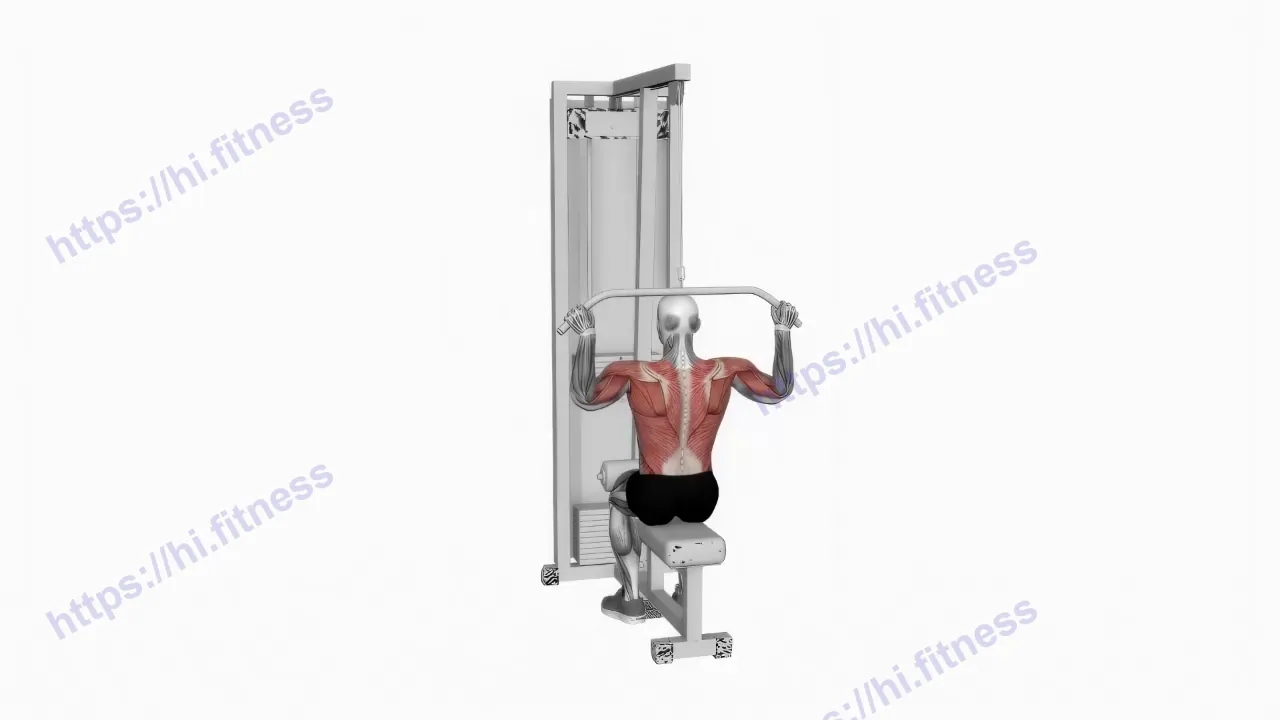
Cable Rear Pulldown
Lats · Cable

Behind Neck Lat Pull Down Machine
Lats · Cable

Cable Twin Handle Parallel Grip Lat Pulldown
Lats · Cable

Standing Lat Cable Pull Over
Lats · Cable
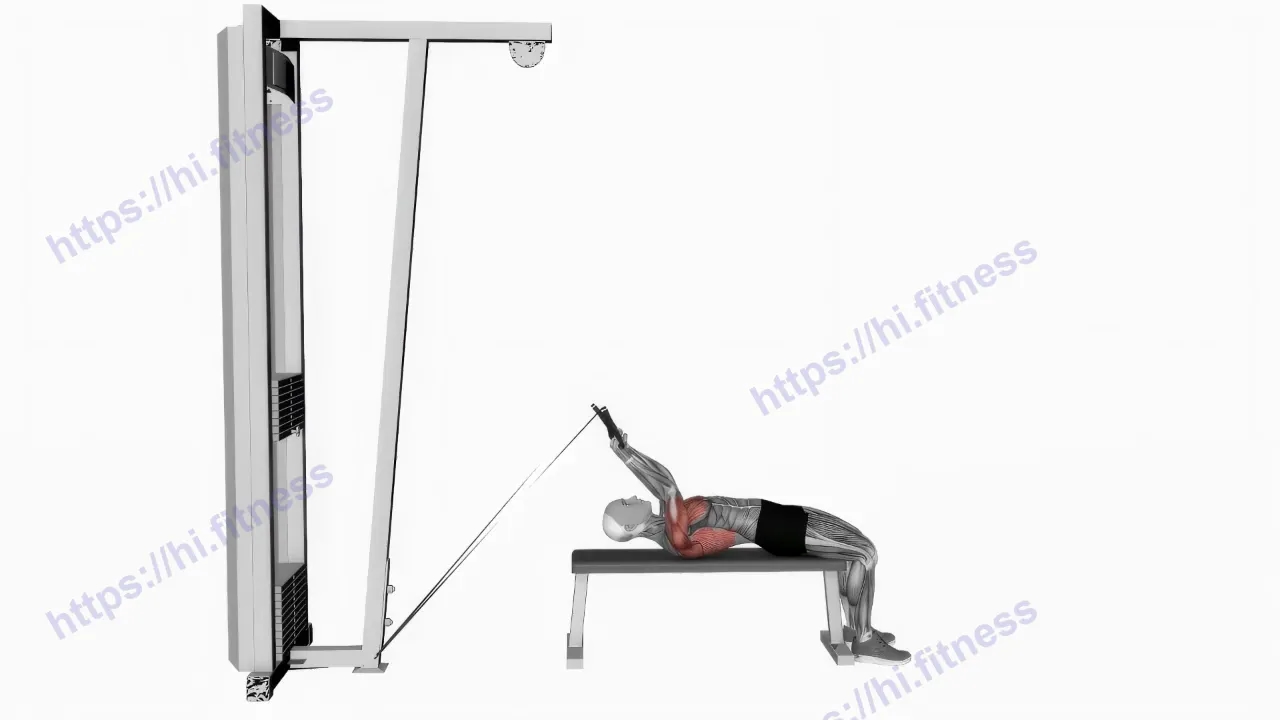
Cable Lying Extension Pullover (With Cables Attachment)
Lats · Cable
Training guide
About training Lat exercises on the cable
Choose one movement, perform it well, then progress it over time.
Two families of movement on one stack
In a pulldown to the chest the elbow bends along with the work in your back, so the biceps and the forearm join in. That is an advantage, because it lets you use the biggest weight available on this station, but it is also why a lot of people finish a set on their grip rather than their back. Grip changes the proportions: underhand the biceps helps the most, a wide overhand grip sets the arm more out to the side, and the V-handle and neutral grips are often the kindest to the wrist.
The second family looks completely different. In the straight-arm pulldown, the standing bar pullover and the pullover lying with the arms going behind your head, the elbow stays extended or only slightly bent, and the shoulder joint covers the whole path. The arm has no way to add force, so the weight is clearly lower, but the lats work with nothing in between. The descriptions of these versions warn against locking the elbows out, because then the load goes into the joint.
You do not have to pick one family. It is just worth knowing that they do not replace each other: one raises the weight, the other takes the arm out of the equation.
How do you set the station up?
Start with the pads. They should press on your thighs hard enough that nothing lifts when your arms are fully extended overhead, and that is the one thing you set before every set, whatever the weight. Feet flat on the floor, back straight.
Then the handle. A straight bar gives you the most options for width, the V-handle and the neutral version usually sit best on a cranky wrist or elbow, and the one-arm version lets you check whether both sides pull the same. Its description stresses pulling the shoulder blade toward your spine, which is easier to feel with one arm than with two.
The behind-the-neck pulldown is in the atlas, but it comes with its own condition: the description requires a slight forward lean of the torso so you do not load the neck, and it assumes a good deal of shoulder mobility. If that position feels uncomfortable, the version to the chest does the same thing for your lats without the compromise.
Progress the movement
A second at the bottom first
The pulldown description already asks you to hold the squeeze for a second before you come back. That noticeably changes a set at the same weight, so it is worth using up that headroom before you touch the pin.
The pin, one notch
It is the only step this machine has, and it can be bigger than it looks: the plates in the stack weigh several kilograms each, so one hole can change a set more than the smallest plate on a barbell.
See where this road ends
The higher you go up the stack, the more you are limited not by your back but by what is holding you into the seat. Pulling down a weight close to your own bodyweight and doing a pull-up are the same task anchored differently, so the natural next step is the bar.
Explore further
Workout tracker
Add this exercise to a workout and track your progress
Add it to a plan or to your current session, log sets, weight and reps, keep the instructions and tips at hand while you train, and check your previous results, records and volume.
- Plan - add this exercise to a workout
- Log - sets, weight and reps
- Progress - history, records and volume