Equipment
Hamstring exercises with no equipment
The hamstrings work at two joints: they extend the hip and they bend the knee. With no equipment you can only load the first of those, and only if you shift onto one leg - then the resistance becomes your torso plus the leg you lift behind you. On knee flexion you are lifting your own shin and nothing more.
That is why this list is short and mixed. Next to the movements that genuinely tire the back of the thigh you will find butt kicks in place, forward-bend stretches and downward dog. It is worth knowing which is which before you build a leg day out of them.
Exercise library
All Hamstring exercises with no equipment
10 exercisesFilters
Filters
Training type

Butt Kicks
Hamstrings · Bodyweight

Butt Kicks Slow
Hamstrings · Bodyweight

Butt Kick with Row
Hamstrings · Bodyweight

Alternating Hamstring Curl
Hamstrings · Bodyweight

Alternating Hamstring Curl with Punch
Hamstrings · Bodyweight

Standing Bow Hamstring Stretch
Hamstrings · Bodyweight

Basic Toe Touch
Hamstrings · Bodyweight
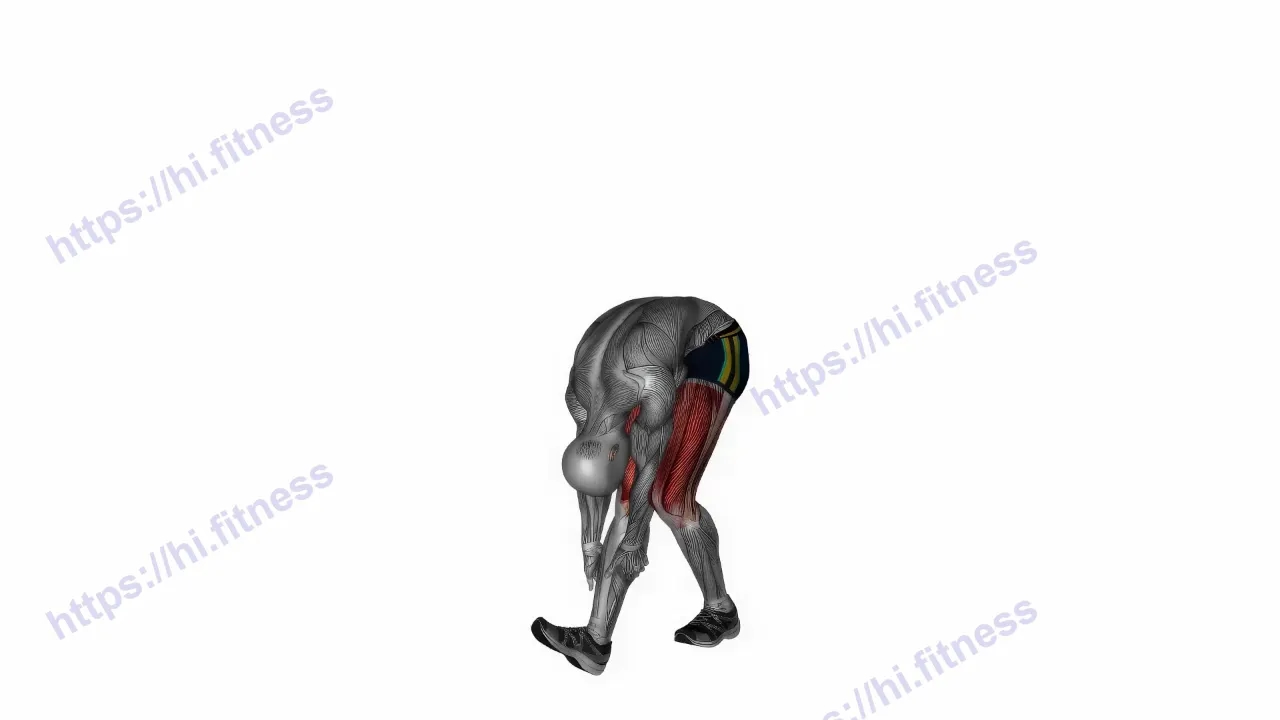
Runner Stretch
Hamstrings · Bodyweight
Training guide
About training Hamstring exercises with no equipment
Choose one movement, perform it well, then progress it over time.
Why does the hinge work and the curl not?
Because in a hinge you have something to lift. Stand on one leg and raise the other behind you, and your torso and that straight leg swing far out past the hip, with the hamstrings of the standing leg holding all of it. That is real load, available without a single kilogram of equipment, and it is why the single-leg deadlift is the number one movement on this page.
On knee flexion the trick stops working. Whatever you do with body position, the only thing the knee lifts is your own shin and foot. A shin does not get heavier because you added reps, so lying curls and alternating standing curls stay light by definition. They are not useless, but calling them strength work is a stretch.
There is one way out and the catalog knows it. Hook your feet under something fixed and the knee starts bending against the mass of your whole torso, which makes the movement incomparably harder. On this list that is the assisted reverse leg curl on a cable, where a bar held behind your neck takes part of the weight off. The muscle stays the same; what changes is what sits on the other side of the knee.
What are butt kicks and toe-touches doing here?
Because an exercise lands under a muscle group by what moves in it, not by how much it weighs. Butt kicks are running in place with the heel finishing high, so the back of the thigh works on every step, just for a fraction of a second and against nothing. The variations differ in tempo and in what the arms do, not in load on the legs.
As a warm-up before legs that works well, because it rehearses the exact movement you are about to load. The cues say what it is about: light, quick, torso upright. Once you start leaning forward to get the heel higher, the movement stops being about the knee.
The rest of the list is stretching: the toe-touch, the standing hamstring stretch and downward dog with alternating knee drives. They all lengthen the back of the thigh and none of them load it. A separate case is the entries that need a station despite the label: the lying leg curl on a machine and the assisted reverse curl already mentioned. If you have access to those, they, not the rest of this page, are the closest thing here to real load on the hamstrings.
Progress the movement
Start next to a wall
On the single-leg deadlift it is your balance that gives out first, not the back of your thigh. Fingertips on a wall or the back of a chair take that problem away, and letting go of the support is a progression in itself.
Get the torso to parallel
The description calls for a torso parallel to the floor, and that is not a detail. The lower the torso goes, the longer the lever on the hip, so stopping halfway is the same position in a lighter version.
Find something to hook your feet under
On the knee-flexion side your bodyweight has no way to grow, because your shin weighs what it weighs. The next level starts wherever you can hook your feet: that is how the assisted reverse leg curl works, the one movement here where the knee bends against the mass of your whole torso.
Explore further
Workout tracker
Add this exercise to a workout and track your progress
Add it to a plan or to your current session, log sets, weight and reps, keep the instructions and tips at hand while you train, and check your previous results, records and volume.
- Plan - add this exercise to a workout
- Log - sets, weight and reps
- Progress - history, records and volume