Equipment
Ab exercises with no equipment
Abs are the one muscle group where training without equipment is not a compromise. The load here is your own legs and torso, and that is a long lever: straighten your knees or reach your arms overhead and the same exercise gets clearly harder. Which is why this is the longest list in the whole atlas.
You will find three kinds of movement on it: crunches, where the torso bends; held positions like the plank or the hollow hold, where the job is not to let it bend; and rotations. Choosing inside each of them comes down in practice to one question - how long a lever you can keep under control.
Exercise library
All Ab exercises with no equipment
88 exercisesFilters
Filters
Training type
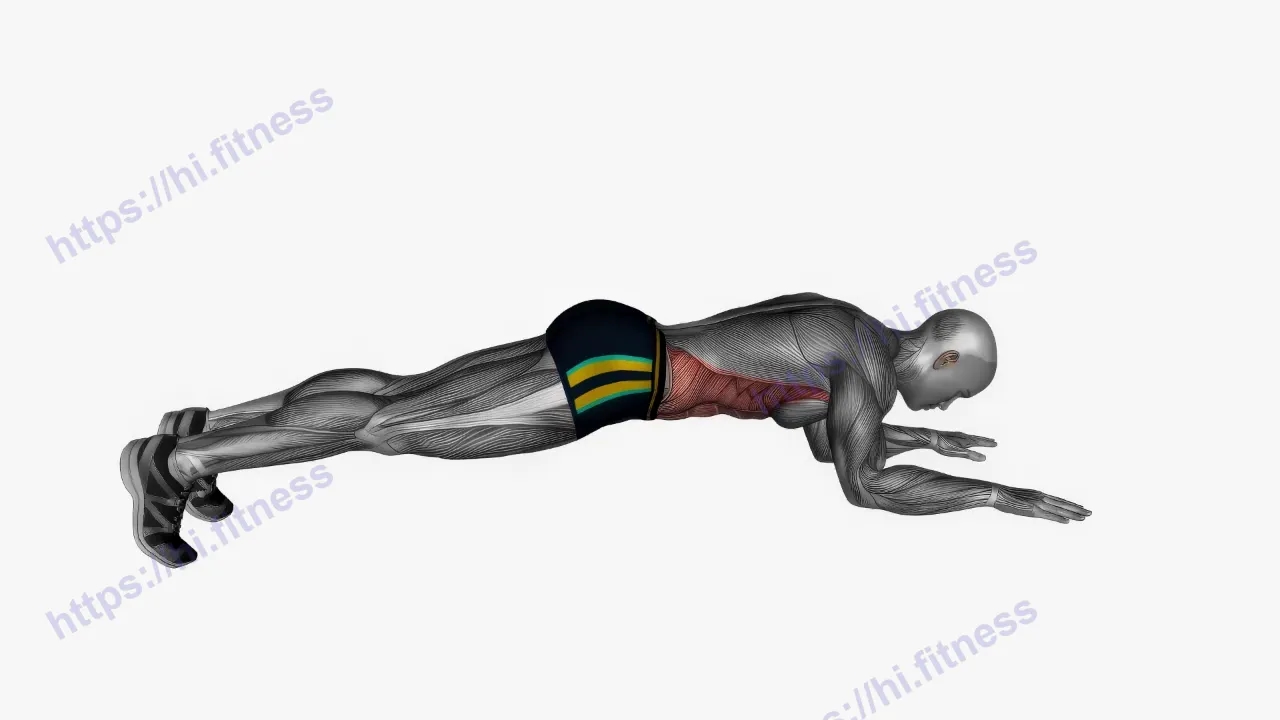
Plank on Elbows
Core · Bodyweight

Abdominal Crunches
Core · Bodyweight

Situps
Core · Bodyweight

Russian Twist
Core · Bodyweight

Lying Leg Raise
Core · Bodyweight

Bicycles
Core · Bodyweight

Crunch Floor
Core · Bodyweight

Reverse Crunch
Core · Bodyweight

Dead Bug
Core · Bodyweight
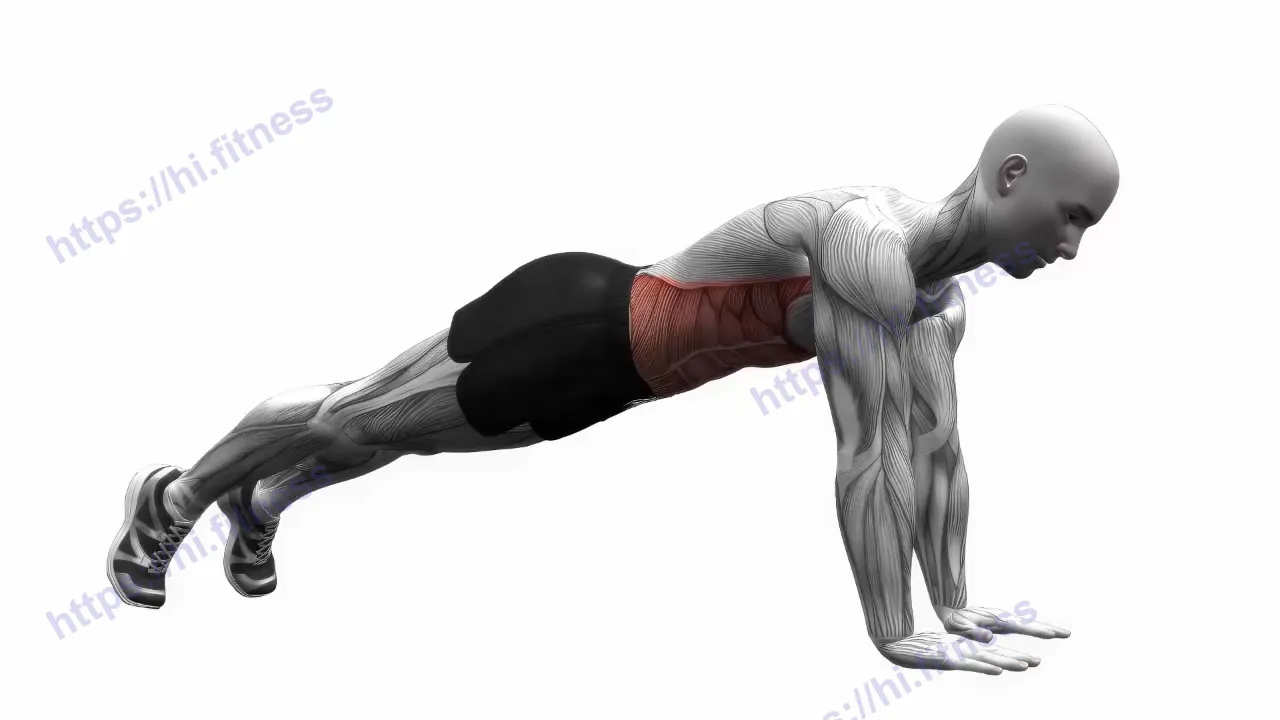
High Plank
Core · Bodyweight
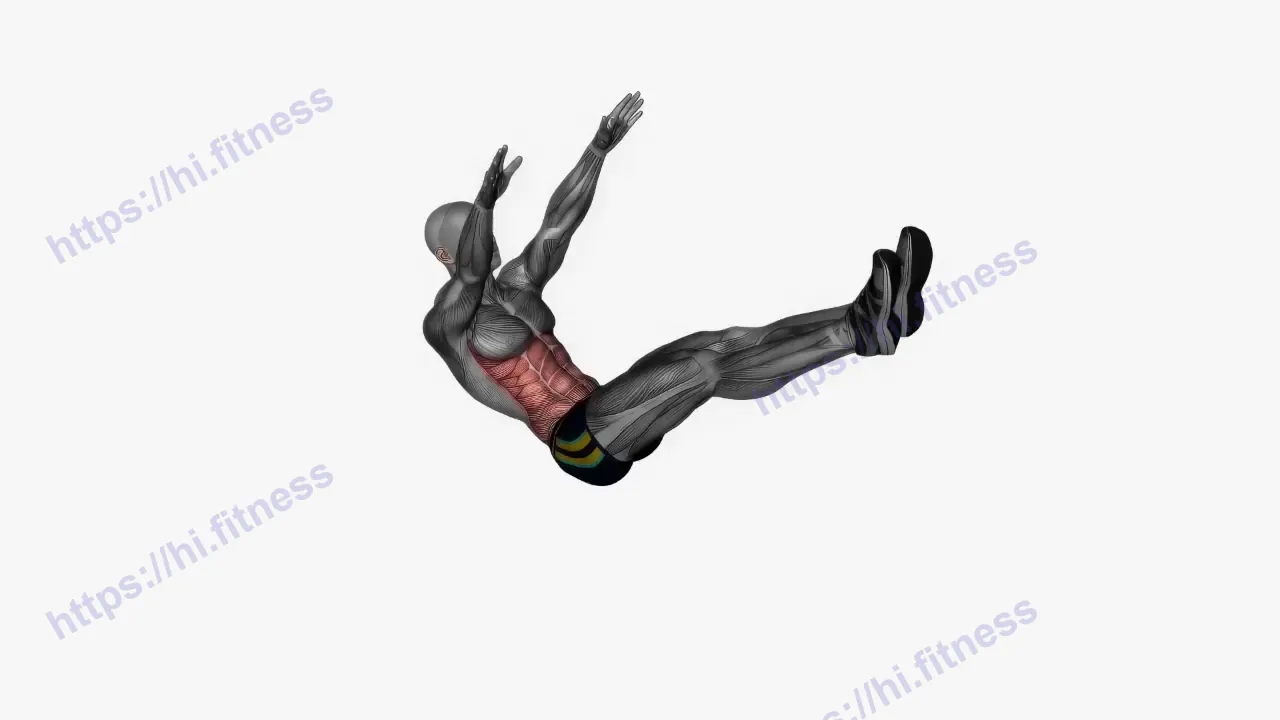
V Up
Core · Bodyweight
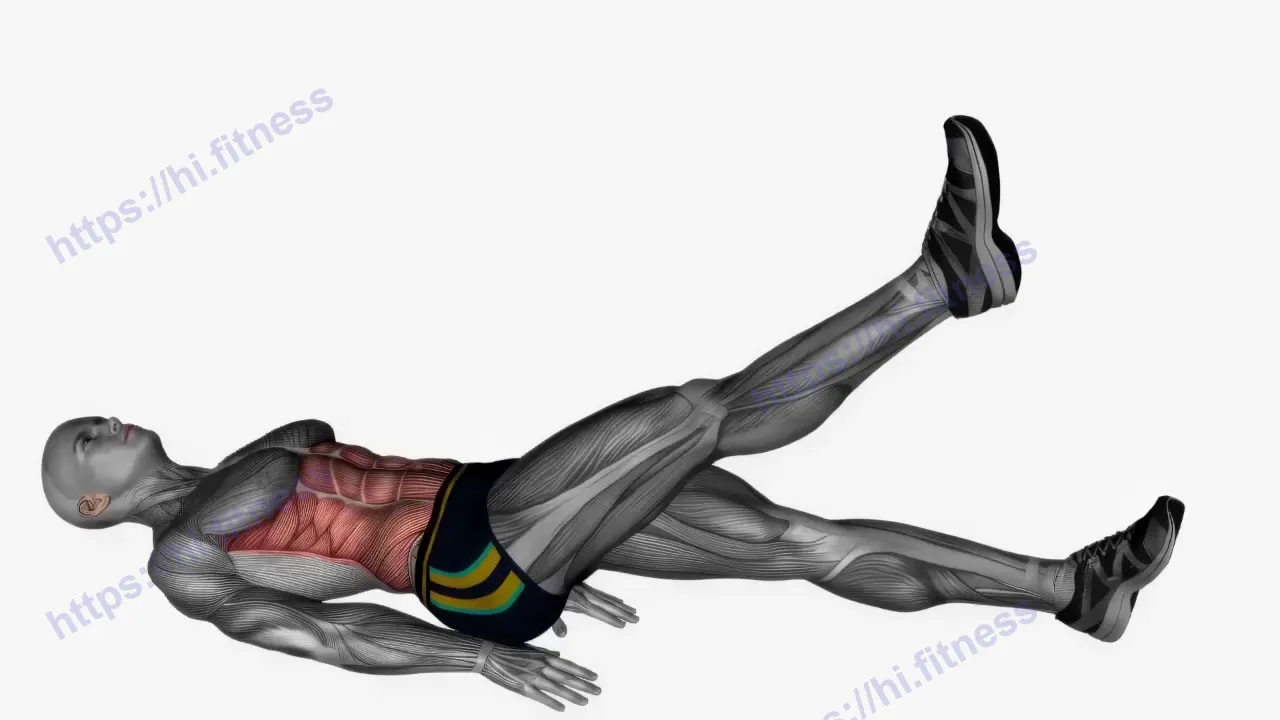
Flutter Kicks
Core · Bodyweight
Training guide
About training Ab exercises with no equipment
Choose one movement, perform it well, then progress it over time.
Why don't abs need added load?
Because you are already carrying it. On most muscle groups your own bodyweight is hard to line up against the working muscle, which is why the lists for biceps or hamstrings are short. Abs have the opposite situation: their job is to keep the torso and the legs in check, and both of those weigh plenty and can be moved further from the hips.
That distance is the only variable you need. Leg raises with the knees tucked tight, then bent at a right angle, then with the legs straight are the same movement in three versions, differing only in how far the center of mass of your legs sits from your hips. With a barbell the equivalent would be adding a plate.
The ceiling only shows up right at the top. Once a full hollow hold, straight-leg raises and a plank with a hand and a foot lifted stop being a challenge, the lever is used up and the next step needs something in your hands.
What is the difference between a plank and a crunch?
A crunch shortens the abs: the torso comes closer to the hips and the muscle travels through its range of motion. The plank, the hollow hold and the dead bug do something else. The abs don't change length there, they just refuse to let the spine bend under the weight of the legs and hips. Both are real work, but you measure them differently.
You count crunches in reps, so progress shows itself. Held positions tempt you to measure them with a stopwatch, and that is where the mistake creeps in: the seconds stop meaning anything the moment the hips sag or ride up too high. Practically speaking, the set ends when the line from your head to your heels stops being straight, not when the planned time runs out.
Which is why it is worth having both in a week. The plank and the hollow hold teach you to hold your ribs and pelvis in place; crunches and leg raises add the range of motion that a held position by definition does not have.
Progress the movement
Start with bent knees
The hollow hold and leg raises with the knees bent are the same exercises on a shorter lever. The atlas lists that version as the first step when the full one is too hard.
Straighten the legs, then move the arms out
Those are two separate levers. A crunch with the arms along the torso, with the arms straight, and with the hands overhead is three different difficulty levels on the same body.
Hang from a bar
In a hang there is no floor left to push against. Hanging knee raises, then hanging side crunches, and on a roman chair the straight-leg version, are the furthest point you can reach without adding load.
Explore further
Add this exercise to a workout and track your progress
Add it to a plan or to your current session, log sets, weight and reps, keep the instructions and tips at hand while you train, and check your previous results, records and volume.
- Plan - add this exercise to a workout
- Log - sets, weight and reps
- Progress - history, records and volume