Equipment
Upper back exercises with a barbell
A barbell lets you load a row harder than anything else in the gym, because both hands hold one bar and neither has to stabilize it on its own. You pay for that with position: bent over, the hip hinge carries the weight for the entire set, and your back does its pulling almost on the side.
The list splits into three families. The free barbell bent over, the landmine variants where one end of the bar is wedged in place and the floor takes part of the load, and shrugs. The first two differ in the path of the bar and in how much weight actually hangs in your hands. The third has nothing in common with rowing beyond the fact that you have to hold the bar.
Exercise library
All Upper back exercises with a barbell
16 exercisesFilters
Filters
Clear filtersTraining type
16 exercises

Landmine Row
Upper back · Barbell

Barbell Bent Over Row Pronated Grip
Upper back · Barbell

Bent-over Row with Bar
Upper back · Barbell
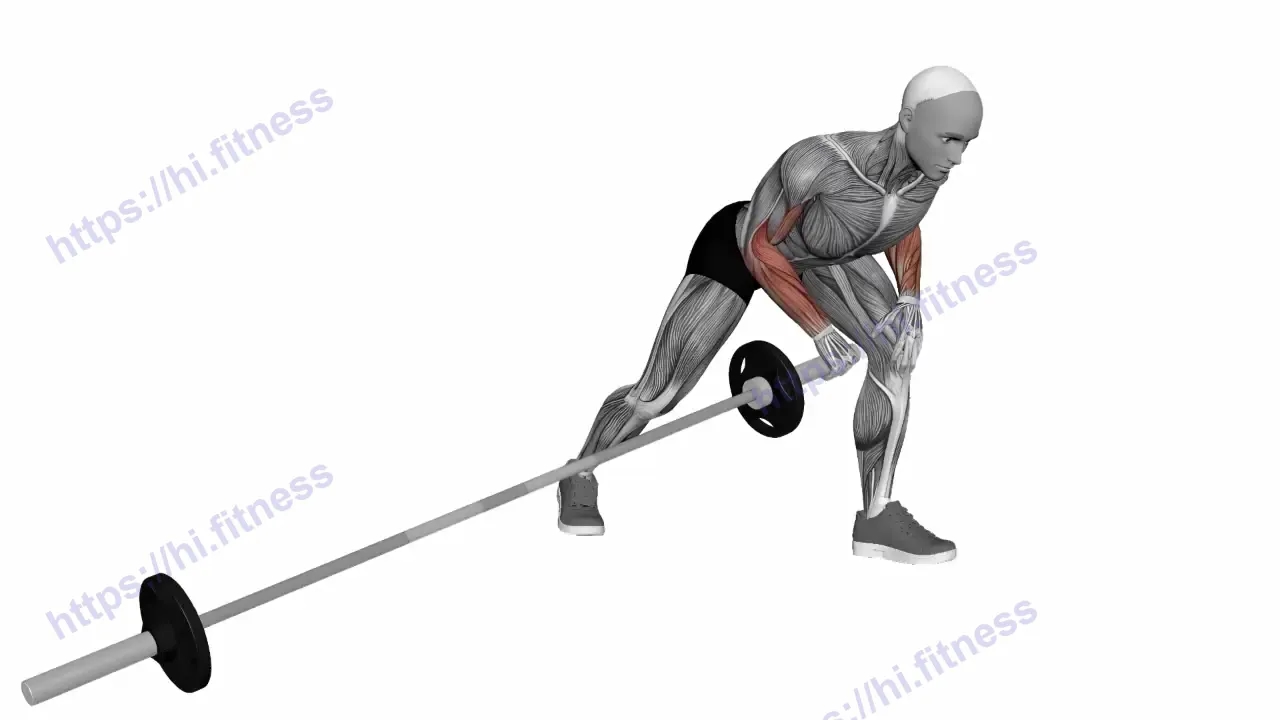
Barbell Meadows Row
Upper back · Barbell
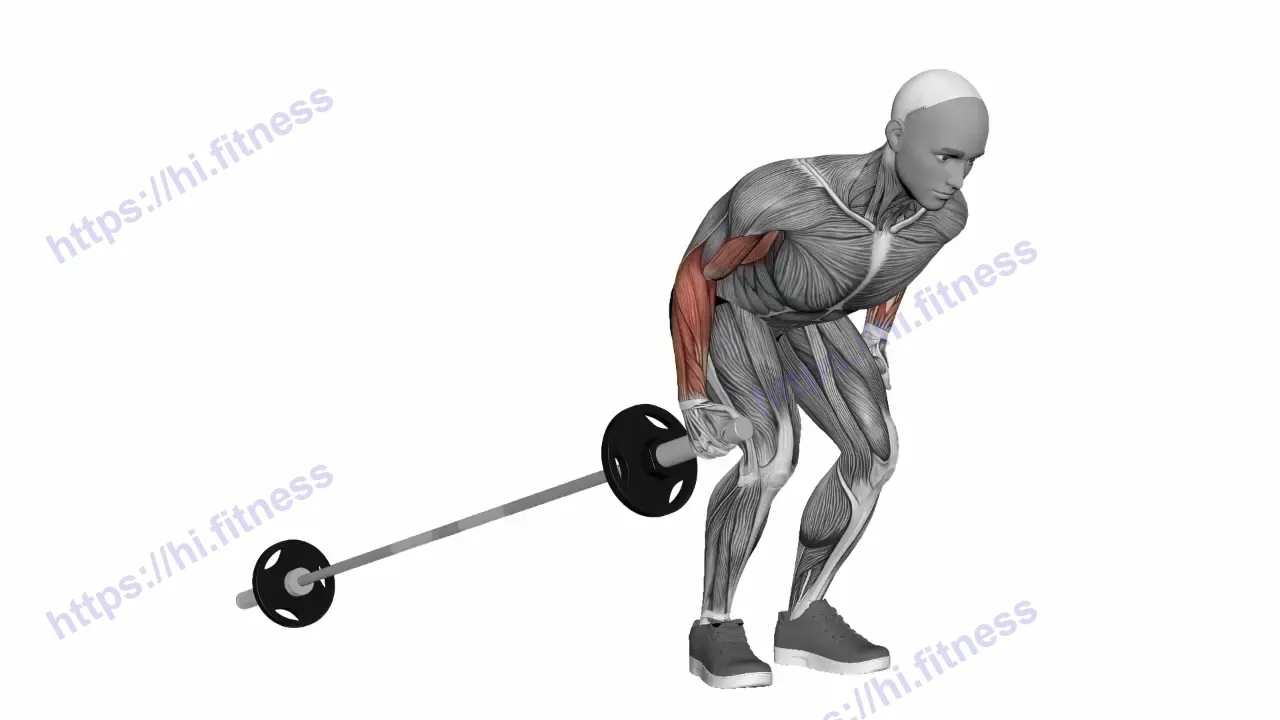
Barbell Long Landmine Row
Upper back · Barbell
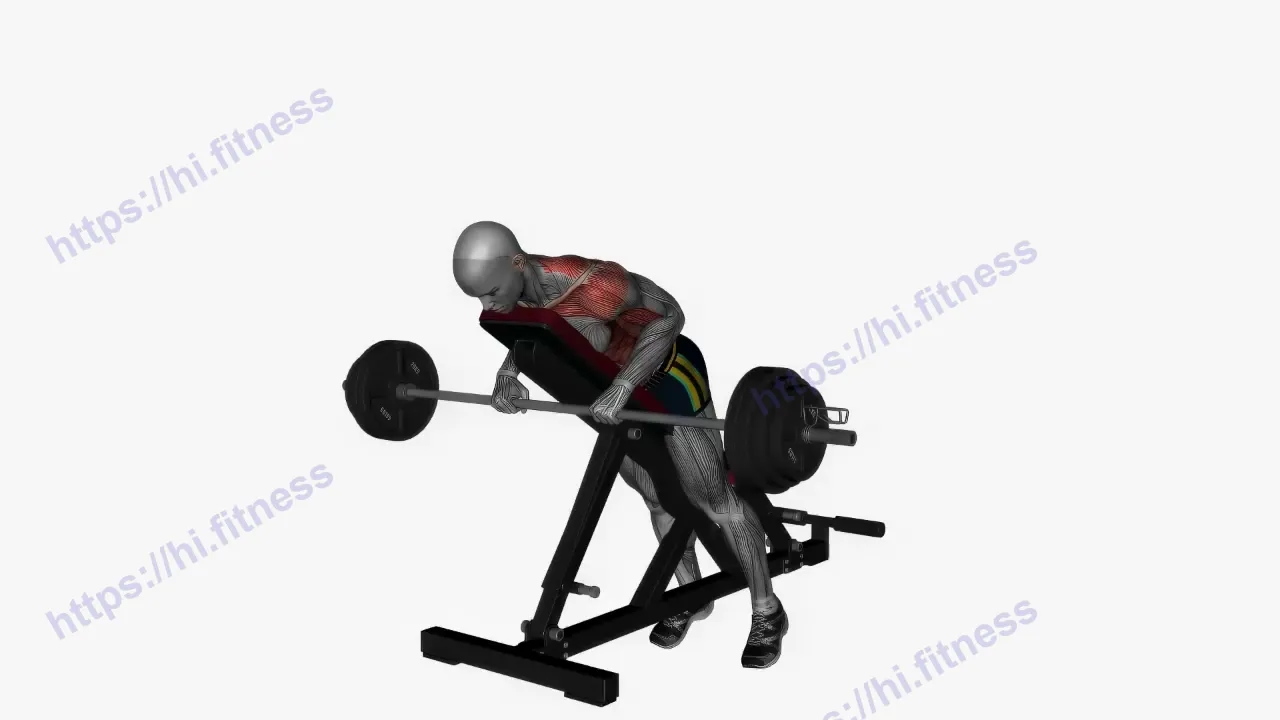
Prone Bench Row Barbell Pronate Grip
Upper back · Barbell
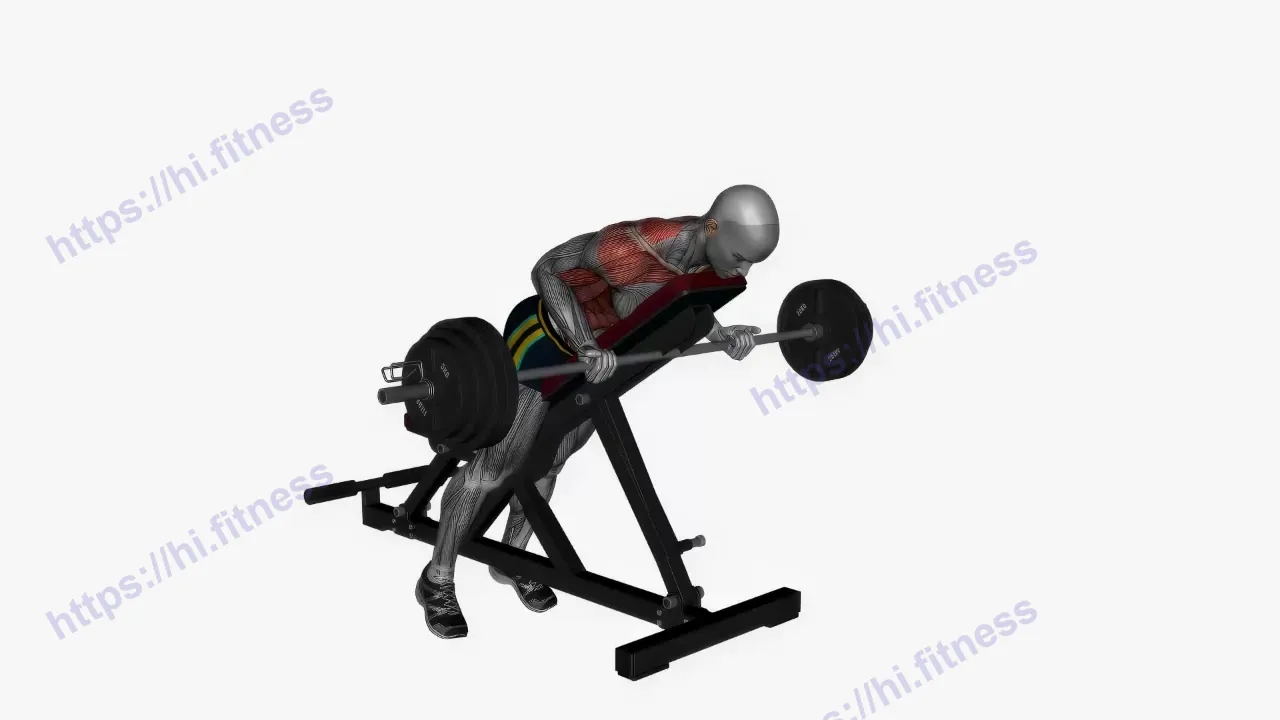
Prone Bench Row Barbell Reverse Grip
Upper back · Barbell
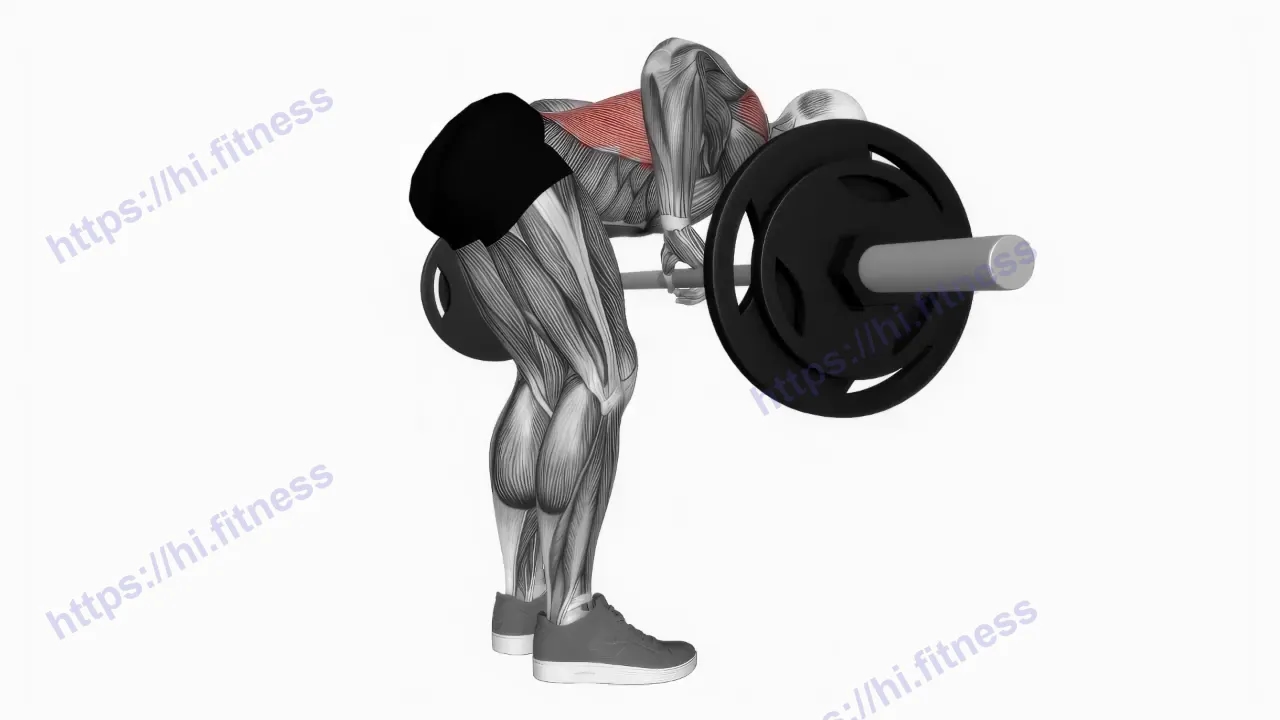
Barbell Push Bent Over Row
Upper back · Barbell
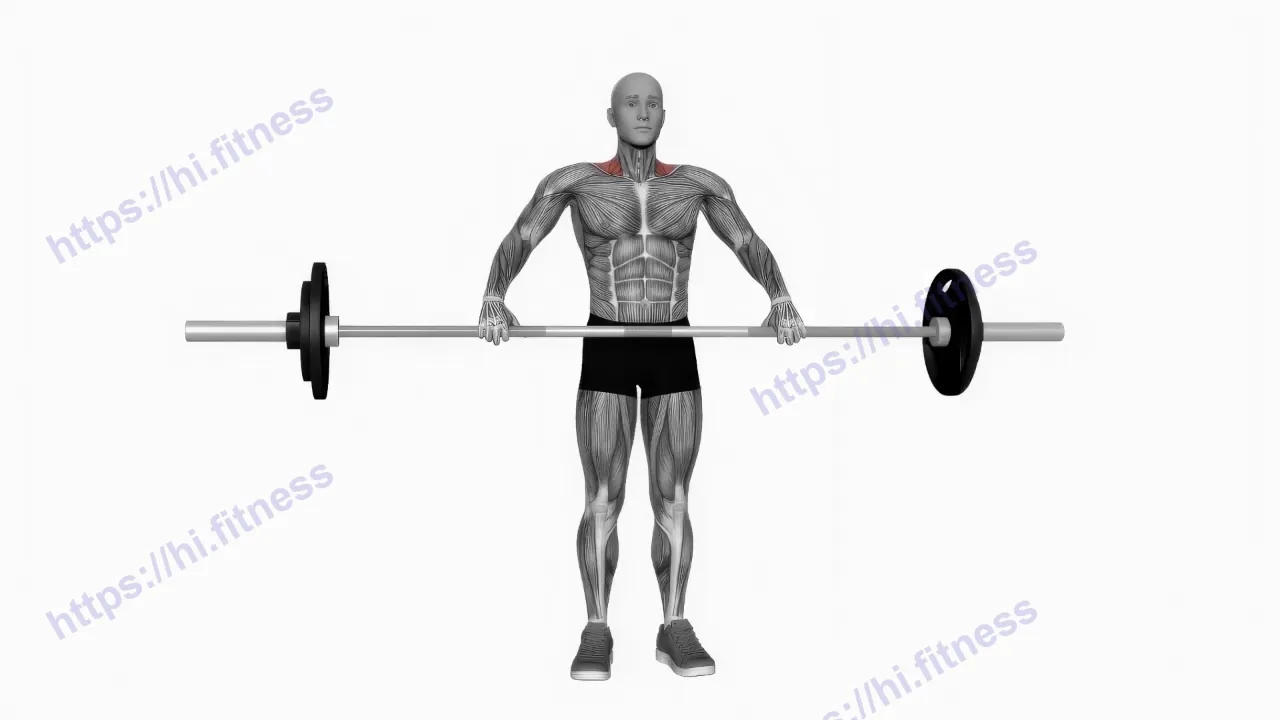
Barbell Wide Shrug
Upper back · Barbell

Barbell Back Wide Shrug
Upper back · Barbell
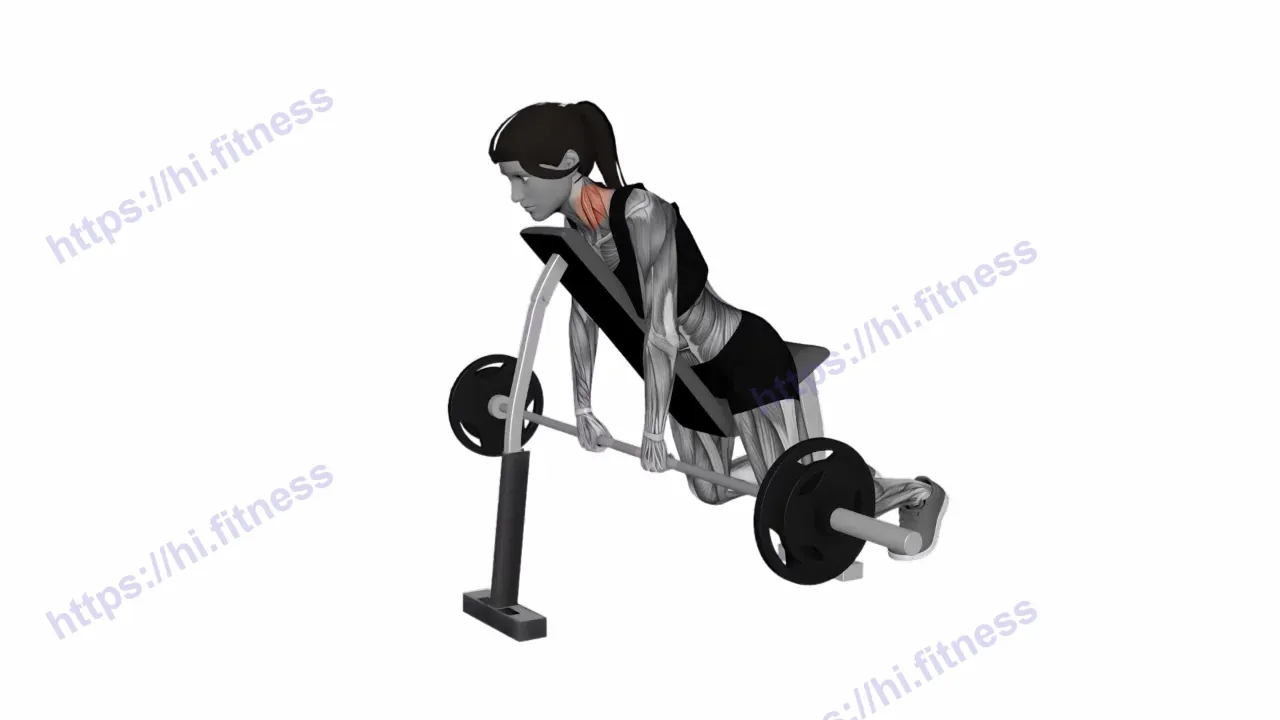
Barbell Decline Shrug
Upper back · Barbell
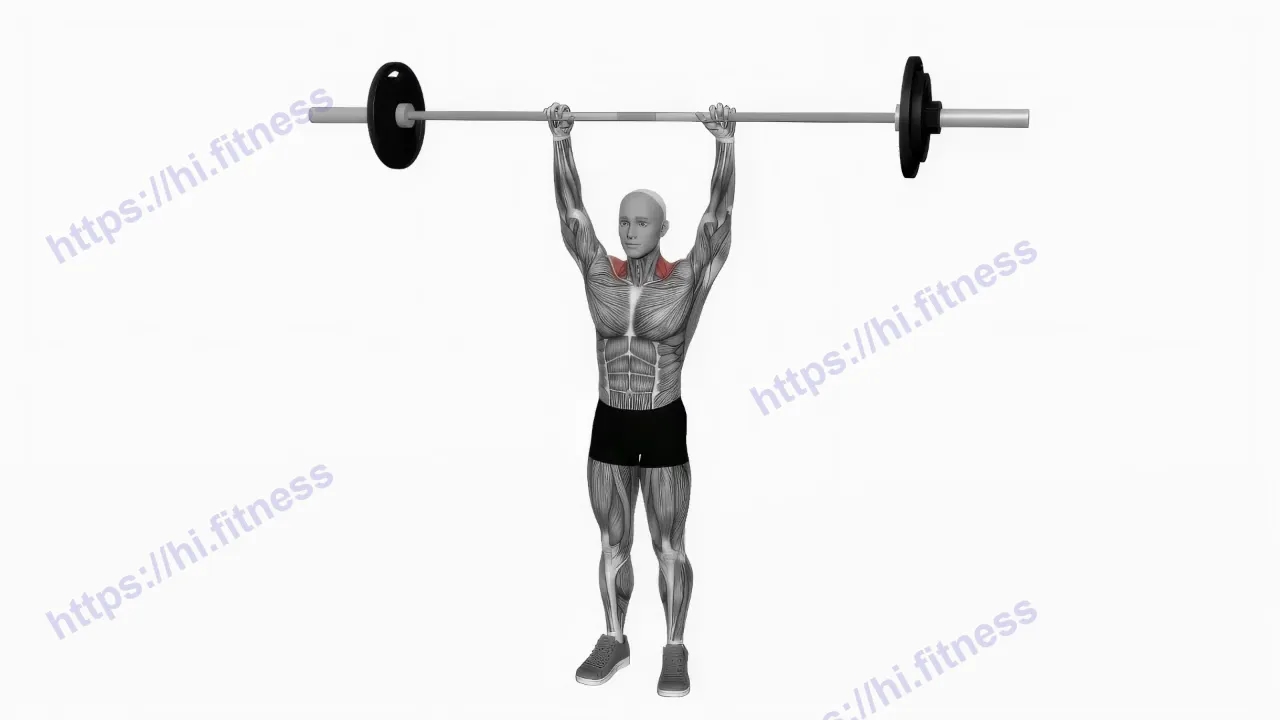
Barbell Overhead Shrug
Upper back · Barbell
Training guide
About training Upper back exercises with a barbell
Choose one movement, perform it well, then progress it over time.
What ends a heavy set?
There are three candidates: your position, your back and your hands. The catalog cues on the free barbell circle almost entirely around the first. Keep your back flat, do not round your shoulders, do not rock your torso, pick a weight that does not cost you technique - these are all descriptions of the same limit, the point where the bent-over position stops holding. The muscle itself gives up surprisingly rarely in a barbell row.
The second limit is in your hands, and it shows up most clearly in shrugs. Your arms hang straight through the whole movement there, so your traps will handle far more than your fingers will hold, and the set usually ends on the grip. Straps and a mixed grip move that ceiling but do not delete it. The exception in this family is the overhead shrug: there neither the traps nor the fingers decide, but whether you can hold the bar overhead with straight arms in one place.
If you want to take position out of the equation, the catalog gives you a way to do that with a barbell too. Overhand and underhand rows on an incline bench, head up, put your torso on the pad, and then only the pull and the grip are left. That is a sensible pick on a day when your lower back has already had its share from deadlifts.
Free barbell or landmine?
A free barbell hangs straight down, the path is a straight line, your hands are locked at one distance apart, and the whole load is in your hands. In a landmine one end of the bar sits in the attachment, so the bar travels on an arc and part of the weight goes into the mount. What you are actually pulling is less than what you loaded onto the bar, and comparing those two numbers makes no sense.
The catalog separates the targets too. The two-handed version with a V-handle brings the bar to the chest, the one-arm Meadows row to the lower ribs, and the long landmine row out toward your side. Each one is a different path for the elbow, even though the equipment is standing in the same place.
The landmine has one advantage a free barbell will not reproduce: it turns the bar into a one-handed tool. If you want to load one side on its own and the dumbbells at your gym stop at a weight that stopped being a challenge, the Meadows row and the long row are the only versions on this list that let you do it.
Progress the movement
One torso angle first
As long as your torso rises during the set, the next plate measures nothing. Settle on a bent-over position you can hold to the last rep, and only start counting from there.
Then a dead start
In the Pendlay version the bar goes back to the floor after every rep, so none of them borrows momentum from the one before. The same weight gets harder because of it, even though nothing on the bar changed.
A second pull at the top, last
The catalog has a variant where you let the bar down briefly at the peak and pull it in again. The load stays the same and the hardest stretch of the range gets longer.
Explore further
Workout tracker
Add this exercise to a workout and track your progress
Add it to a plan or to your current session, log sets, weight and reps, keep the instructions and tips at hand while you train, and check your previous results, records and volume.
- Plan - add this exercise to a workout
- Log - sets, weight and reps
- Progress - history, records and volume