Equipment
Quads on cardio machines
This is not a list for building quads, and it is better to say so up front. Cardio machines land in this category because the knee extends against resistance on them, but it happens thousands of times at very little load per rep. What comes out of that is work capacity and a tired muscle, not a stimulus in the same league as a squat.
The list also looks longer than it is. Most of it is pace variations on the same handful of machines: the treadmill, the stationary bike, the rower, the elliptical, the air bike and the ski erg. The differences between them in how much work stays in the quads are real, though, and that is what this page is about.
Exercise library
All Quads on cardio machines
15 exercisesFilters
Filters
Training type
- Preview unavailable

Treadmill Running
Quads · Cardio machine
- Preview unavailable

Treadmill Jogging
Quads · Cardio machine
- Preview unavailable

Gym Elliptical Machine Normal Speed
Quads · Cardio machine
- Preview unavailable
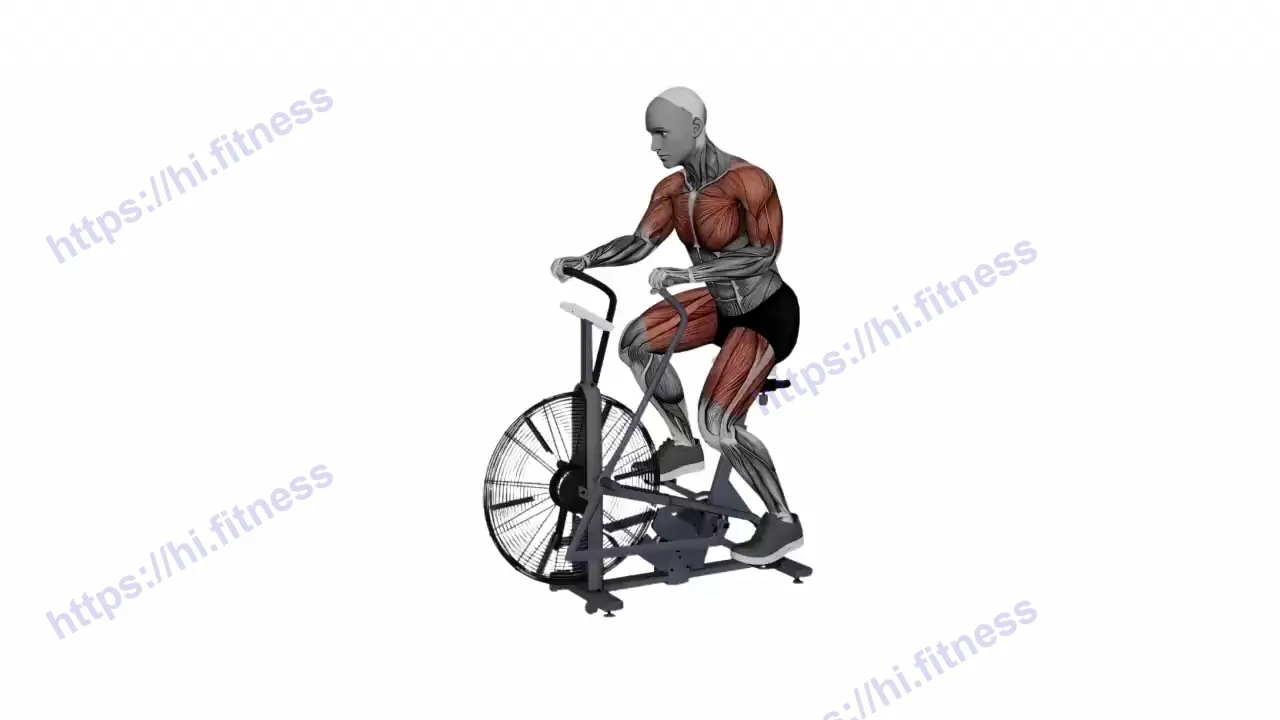
Assault Airbike Normal Speed
Quads · Cardio machine
- Preview unavailable

Gym Rowing Machine Fast Speed
Quads · Cardio machine
- Preview unavailable

Gym Rowing Machine Sprint Speed
Quads · Cardio machine
- Preview unavailable

Gym Elliptical Machine Fast Speed
Quads · Cardio machine
- Preview unavailable

Gym Elliptical Machine Sprint Speed
Quads · Cardio machine
- Preview unavailable
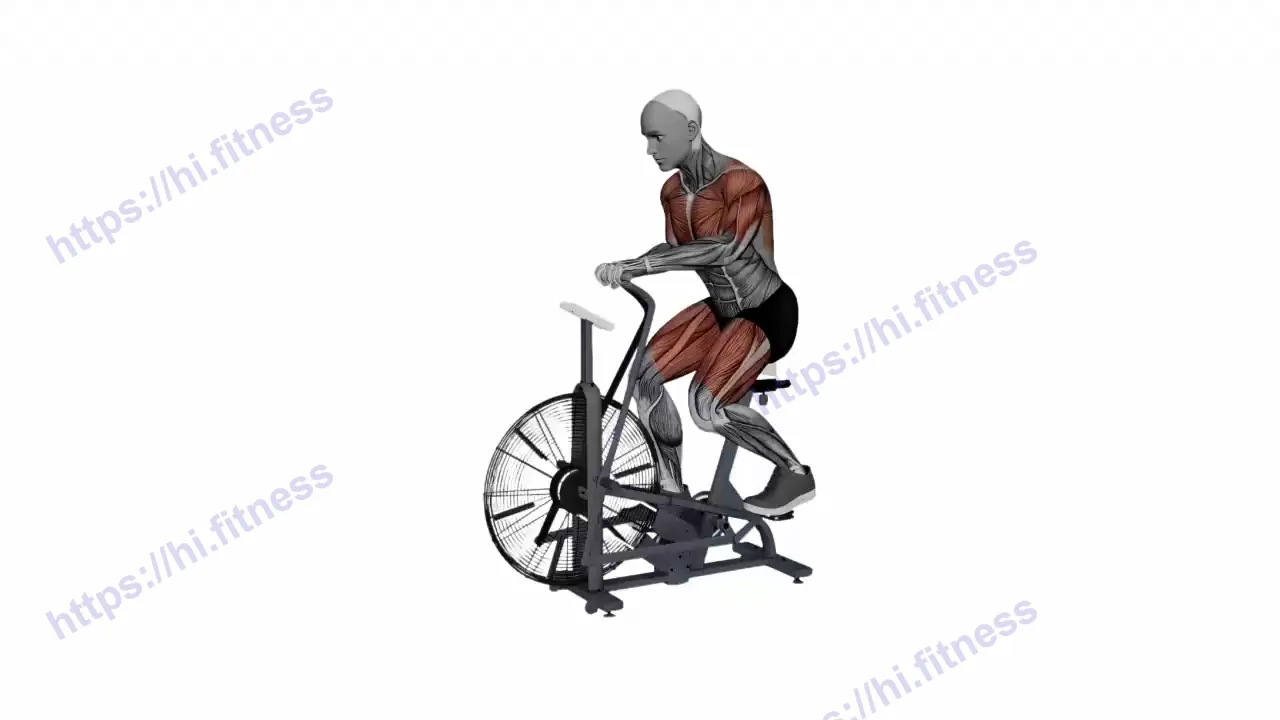
Assault Airbike Fast Speed
Quads · Cardio machine
- Preview unavailable
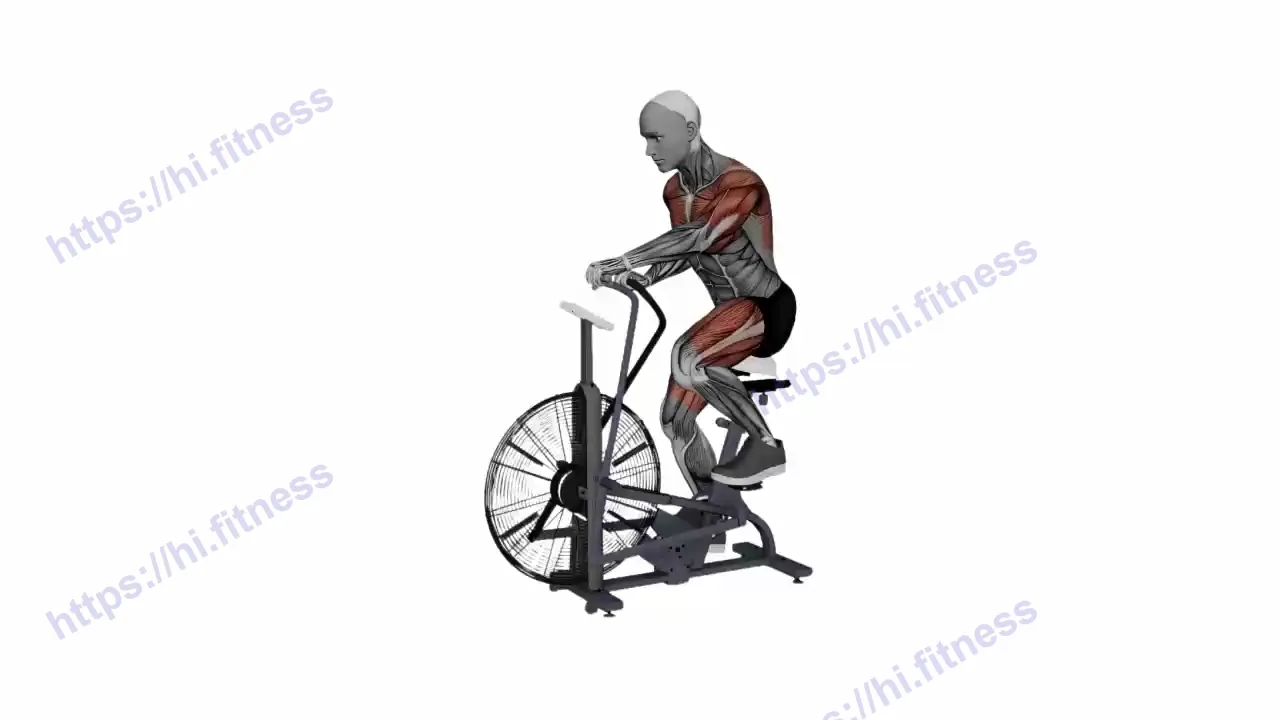
Assault Airbike Sprint Speed
Quads · Cardio machine
- Preview unavailable

Ski Ergometer Cross Country Ski Squat Pull Half Circles
Quads · Cardio machine
- Preview unavailable

Ski Ergometer Cross Country Ski Squat Wide Lat Pull
Quads · Cardio machine
Training guide
About training Quads on cardio machines
Choose one movement, perform it well, then progress it over time.
Will a cardio machine build your quads?
Not the way a squat does, and there is no point promising otherwise. Muscle grows from reps taken near the limit of what it can handle, and on a bike or an elliptical a single push is nowhere near that limit - even if after forty minutes your legs feel as beaten up as after a lifting session. Fatigue and a growth stimulus are two different things.
That does not mean these machines do nothing for your quads. They raise work capacity, they keep some leg volume in a week with no barbell in it, and they are the only thing on this list you can do every day without paying for it later. For somebody who does not train legs at all, riding under high resistance is noticeably better than nothing.
There is one exception worth flagging. The ski erg variations where the pull on the handles comes with a squat or a jump really are a squat pattern performed against the machine's resistance. They sit closer to circuit training than to a barbell set, but of everything here they load the quads the most directly.
Which machine gives the quads the most?
The stationary bike. Your torso is seated and your arms only hold the bars, so the legs have nobody to share with, and every revolution is a knee extension against resistance you set yourself. The higher the resistance and the slower the cadence, the more it resembles strength work, though it stays a distant relative of it.
The rower is second, with a caveat. It is true that the drive starts by pushing away with the legs, but a single stroke also uses the back and the arms. The quads get plenty here if you keep the order right, and very little once you start pulling with your hands.
The elliptical and the air bike are built to spread the effort between legs and arms - the technique notes say so outright, because that is the whole point of those machines. A treadmill loads the quads mostly in braking each step, and running an incline moves part of the work onto the glutes and calves. All four are excellent conditioning tools. As quad exercises they are what they are: work that happens to pass through the knee.
Explore further
Add this exercise to a workout and track your progress
Add it to a plan or to your current session, log sets, weight and reps, keep the instructions and tips at hand while you train, and check your previous results, records and volume.
- Plan - add this exercise to a workout
- Log - sets, weight and reps
- Progress - history, records and volume