Equipment
Chest exercises with dumbbells
Dumbbells have one advantage over a barbell that shows up most clearly on the chest: a bar stops on your ribs, dumbbells don't. Each arm runs its own arc, can travel a little lower, and can set the hand wherever the shoulder is comfortable. Your weaker side has nowhere to hide either, since nobody is helping it out with the other hand.
There are two families of movement on the list. In a press the elbow straightens and the triceps joins in; in a fly the elbow stays bent at a fixed angle and the arms sweep together through a wide arc. On top of that come the floor versions, for anyone training without a bench, and the dumbbell pullover, which works the chest together with the lats.
Exercise library
All Chest exercises with dumbbells
16 exercisesFilters
Filters
Training type

Dumbbell Pullover
Mid chest · Dumbbell
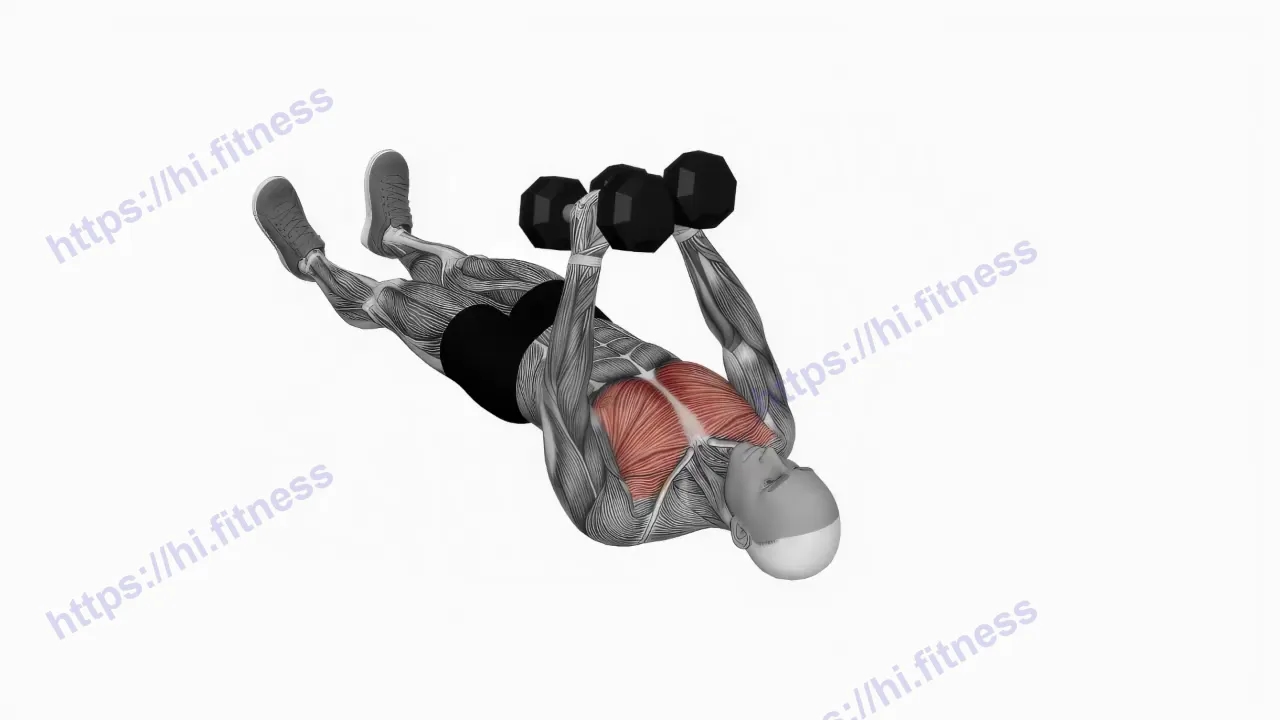
Dumbbell Floor Fly
Mid chest · Dumbbell

Dumbbell Alternate Bench Press (High Start)
Mid chest · Dumbbell

Dumbbell Pullover on Floor
Mid chest · Dumbbell

Dumbbell Bent Arm Pullover
Mid chest · Dumbbell
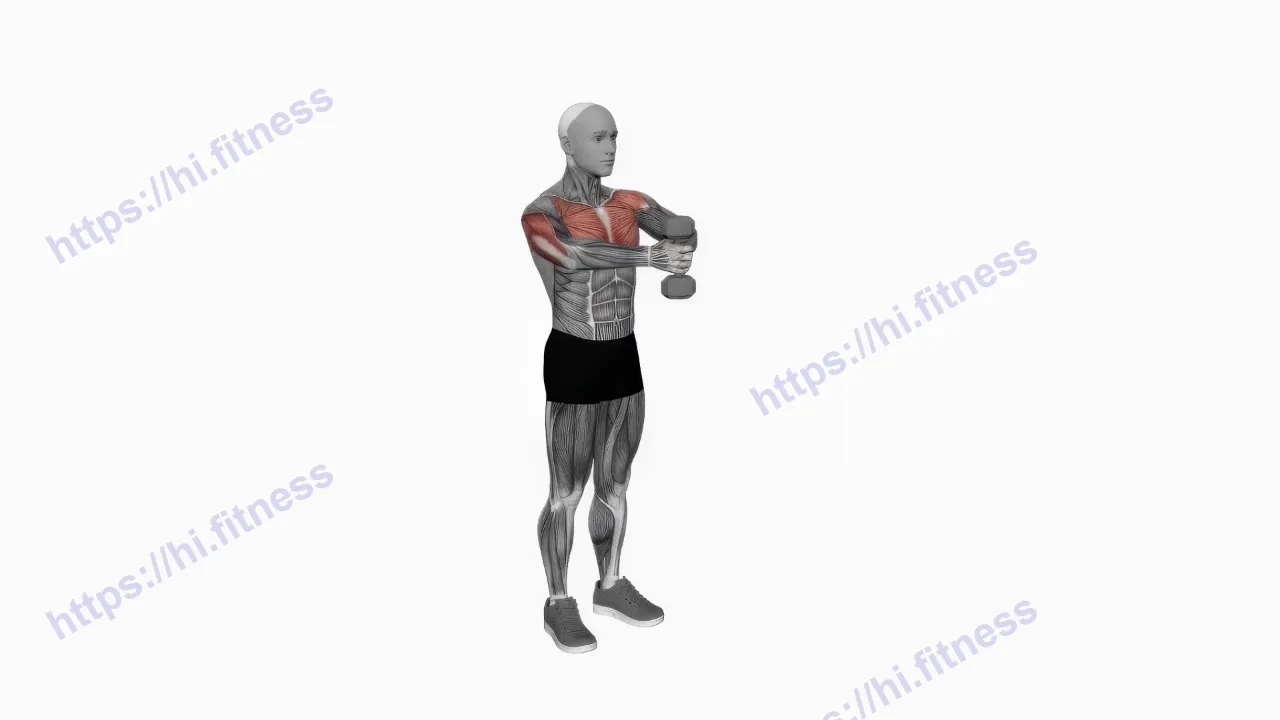
Dumbbell Svend Press
Mid chest · Dumbbell

Dumbbell One Arm Wide Grip Bench Press
Mid chest · Dumbbell
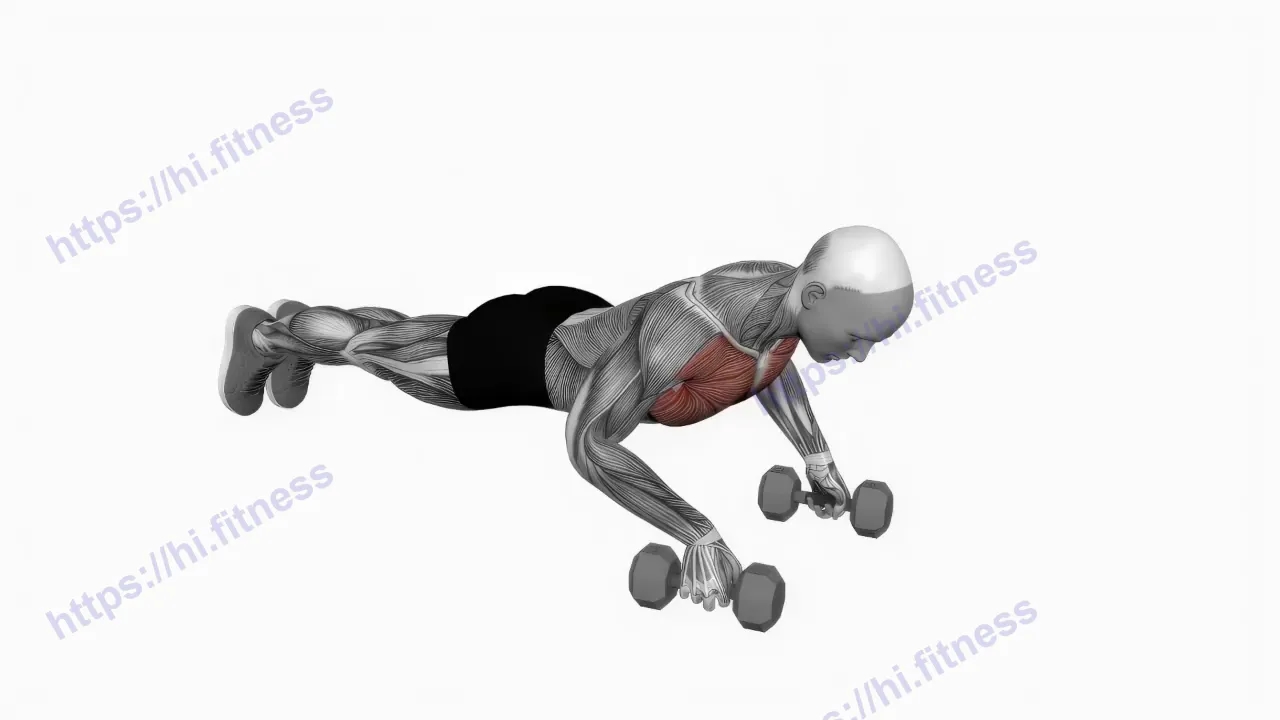
Deep Push-up
Mid chest · Dumbbell

Dumbbell Fly Flat Bench Slow
Mid chest · Dumbbell

Dumbbell One Arm Floor Fly
Mid chest · Dumbbell
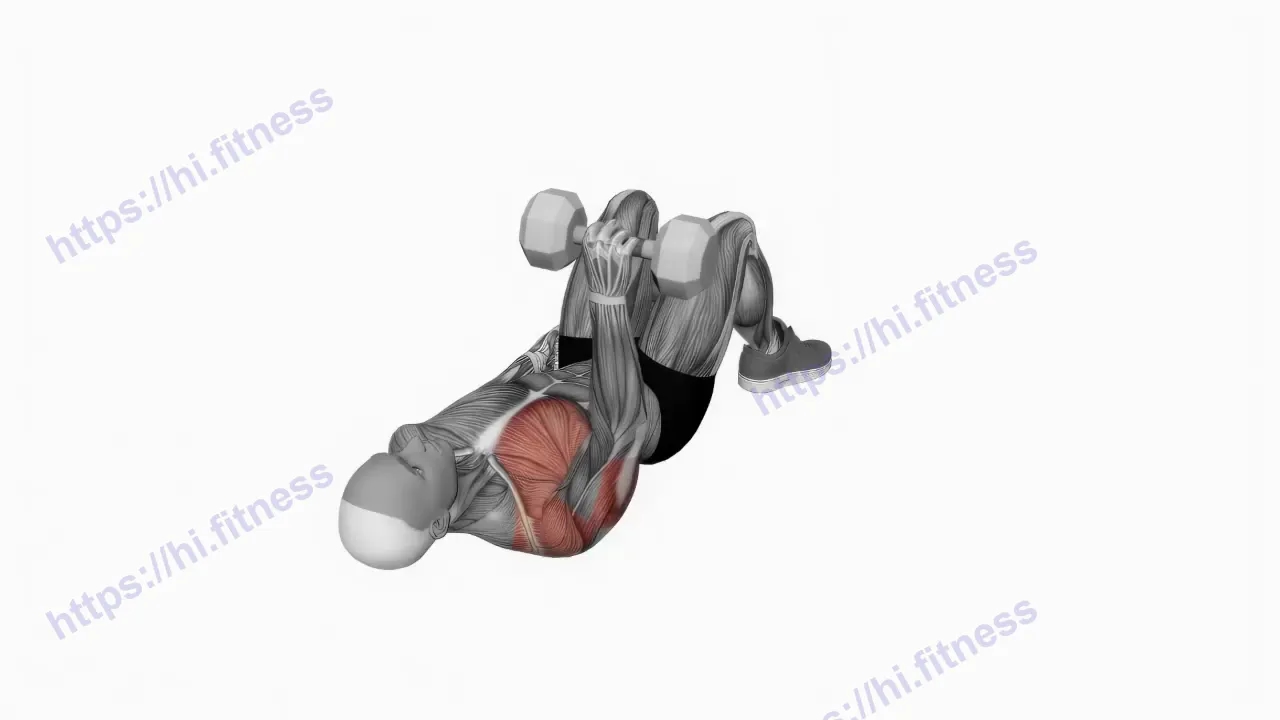
Dumbbell Single Arm Floor Press from Close Elbow
Mid chest · Dumbbell
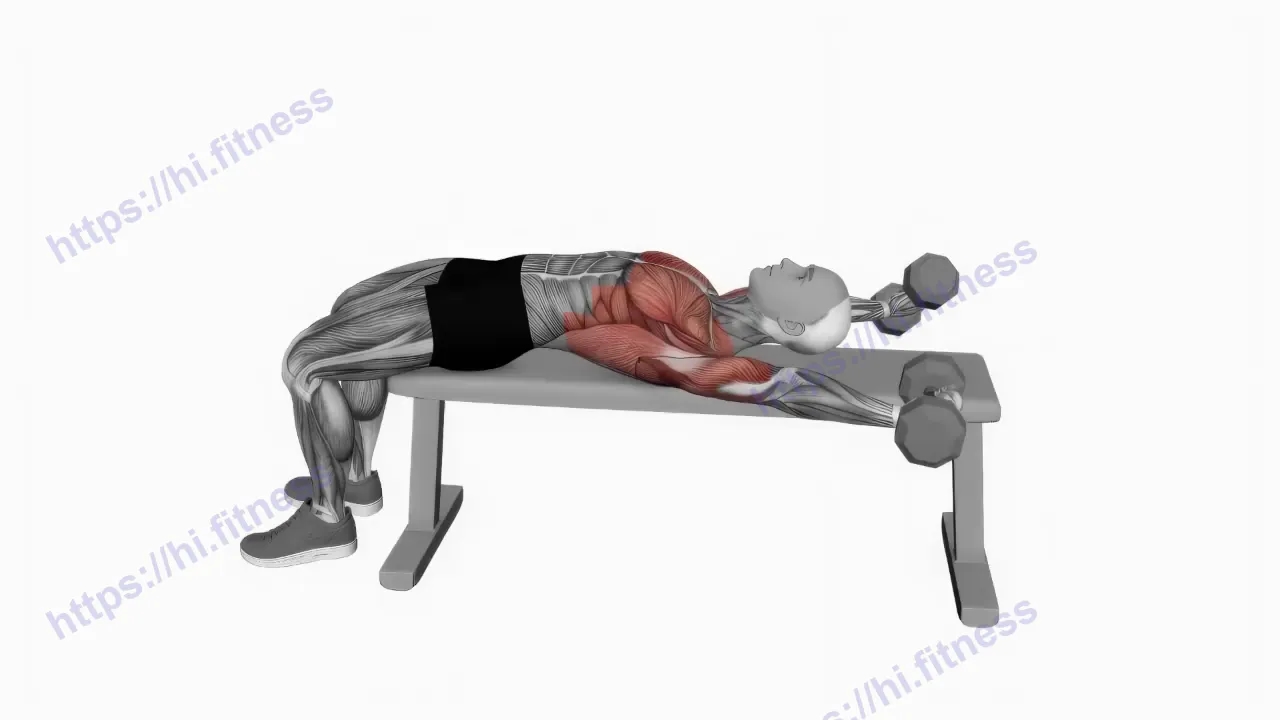
Dumbbell Around Pullover
Mid chest · Dumbbell
Training guide
About training Chest exercises with dumbbells
Choose one movement, perform it well, then progress it over time.
What do dumbbells give the chest that a barbell can't?
The bottom of the range, above all. A barbell comes to rest on your chest and that is where the movement ends, no matter how much room is left in the shoulder. Dumbbells pass that line, so the chest works through a stretch of the path that simply doesn't exist with a bar. The catalog describes the same thing from the other side on flyes: the dumbbells come down until the arms are parallel to the floor or slightly below.
The second thing is independent arms. Under one bar the stronger side can quietly add a few percent for years and nobody notices. With two dumbbells the difference shows up in the first set, because the weaker arm finishes sooner. Hence the single-arm versions on the list - one-arm presses and one-arm flyes, where the other hand only stabilizes.
The price is that you have to get the dumbbells over your chest first, and with a heavier pair that is a skill of its own. Until you have it, the versions lying on the floor are simpler: you pick the dumbbell up off the ground beside you instead of from overhead.
Bench or floor?
The floor stops your elbow before the arm finishes traveling. That limits the range, but it can be an advantage - with a cranky shoulder the bottom of a press is usually the spot that speaks up, and the floor version doesn't let you get there. It is also the only sensible option at home without a bench, and the catalog has plenty of it: one-arm presses, presses with the elbow tucked to the torso, flyes lying on the floor.
A bench opens the full path and lets you use what dumbbells do best. If you are picking a single movement, the flat dumbbell bench press covers the most ground: it loads the chest, brings in the triceps and the front delt, and it is the easiest one to record progress in.
The pullover sits a little to the side of both groups. The chest works there in a different position, together with the lats, and the elbow stays slightly bent through the whole arc. The catalog warns outright not to go too deep behind your head, because that is where the shoulder's comfortable range ends.
Progress the movement
Range first, weight second
The floor version ends the movement the moment your elbow touches the ground. A bench opens up the bottom of the range, so going from the floor to a bench usually changes more than the next pair of dumbbells.
Slow it down before you go heavier
Slow-tempo flyes are a separate exercise in the atlas, because the longer time under tension loads the chest harder with the same dumbbell. That is a sensible step in between.
After a jump in weight, drop back on reps
The next dumbbell in the rack is often two kilos in each hand, four across the whole movement - a far bigger jump than the smallest plate on a barbell. Losing reps after a change like that is normal, not a step backwards.
Explore further
Workout tracker
Add this exercise to a workout and track your progress
Add it to a plan or to your current session, log sets, weight and reps, keep the instructions and tips at hand while you train, and check your previous results, records and volume.
- Plan - add this exercise to a workout
- Log - sets, weight and reps
- Progress - history, records and volume